DAVID SIODOS
Welcome, David! Thank you for joining us for this interview. To kick things off, I’d love to hear what inspired you to embark on your photography journey.
My name is David, I’m 47 years old. I live and work in Toulouse. More than 20 years ago, I earned a Master’s degree in communication and marketing. I began my professional career, but after a few years I walked away from it all. I didn’t feel like I belonged there. It simply wasn’t working for me. I ended up unemployed and went through a complete personal reckoning.
During an evening with close friends, I had a conversation with one of them. He was the one who suggested that I buy a camera. He probably saw me more clearly than I saw myself. I listened to him, and that was the first shock. My first camera was digital. I knew absolutely nothing about photography, apart from a few photographs by Robert Doisneau, and not much more. I had never been to an exhibition, nor had I ever really been interested in art.
So there I was with this camera, and I started taking pictures of street art. In Toulouse, there are quite a few interesting places for that. Then one day, my girlfriend told me there was a retrospective exhibition by a great artist not far from where we lived. It was entirely dedicated to the work of photographer Willy Ronis. I knew nothing about street photography. My mind exploded. It was incredible, like a revelation. The very next day, I was out in the streets of Toulouse trying to recreate what I had seen the day before. From that moment on, I wanted to know everything, to discover everything. Not necessarily from a technical point of view, but I was starving to discover new images. I went to libraries, exhibitions all over the place, and searched endlessly on the internet. It became a kind of photographic bulimia. I had a small job on the side, and at the time I didn’t yet have children. I was free to feed my passion. And that hunger has never disappeared.
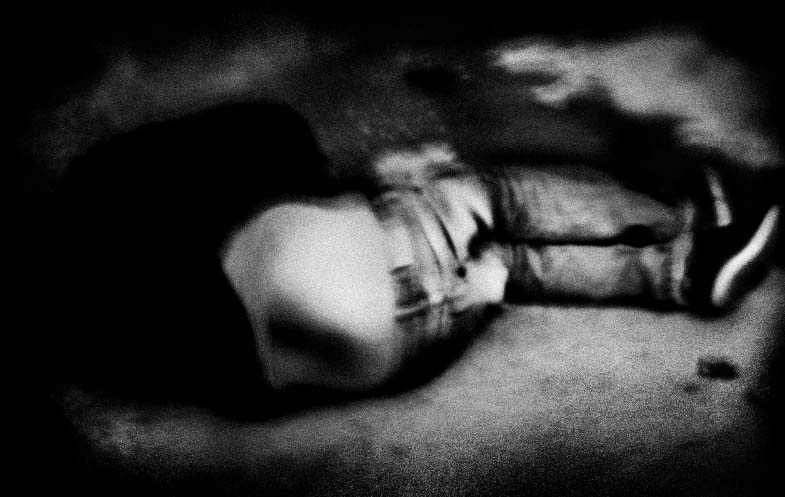
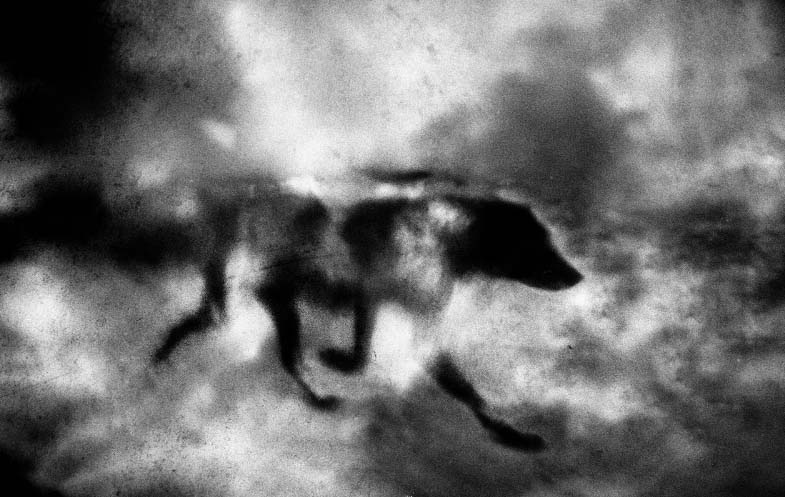
Above: 2 images from The Shadow of the Living
I photographed the streets, everything and anything: walls, people, even dog shit. I had become obsessed, but I also felt fulfilled. One day, I discovered the work of Daido Moriyama, and that was my second explosion. The contrast, the grain, and above all the freedom in his framing. Until then, I had focused mainly on lines and composition. After discovering his work, I began paying much more attention to light and to people.
My grandfather had passed away, and my grandmother gave me his old cameras. He only used them during holidays, but they were his little treasure. That’s how I began using film cameras.
One day, a man attacked me. It was violent. I thought it was the end for me. All because of a photograph. I didn’t understand anything; I was terrified. There I was, standing in the middle of the street, without a real job, wandering aimlessly — and for what? To be assaulted? It was deeply disturbing because I felt the ground disappear beneath my feet. Fortunately, my partner was there. I decided to step back and breathe for a while.
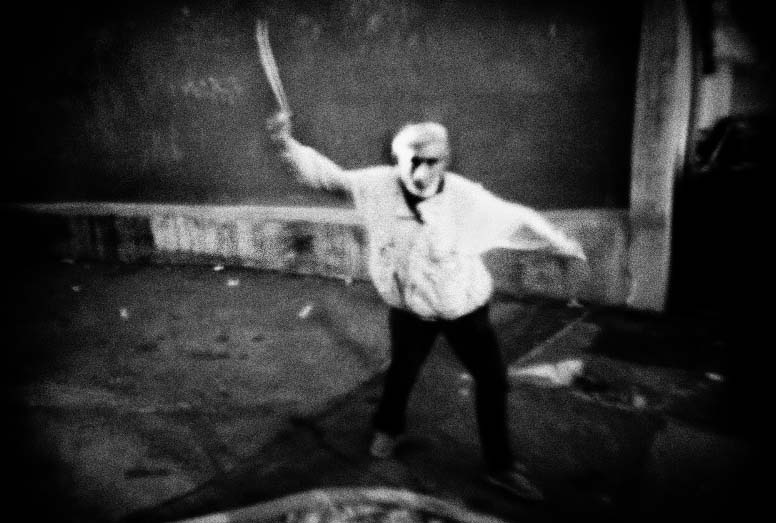
Above: 1 image from The Shadow of the Living
That’s when I started going to the outskirts of the ring road. I don’t really know why. And there, I met a man. He lived there — between the road and the river, hidden by the trees. He had built himself a small shelter out of scraps and discarded objects he had collected from the sidewalks of the city. He invited me to sit down. We talked all day long. I took photographs of him. It was the first time I had truly taken my time.
When I left, I understood that something had happened. What if I went to meet those people we never see, the invisible people of the world? That is how everything truly began for me.
My first project was called Peripherique. For three years, I went out to meet those who remain unseen. I spent time with outcasts, sex workers, and people searching for hidden places to take drugs. An entirely new world, in fact. After three years, I told myself I could go even further. I continued working on the same subject — marginality — but elsewhere. That’s how my work eventually unfolded across three different locations: the ring road, the city, and the forest. It lasted for more than ten years.
More than a photographic project, I wanted to create a kind of anthropological document. I collected the testimonies of the people I met. I spent a great deal of time with them. I listened to them without ever judging them. It was fascinating, but also deeply moving.
Do you have any formal photography education? any workshops you attended and so on.
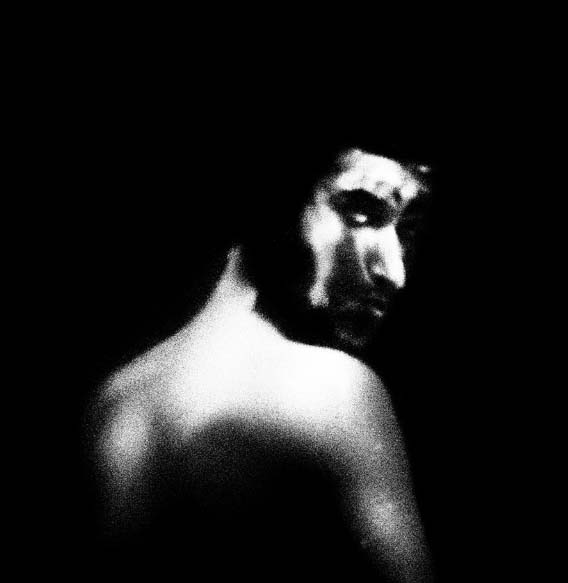
As I explained earlier, I never studied photography. In fact, I knew nothing about art in general. My life changed completely by chance. The friend who advised me to buy a camera told me recently that, for him, it had been obvious from the very beginning. But he never said anything because he wanted me to discover it for myself. I think I’ve made up for lost time since then.
I’m not a very technical photographer in my practice, although I know a bit more today. I learned everything on my own — that’s simply part of my personality. I met other artists along the way who gave me advice, but that’s all. I only attended one workshop, to learn a very specific technique: chlorophyll printing, or Heliophotography. Maybe it’s a mistake to work this way, but I like learning through trial and error.
Today, I try to develop my printing surfaces further by reworking processes such as cyanotype, but also through Polaroid. Still, all of this has to serve the meaning of the work. I don’t do things simply because they are beautiful, but because they make sense within the story I am telling.
I’ll give you an example. Throughout all of my work on marginality, I used a very specific technique. While shooting, I place a sheet of glass in front of my lens, almost like a filter. On this glass, I can apply paint, glue, or any kind of material. By doing so, I create photographs with a completely new texture. Combined with my old cameras and the use of expired film whenever I can find it, the result becomes visually interesting. But I cannot be satisfied with aesthetics alone — that would feel insufficient, too superficial for me.
So why do I do this? Simply because, in my view, the people I photographed are filtered by society. Using this sheet of glass during the shooting process becomes a metaphor for their condition and the way they exist in the world. I continued exploring this idea by working with blur as well.
One day, I met a man lying on the ground inside a tunnel. We talked together, and after a while he told me that, for him, life felt like a dream that never ended. I found his words extraordinary. But thinking about it afterward, I realized that my images themselves could almost come from a dream, not entirely sharp, mysterious, suspended somewhere between reality and imagination.
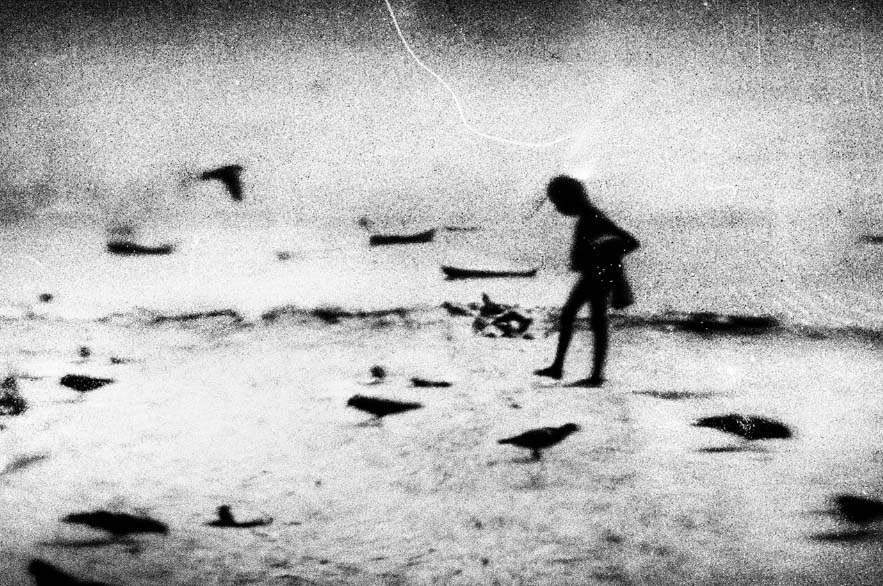
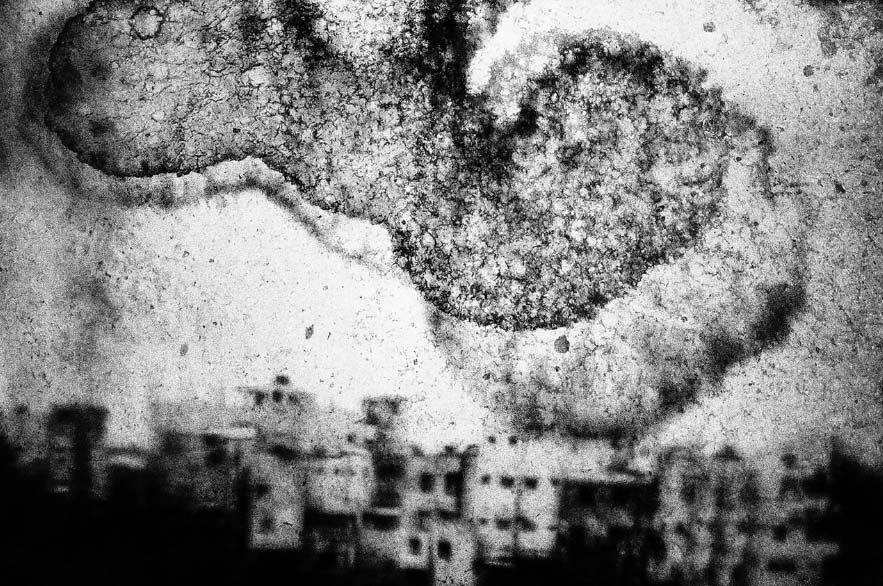
Above: 3 images from Nirvana
Do you shoot only analog or digital as well?
Today, yes — I work exclusively with analog photography. In the beginning, I developed film myself a little. But the subjects I was working on eventually demanded too much of my time, to the point where I could hardly do anything else.
Nowadays, I shoot everything on film, especially Kodak Tri-X 400. However, I have my films processed in a laboratory. Some people say that’s a shame, but I prefer to focus entirely on the stories themselves. For now, that’s the way I work — though I don’t know what tomorrow will bring.
I work mainly from scans. I do very little retouching, partly because I find working on a computer rather boring. What interests me much more today is the materiality of the final print and the surfaces I use.
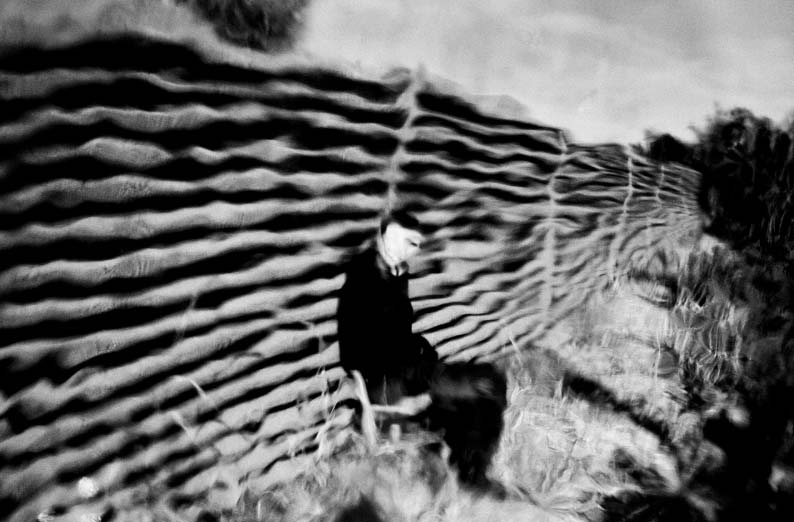
For example, in my series Wild, I present images printed on tea bags. Quite simply because Franck, the man I followed in the forest, drank nothing but tea. As I mentioned before, for the same project I also created an entire series using chlorophyll printing, images printed directly onto leaves. In the same way, this process responds to my desire to bring the viewer physically closer to the places where the photographs were taken, almost as if the material itself carried the memory of those environments.
In my project Waiting for the Silence, for example, I buried my film rolls after taking the photographs. The man I was following, who lived in his caravan, had a very personal relationship with life and death. He was preparing himself like someone fully awake and conscious of his own end. Burying part of the work I had made about him felt completely coherent to me.
It was also a way of surrendering control over the images. For several months, in the very place where Michel lived, I let time do its work. Giving up total control, even at the risk of losing everything. It was exactly what I was searching at that moment. And for me, it made perfect sense.
What does photography mean to you?
It’s difficult to put into words. I would say that photography is a way for me to express myself, to bring attention to humanity in its most overlooked forms. It is also about bearing witness and leaving a trace behind. It means being truthful and honest toward the people who see my work, but above all toward the people whose stories I tell.
My seven-year-old daughter often tells people her dad’s job is “telling stories.” I love that idea because it goes beyond the image itself. It reaches something further.
Do you have a recollection of the first photograph(s) you ever took?
Yes, of course I remember my first photographs. They were mostly graffiti images. I no longer have them. At some point, I decided to erase everything. They were digital photographs, so all I had to do was press a button to forget them.
However, I still have a few photographs from my encounter with Jean-Martial, in his small shack along the ring road. That is where everything truly began for me. Without him, I probably would never have gone this far.
One day, I wanted to see him again. I went back to the place, but there was nothing left. I don’t know where he is now. I wanted to find him again to thank him for opening his life to me. Those photographs are more than fifteen years old now. Time passes so quickly.
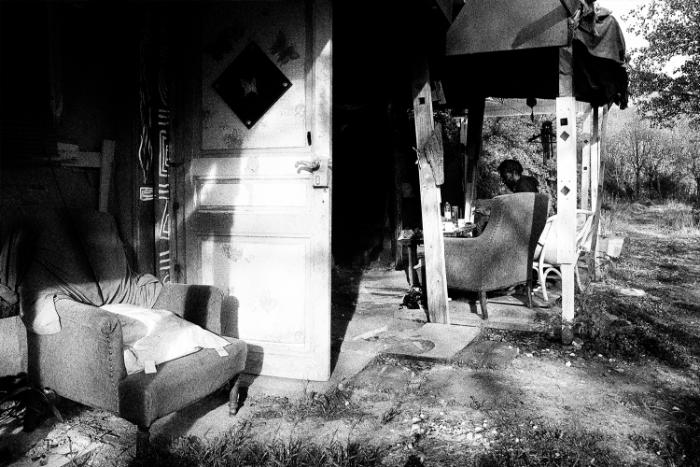
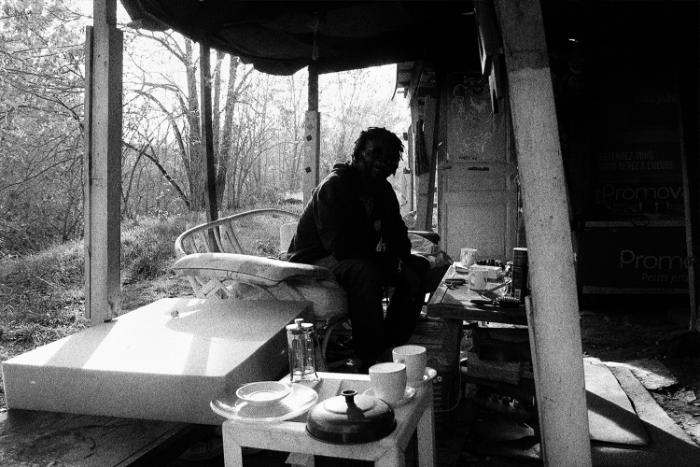
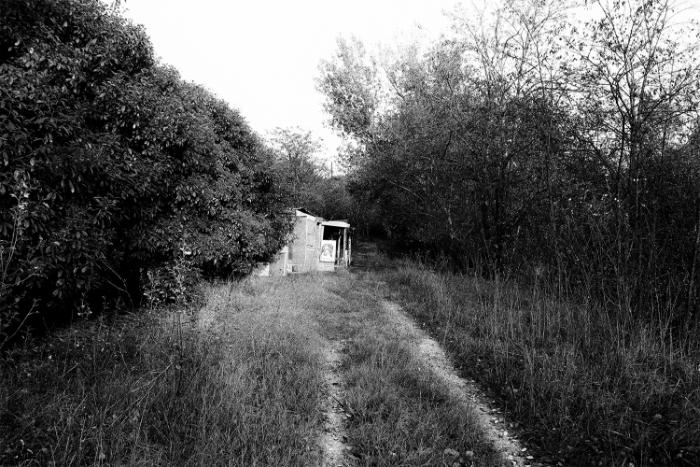
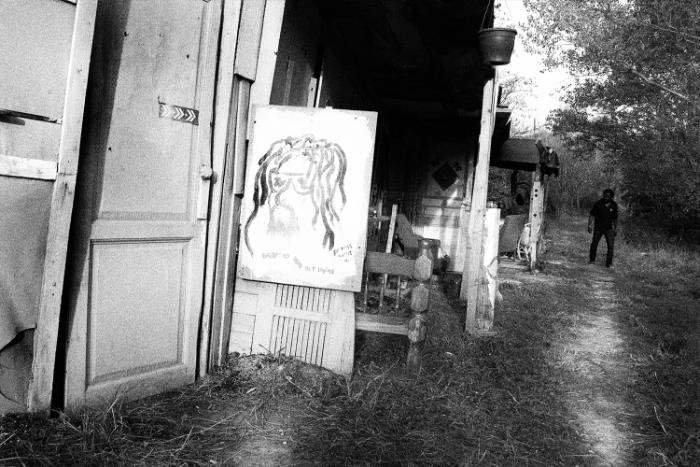
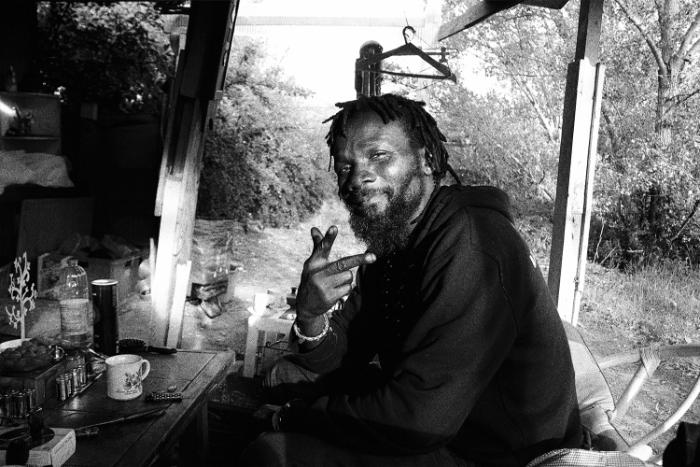
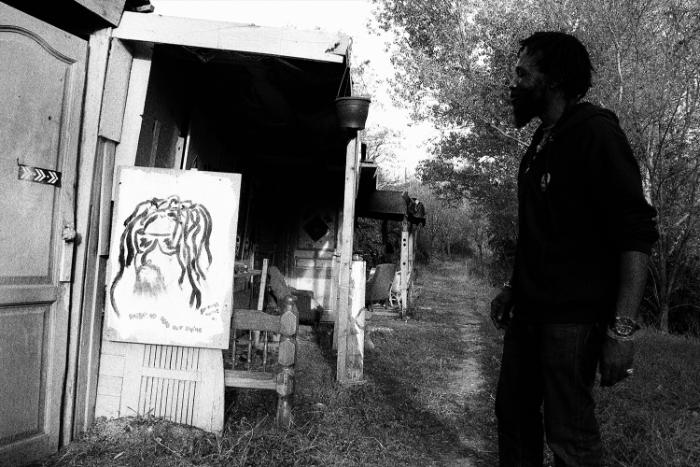
Above: 6 unpublished images from my encounter with Jean-Martial
Do you come up with your own sequences, or do you collaborate with an editor or curator for assistance?
I work alone. I even tend to withdraw into myself—that’s something I’m trying to work on. However, on certain projects, I’ve wanted to open up and share the story with other artists. I’m thinking in particular of the project “Waiting for the Silence.”
This series truly began on a summer evening when Michel’s cabin burned down. He was devastated, but very quickly I saw him rise from the ground, as if driven by a surge of life. And he began to rebuild. He was 75 years old and lived near the Montagne Noire in the Aude region of France. I used to visit him from time to time because I enjoyed spending time with him, he reminded me of my father.
Right after the fire, I told myself that I had to show the strength that drove him. He, the misunderstood outsider, as he liked to define himself. So I worked on this story for a while.
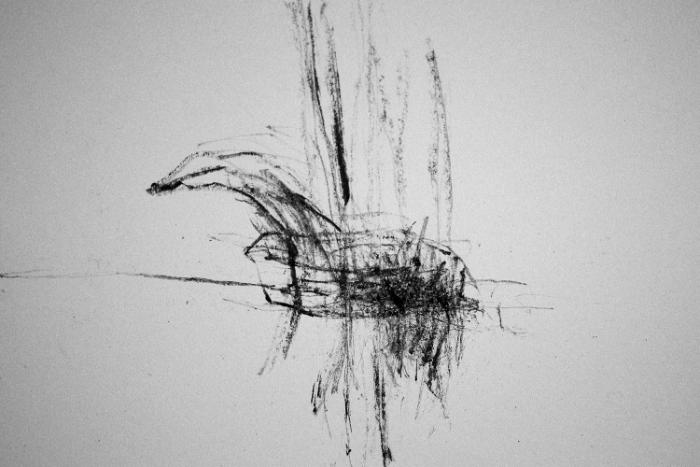
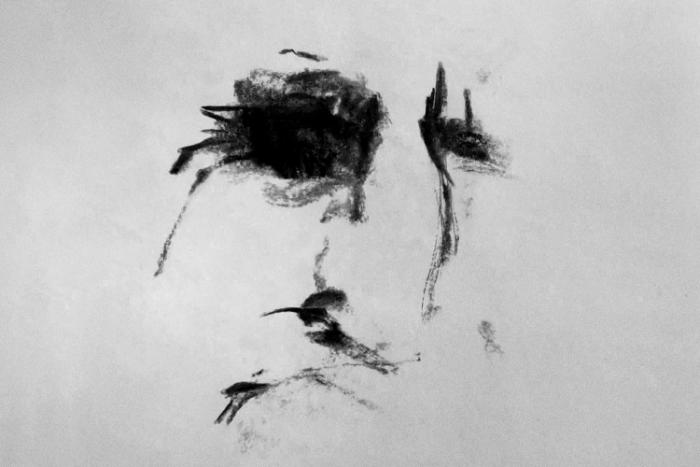
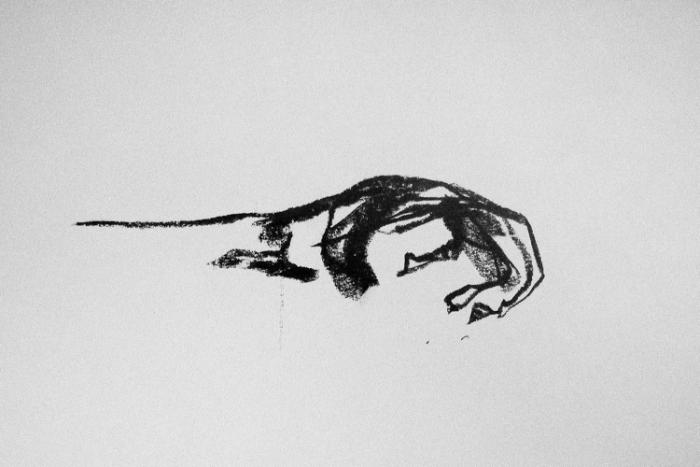
Then I realized that my images were not enough. So I asked a friend, a visual artist (Delphine Alliens), to work with me. We went there so I could introduce her to Michel, but the meeting was a disaster. After that, Delphine went to collect charcoal. Not from the fire, but from an old blaze that had long since gone out, one that Michel had once lit.
That’s when our collaboration truly began. We would spend hours on the phone: I would tell her about my life with Michel, and Delphine would draw what she felt. This work is a new experience for me, but one that is deeply important to me.
You published several books. are they self-published? Can you tell us more about your publishing experience (difficulties, etc)?
My first book, titled “Ring road” is a work created in collaboration with the poet Romain LASSERRE. Combining photographs and poems, this self-published book was printed in 350 copies and is now sold out. It’s quite incredible when you think about it, as it was my first experience in publishing. We were stepping into the unknown, and in the end, the result turned out to be very solid. It was a first step that gave me the desire to go further, to be less conventional, and to offer a true experience.
The second book, titled “In the shadow of the living,” was created this time with the publishing house Le Mulet (Brussels, Belgium). I met Simon Vansteenwinckel and Van Assche in Arles during the festival, and we quickly decided to work together. For the first time, I had to trust in the expertise of others. That’s not easy, especially when it comes to editing. What really matters is the fluidity of the narrative. A book is not just a succession of beautiful images. I came to understand this through working with them. The book is available on my website: www.davidsiodos.com or on Le Mulet’s website: www.lemulet.com
After that, I created a book with the musical artist HORS. It is a collection of photographs designed to accompany an album—a book that you actually listen to. Printed in risography (15 copies), I then completed the binding and cover myself. This was my first experience in artisanal publishing, and it fully convinced me. A handmade book gives meaning to a story. I see it as an additional way to offer something unique—through its form, its composition, and its coherence. This is now the direction I intend to pursue in my work.
This is how the project “KOSMOS” was born.
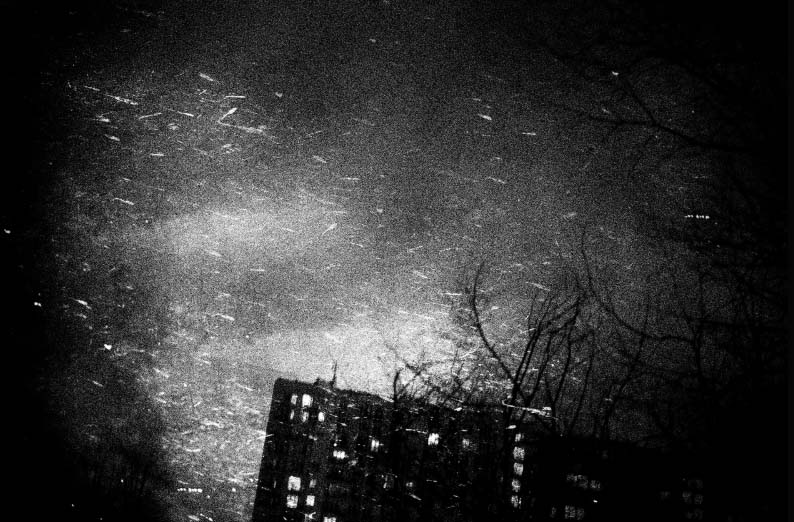
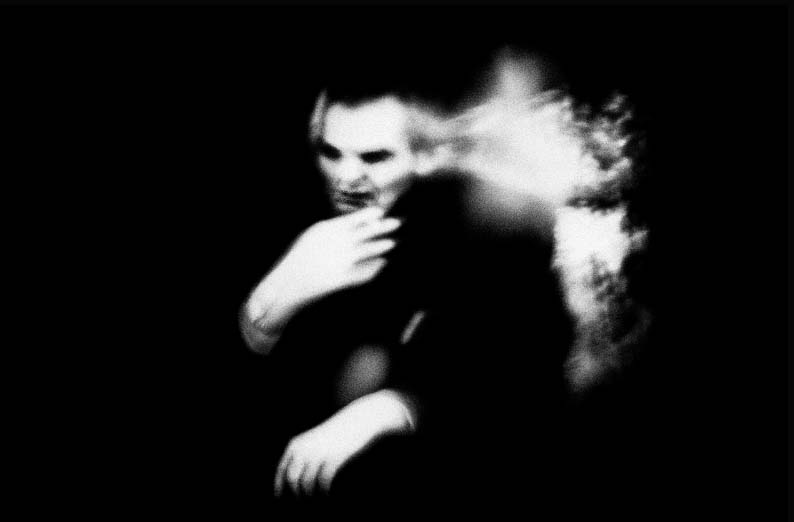

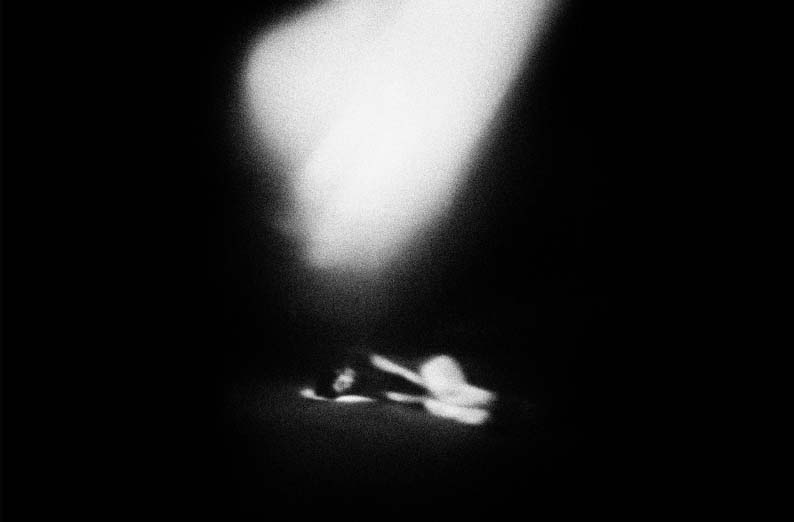
Above: 4 images from the series In the Shadow of the Living
In Greek, Kosmos means “world.” In the series “Wild,” the world of Franck, the main character of this story, is the forest, the trees, and the stars shining at night. In the summer, we would contemplate the Milky Way. Passionate about astronomy, he enjoyed pointing out the constellations to me. “KOSMOS” is a celestial object that wanders, just like him, through immensity.
This book was entirely handmade—from its conception to its realization. It is a limited edition of 5 copies. The wood comes from the forest where Franck lives. This is an essential element in creating proximity and a certain intimacy with the reader.
I returned to his forest to cut five logs. Once treated and dried, my friend Romain ZIMMERMANN and I began cutting each log into two pieces and hollowing out one of the halves. The legs and brass supports were custom-cut and welded.
Franck often told me that he lived like a snail, withdrawn into himself. The book, wrapped around a piece of wood, clearly echoes this idea. The Awagami paper (70g) is made from hemp in Japan by an artisan. Its composition gives it both delicacy and strength. Within the scroll (3.5 meters long), I included 20 images and a poem printed using lithography. This traditional technique, done by manual pressure using lead type, produces exceptional results. Each print is different due to its handcrafted nature.
Through “KOSMOS,” I wanted to bring each reader into the very forest where Franck lives. I see this book-object as a different experience, an original encounter. Through its materials and its making, each copy is absolutely unique.
A new book should be released by the end of the year. It will be based on the series “The sleep of the forgotten.” Like “KOSMOS,” it will be handmade in 100 copies. Printed in risography, I am currently working on the design of an original cover. I am also considering an additional edition of 5 copies. It’s still a bit early to reveal everything, but the idea is the same as with “Kosmos.” I want to bring the reader to the very place where I took the photographs—the city. I imagine concrete, sound as well, and entirely handmade paper.
You mentioned a new book based on the series The Sleep of the Forgotten will be released later this year? What was your original intention or goals for the project? What were your processes? Heavy grain seems to be the common denominator in your photography. can you tell us more about what it means to you?
When I finished my work on marginality, I was so shaken that I no longer wanted to continue working on that subject. My relationship with Franck ended abruptly, and I needed time to process it. Maybe I can explain a bit.
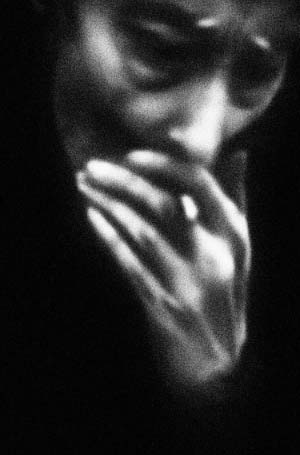
One morning, I found Franck at his camp. He had just come back from the vet, where he had left his sick cat. We spent the day together. First at his place, then we went into town to go through the supermarket bins. After dropping his bags of food on the ground, at the foot of his tent, he took out his phone to find out if he could come and pick up his companion. The cat hadn’t woken up.
I had never seen such distress in someone before. He was devastated. We went to the vet to collect Victor’s body. With great care, he placed his now cold friend in the trunk of the car. When we returned, Franck decided to bury him. He wanted me to take a photograph. I wasn’t comfortable with it, but it was important to him. I watched him bury his friend, and I felt miserable.
A few minutes later, he came over to me, took me in his arms, and quietly said goodbye.
I didn’t say anything and went back home. A few days later, I tried to call him because I was worried. He didn’t answer. Eventually, he picked up and asked me to come over. So I went to see him, not really knowing how it would go. He didn’t say anything. He just handed me a letter. I never saw him again after that day.
So I tried to take some time to clear my head. That letter broke me, because on one hand he was asking for my help, but on the other, he didn’t want to see me anymore.
I took the time I needed, and one day, while I was taking part in an exhibition, I met Michel. The story that came out of that encounter is called “Waiting for the silence.” A chance meeting that made me realize that stories choose you, not the other way around.
A few years went by, and during that time I kept taking photographs in the city. I met people, spent time with them, and so on. Without any real editorial ambition. In a way, I was continuing “In the shadow of the living” After a while, I simply realized that I had quite a lot of film rolls. It’s as simple as that. That’s when I decided to work more specifically on this new story.
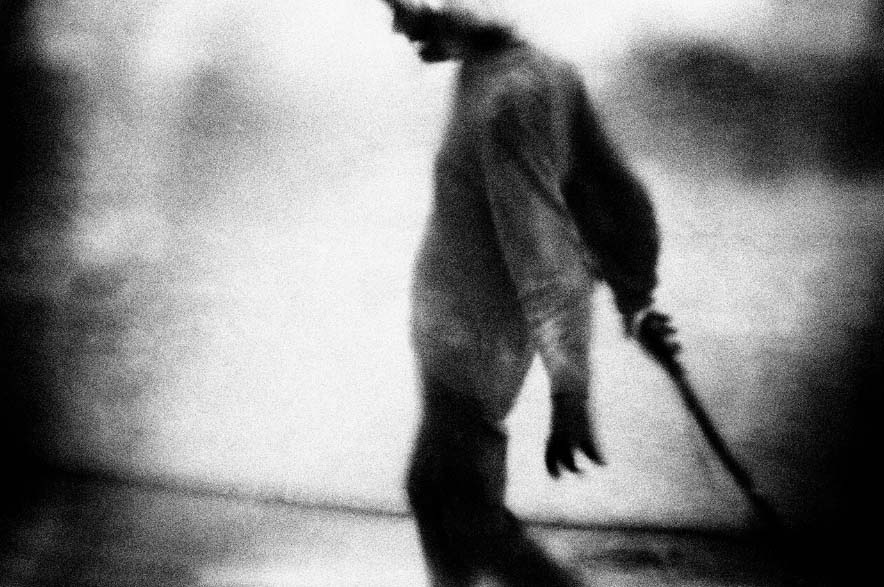
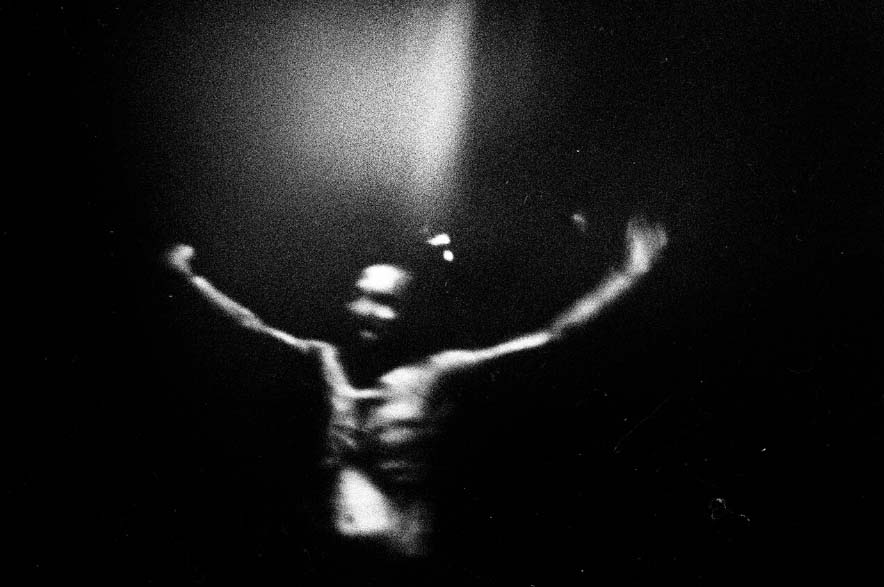
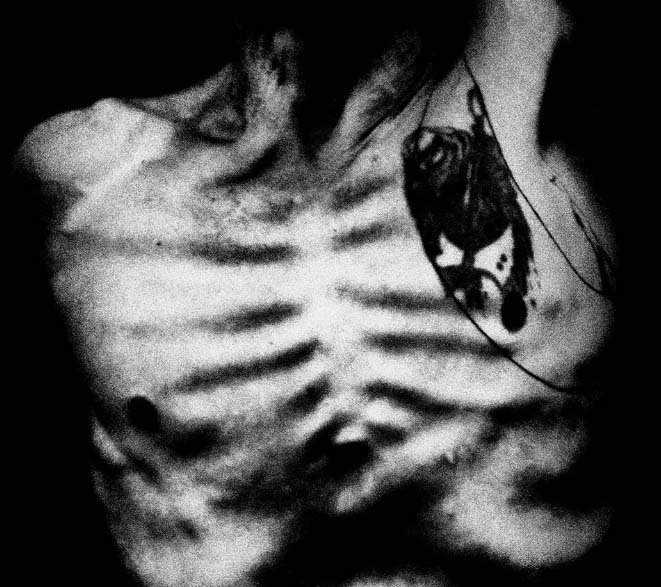
Above: 3 images from the series The Sleep of the Forgotten
If I’m honest, it was partly because I didn’t have a new subject that I kept going down a path I already knew, it was easier. The substance remains the same, but the form will be different. I want to continue working in artisanal publishing, creating a sense of closeness with my subject.
In this version, there will be no recorded dialogues with the people I photograph. Instead, there will be a text by Marguerite Duras. In it, she describes the death of a fly. The slow agony of the insect as she sits alone at home. That text immediately made me think of the people I encounter every day. Through her words and descriptions, I felt it would be meaningful to include it in this book.
To make the photographs, I continued in the same way. My method hasn’t changed, nor have the films I use. I mainly work with a Canon Prima 5, a point-and-shoot camera. It’s simple, practical, and discreet. But sometimes it breaks down. Luckily, I have other equipment. A Canon EE17 that works well, a Silette that I bought for €3 at a market, and so on. I don’t get too caught up in the technical side. What matters to me is my relationship with the people I photograph. The act itself is quick and discreet.
Can you tell us the story behind the series Waiting for the Silence?
As I was explaining earlier, this series was born by chance while I was in the middle of installing an exhibition in the Haute Vallée de l’Aude. It was part of a festival. The concept is simple: the idea is to exhibit your work in people’s homes. It’s a nice approach, and it helps this region open up a bit to culture. The Aude is one of the poorest regions in France, so events like this are very important and highly anticipated.
I was hanging my work when an old man, accompanied by his dog, walked into the garage where I was exhibiting. Without saying hello, he stopped in front of a photograph showing a caravan. He turned to me and said:
— But that’s my caravan!
I told him I highly doubted it, since that caravan was used as a place for prostitution. He thought for a moment, then, looking me straight in the eyes, said:
— Yes, I know but it’s because I have the same one.
Then, without saying anything more, he left.
The next day, I saw him walk back into the garage. He came straight toward me, took a camera out of his pocket, pointed it at me, pressed the shutter, blinded me with the flash, and left again. A few minutes later, he came back once more and said:
— If you want, you can come to my place. I’ll tell you my story.
And that’s exactly what I did. A week later, I found myself at the top of a hill after driving for more than an hour along an impassable track. In the distance, the Pyrenees. In front of me, a wooden cabin and two derelict caravans. I knocked on the door. He opened it, stared at me with piercing eyes, looked me up and down, and said:
— Who are you?
I told him that he had invited me the week before, and so on. He had simply forgotten. He went on:
— Since you’re here, I’ll show you around.
That’s how my relationship with Michel truly began.
My work really started after the fire that destroyed the cabin, as I mentioned earlier. Encounters like this can’t be staged, you have to accept them and share them. Michel told me his life story, though I never really knew whether everything he said was true. In the end, that’s not what matters.
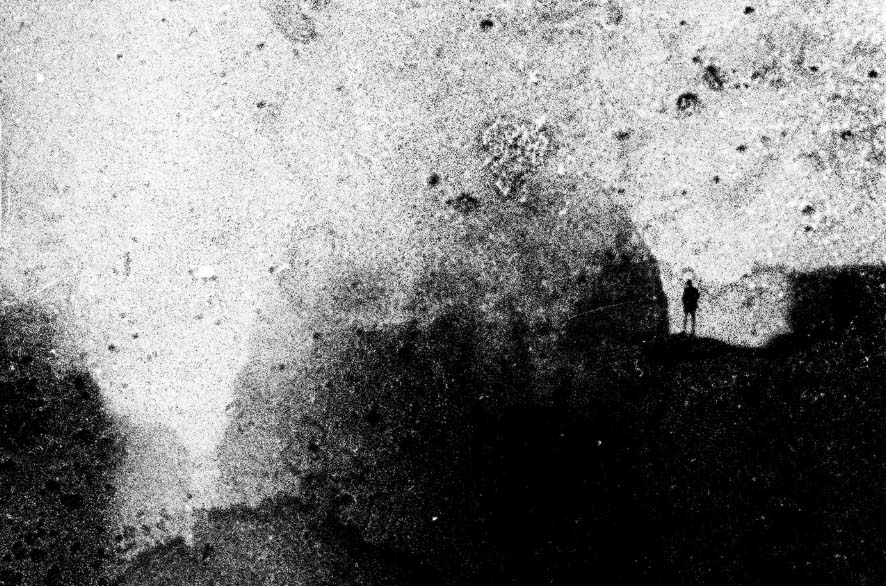
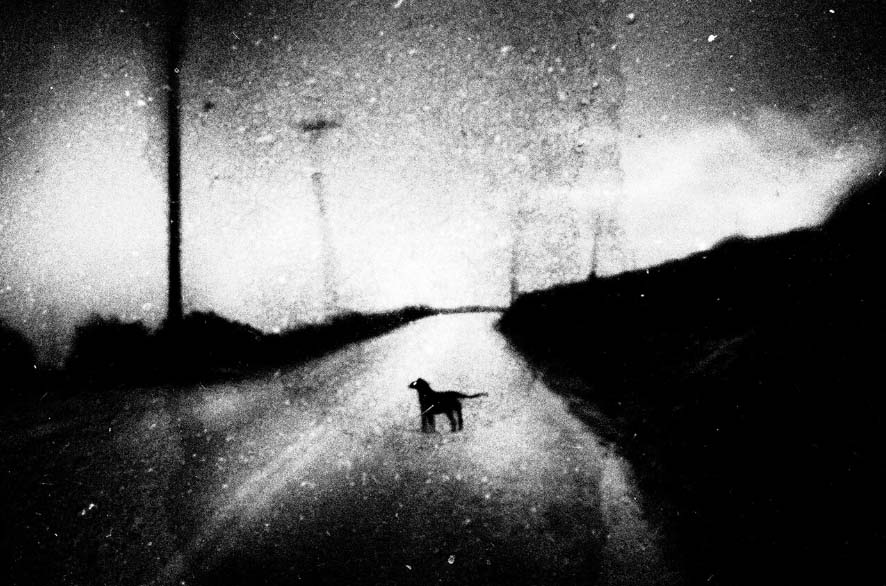
Above: 3 images from Waiting for the Silence
Once I had finished shooting, I decided to bury some of my film rolls for several reasons. First, because he had a very acute relationship with life, and therefore with death, always ready, as he liked to say. But also as a way of letting go. By burying my films, I was taking the risk of losing everything. My intention was to stop controlling things entirely, to lose control. In a world that is increasingly precise, increasingly controlled, I felt the need to go against the current.
What advice would you give to younger photographers or artists who would like to get started in photography?
It’s very difficult to answer that question. I would first say that it’s important to learn to listen to yourself. Not to commit to a job or a project unless you truly feel passionate about it. I also think you shouldn’t try too hard to follow any particular graphic or artistic trend. By that I mean it’s better to create a body of work based on your own codes and influences, rather than trying to match an artistic trend. If you want to work with film photography, for example, do it for yourself or because it makes sense to you. But you can also create something meaningful with just a simple phone.
Being consistent with yourself is also important. I’m thinking again about that story with the log for the book Kosmos. If I just go cut a piece of wood in some random forest simply to tick a box, in the end no one will know. But I will and that’s the key. Ultimately, the only real obstacle is yourself.
You also shouldn’t try to be overly ambitious or try to please at all costs. In my opinion, that path only leads to burnout or going in circles. It’s important to take your time as well. That’s essential in any artistic process. At the beginning, I used to work compulsively, all the time, without stopping. I needed it, it was a natural phase. But being an artist isn’t limited to taking a photograph. There is so much more behind it. In my case, of course, there’s the act of photographing itself. Then there’s all the research, the editing, the post-production, even if minimal. And also all the background work, such as outreach, working on application files, applying for grants or residencies. The list is long and can feel overwhelming at times. Personally, I sometimes feel completely overwhelmed, even discouraged. Often I feel like giving up when nothing seems to happen or when I receive too many negative responses to my applications. You have to be prepared to deal with failure, because it can shake everything. In those situations, it’s important to step back and put things into perspective. It may sound simple, but I believe in the value of hard work and patience.
It’s also important to be well surrounded. I like working alone, as I mentioned, but you shouldn’t isolate yourself. You can’t succeed on your own, it’s impossible. I don’t really believe in the idea of one big happy family where everyone is friends. Like everywhere else, you have to be open to others without being naive. I’ve been lucky to meet incredible people in photography, passionate and inspiring individuals, not just photographers. I’m thinking, for example, of Stéphanie Coudray, who runs Galerie (S) in Cully, Switzerland. She’s an exceptional person who does remarkable work. I’m also thinking of Pauline Caplet from the gallery “L’Enfant Sauvage” in Brussels. I won’t name everyone, but what stands out to me in most of the people I feel close to is their human quality. This profession brings so many emotions. You shouldn’t lose sight of your goals and should remember that being able to express yourself is a privilege, no matter the medium.
Thank you for the opportunity of getting to know you. It’s been a pleasure!
Thank you! My pleasure!
All Images © David Siodos