LAUREN KAIGG
Thank you for participating in this interview, Lauren. First, could you tell us a little about yourself and your first experience with photography? What made you want to be a photographer?
My pleasure! I’m a visual artist based in the UK, working primarily with photography. My first experience of taking images was in my early teens on a small point and shoot camera. I was also interested in other forms of art, but what drew me to photography in particular was its accessibility as a way of reframing the world around you instantly. It became a bit of an obsession, and I think I knew quite early on that I wanted to work with photography in some capacity, even if I wasn’t yet sure what that would look like.
Over time, I realized that photography allowed me to explore questions and feelings that were difficult to articulate in words. Gradually, it became a way of thinking through ideas around time, absence, mystery, and our relationship to the unknown. That curiosity is still at the centre of my practice today.
Have you received any formal education in photography, such as attending workshops or similar programs?
Yes, I have a BA and an MA in Photography, both from the University of the West of England.
Do you prefer shooting with analog, digital, or a combination of both? If you lean towards analog, I’d love to hear about your development process. Do you handle film development yourself? Are you involved in printing in the darkroom?

I work with both analog and digital, although in more recent projects such as Loop and Resonance I’ve primarily been working digitally. That said, I still see both processes as important tools and I’m open to moving between them depending on the needs of a project. When I was working more regularly with film, I was particularly drawn to square medium format. I enjoyed the slower pace of shooting and the experience of viewing the world through a waist-level viewfinder. As I mostly shot colour film, I would send my negatives out to be developed and then scan them myself.
What does photography represent for you?
Photography helps me to explore and get closer to things that are hard to put into words, it’s also where I can daydream.
Do you recall your very first experience with a camera? Do you remember the first photo(s) you took?
Sadly I don’t have a recollection of the exact first photographs I ever took, but I started out by taking photos of my daily surroundings and friends
How would you characterize your approach to photography?
That’s a tricky question to answer as I like to keep my work free to shift and change but I think there tends to be a dreamlike quality to my work.
Many of your images evoke a sense of surrealism. Does your work encourage us to delve into our inner selves and emotions, rather than simply conveying information?
Definitely. I’m less interested in presenting straightforward facts than in creating images that evoke feeling and atmosphere. I’m also very drawn to the tension between what is real and what is imagined, which is something that keeps me curious about photography. Rather than offering fixed meanings, I hope my images invite viewers to bring their own interpretations and emotional responses to what they see.
Could you share the story behind your body of work titled “Resonance”? What were your original intentions or goals for this project? Additionally, what processes did you follow during its creation?
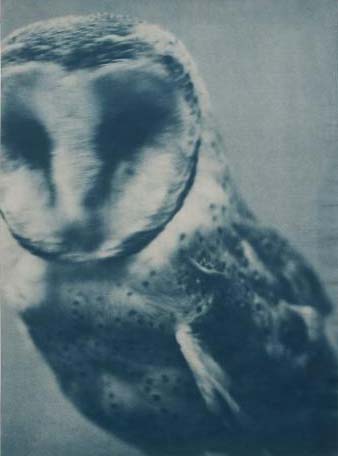
Resonance grew from an interest in the uncanny agency of nature and the idea that the natural world can sometimes feel active or responsive, almost as if it has its own quiet presence. I became interested in how I could explore that feeling through photography and in creating images where the boundaries between people and nature become less certain, allowing them to feel quietly intertwined.


Above: a selection from Resonance. Below: a selection from Loop
My process was intuitive and developed through photographing familiar places such as woodlands, roadsides and domestic spaces, alongside creating subtle constructed interventions. My aim wasn’t to document those places or tell a linear story. Instead, I wanted to create images that suggest something just beyond our understanding and function as a sequence of echoes rather than fixed narratives. I often worked with soft focus and obscured perspectives to create an embodied sense of looking, where the viewer feels immersed in the scene rather than simply observing it. Ultimately, I wanted the work to encourage a slower way of seeing, where what’s felt can be just as important as what’s clearly seen.
Your series Loop has received great acclaim. can you tell us a bit about it?

Loop developed from an interest in absence and the feeling that something is missing or beyond our grasp. It grew out of my experience of noticing a kind of strangeness in everyday life, and I became interested in what those moments reveal about how we experience the world. I’m particularly drawn to the idea that we never have access to the whole picture, yet we’re constantly trying to make sense of it. Through photography, I wanted to explore how we make sense of the world when we only ever see part of the picture. The title Loop reflects that ongoing cycle of searching and questioning rather than arriving at a fixed conclusion.
When embarking on a new series, do you prefer to develop your own sequences, or do you collaborate with an editor or curator for assistance?
I create my own sequences however I do like to try and get feedback when I can from my peers. I think it’s important to show your work to others as it can be hard to see your own work objectively when you’re in the thick of it. I also find it very interesting to hear how others interpret your images.
Your work often features elements of nature, including plants and animals. Do you view nature as a backdrop, a character in its own right, or maybe even a mirror of our inner emotions?
I often see nature as both metaphor and presence. It can reflect our inner states and emotional experiences, but I’m also fascinated by it as one of the great mysteries. There are aspects of the natural world that remain beyond our full understanding and there is something awe inspiring about that gap between what we know and what we don’t know. I like to play with the idea that nature might possess its own quiet intelligence or agency, allowing it to feel less like a passive backdrop and more like an active participant within the image.
Could you share some insights about your short film, “The Wind”?

The Wind is an experimental short film that was created alongside my research into Loop and explores many of the same themes through moving image. The film considers ideas of absence, presence and uncertainty while focusing on subtle forces that shape our experience of the world. The wind itself became an interesting subject because it is something we can feel and observe through its effects, yet never fully see. It seemed to embody many of the questions I was already exploring in my photography. The film also began introducing ideas about a possible agency within nature, which later became more central to Resonance.
Could you share your approach as an emerging artist when it comes to submitting your work to open calls, galleries, and editors?
I take quite a selective approach to submissions by researching open calls, galleries and publications to see whether my work genuinely fits within their context, rather than applying to everything I see. I also think very carefully about how the work is presented and read, especially with sequencing and artist statements, to give a clear picture. I also reapply to previously unsuccessful open calls that I feel particularly aligned with because I know that selection often depends on timing, the context of that year’s programme etc and not just the quality of the project itself.
Are you considering publishing a book inspired by one of your series?
Publishing a book is definitely something I’m interested in, and it’s an avenue I’m continuing to explore as my projects develop.
What tips do you have for young photographers or artists looking to begin their journey in photography?
I think the most valuable thing is to stay curious and make work that genuinely interests you. I’d also encourage people to be patient with their process. You don’t need to have everything figured out before you begin. Sometimes the work reveals itself through making, and allowing yourself to experiment, fail and change direction can be just as important as having a clear plan. But I think most importantly, have fun with it.
Thank you for taking the time to take this interview!
Thank you!
All Images © Lauren Kaigg