LAURENT LOUBET GUITER
Can you tell us a bit about yourself and how you got started in photography?
My name is Laurent Loubet Guiter, I’m 62 years old, and I’ve been practicing photography since I was 20, somewhat by chance when my mother gave me her Leica SLR camera. Already a story of family tradition. I initially photographed my loved ones, my family, spontaneously, instinctively as they say. Then, over time, my practice became more defined, taking a more intimate, introspective path, with a particular taste for research, experimentation, the “happy accidents” that chance brings, the imperfections and flaws of old processes, and the analog processing of images.
Do you shoot strictly analog or digital as well?
I shoot strictly analog. I only use digital in the post-production (retouching) and printing phases. I use analog for all the upstream phases, from shooting with medium format (6×6) or SLR (24×36), to developing the black and white or color film and printing on paper using Lith or Caffenol chemistry. I use several analogic cameras (Reflex R4 Leica, Diana, Lubitel).
I use expired black and white or color film for experimentation, as well as old, expired papers that I find on eBay or LeBonCoin. When I get an interesting result, it’s usually on a small format paper (because it’s difficult to find large format paper). Then I move on to post-production: I scan the paper image, I slightly correct the color/contrast and any minor imperfections (spots, hairs, etc.) produced by the Lith chemistry in Photoshop. Then I enlarge the image for a larger print on FineArt paper.

Can you tell us how you approached your first exhibition?
My first exhibition was at the Manifesto Festival in Toulouse in 2021. It stemmed from a project exploring memory, family, and lineage. Old letters from my grandfather, found at the bottom of a box, eventually became transparent from being read so often. But the memory remains. These stories and tales told by my grandmother, real or imagined, have always nourished my imagination. And yet, there was a void: aside from these letters and this oral family tradition, there were almost no photographs to bear witness to this history.
“Et vous que devenez vous ” Reading these words from my grandfather, I felt the need to explore this story, to bear witness to this attachment, this lineage, and to respond through my portraits and landscapes, revealing an imagined vision of this family fi ction. I wanted to compensate for this double absence (of my grandfather and of the photographs) by combining these words with my images to forge a kind of intergenerational dialogue, to simply try to answer the question, “And what about you, what has become of you?”
Below are a few images from my first exhibition in Toulouse


You mentioned that you transitioned from “regular” analog shooting to old processes. can you tell us what old alternative processes you got started with and your initial results from them?
I often use expired films (color or black and white) as well as expired paper. Since the paper I am able to find is often small format (for example, 9×12), after developing prints, I scan them. Then, I apply digital post-production to adjust contrast and lights. Finally, I print the final image using Epson Digigraphy on Fine Art paper.
I use several old analogic processes. I like to try new processes, for the most part. I widely use Caffenol to develop my black & white films whereas I use LITH for my printing in the darkroom. The reason why I like LITH processing so much is because it’s a very slow process: on certain occasions it takes even more than 15 minutes of developing in the darkroom before images start appearing and each time the result is different. Thus, you never know what you are going to get. Sometimes results are disappointing whereas other times they are exhilarating.
For example, in the image below the result was quite interesting. I used Lith processing on expired paper I found in a house clearance. The box had even been opened! I thought I would not get any decent result out of it BUT in the end, it was quite the opposite!

Have you ever had any formal training in photography?
In 2025, I decided to attend the Milk Masterclass to help me develop a new project, to construct a narrative from a new body of images and texts. This process led me to meet Manijeh Nouri Ortega, translator of the Persian poem “The Conference of the Birds.” From our conversations emerged the idea for an exhibition planned for 2026 and the project for a book, “La vallée de la stupeur / The Valley of Stupefaction.”
Can you tell us how attending the Milk Masterclass changed the way you approached building a narrative from a body of work? Can you give us examples?
The Milk Masterclass helped me create a series from a corpus of images. It allowed me, over an extended period (9 months), to reflect on my work, what meaning I wanted to give it, and what I wanted to say in my photos. The interaction with other photographers, the exchanges, and the diverse perspectives allowed me to mature in my approach and my work. And the editing and presentation exercises, both on my own photos and on others’ photos, were very helpful. For example, I learned to let go of certain images that I found powerful but that didn’t fit into the narrative. This wasn’t easy because I’m not used to working in series but rather with single images (like a painter in front of their canvas).
As a result of attending the Milk Masterclass, I was able to create the series called The Valley of Stupefaction, inspired by the famous 12th-century Sufi tale, “The Conference of the Birds.”
This foundational text of Persian culture recounts how the birds embarked on a quest to find a mythical bird, the Simorgh, in order to make it their king. At the end of a mystical and existential journey, they discover that the Simorgh is none other than themselves: “The sun of my majesty is a mirror. He who sees himself in this mirror sees his soul and his body.” In this existential and mystical quest, the birds traverse seven valleys, including the Valley of Stupefaction, which inspired this series of photographs as well as the photo book project.
Thank you very much for taking the time to share your experience with us. It’s been a pleasure having you!
My pleasure! Thank you!
All Images © Laurent Loubet Guiter


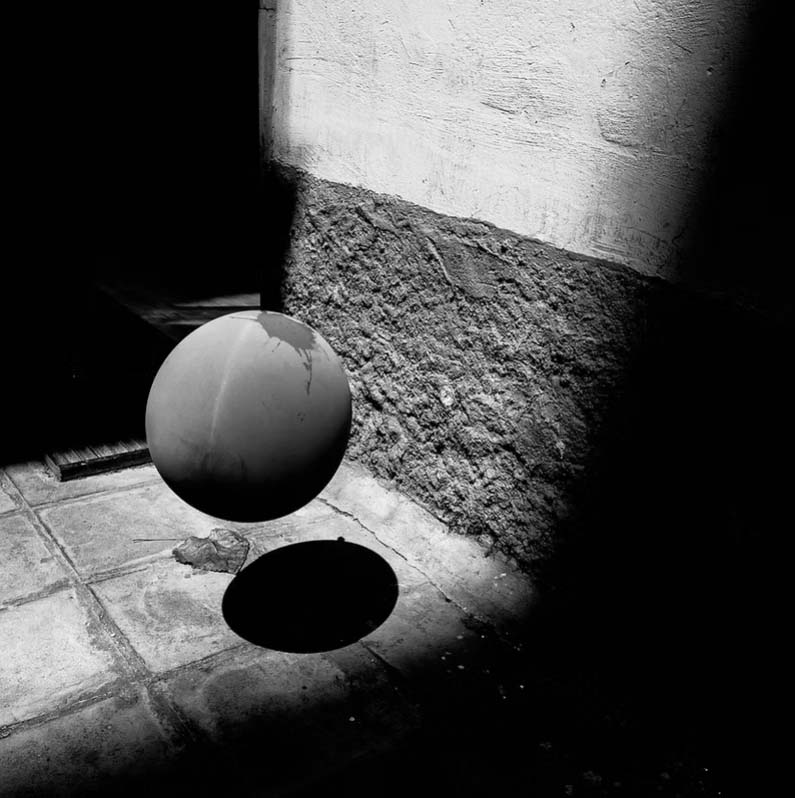
Sometimes even unknown forms would appear, born of the light, and disappear at once. Nothing in this world is more unsettling than something that is neither clear nor dark, neither sun nor shadow. Everything seemed both visible and hidden to them. Imprecise wonders, instantly scattered, would suddenly appear before their eyes. They wondered: “What have we seen?” Forms appeared where they expected only images. Elusive forms, merging and constantly changing. It was even impossible to name them. Improbable images, blurred gods… They advanced, unknowingly, into the valley of stupefaction