
CHIARA BENZI
Good morning, Chiara! Thank you for being here for this interview. To kick things off, could you share a little about yourself and how you began your journey in photography?
Hi! I’m Chiara Benzi, an Italian visual artist and photographer. I first approached photography in 2014 while exploring abandoned places in Emilia-Romagna with some friends. At the time, a friend’s boyfriend introduced me to the basics of photography through his camera. Soon after, another friend lent me his DSLR, and later that same year, I received my very first camera as a Christmas gift from my parents. Before that, my only experience with photography had been using a Kodak disposable camera.
Nowadays, my practice focuses on physical and digital manipulation of my own photographs and archival images, reflecting on the interaction and interpretation of the imaginary encountered in a personal manner, and oscillating between familiarity and alienation. My work has been exhibited in several group exhibitions around Italy and Europe. In 2021, I was selected as a FRESH EYES Talent by GUP Magazine and as one of “New Talents 2021” by Photographic Exploration Project. I currently work with organizations active in the field of music and performing arts.

It seems that your photography includes both analog techniques and digital manipulation of archival images. Could you please provide more details about your development process? A thorough explanation would be appreciated.
My practice is realized through physical and digital manipulation of my own photographs and archival images, reflecting on the interaction and interpretation of the imaginary encountered in a personal manner, and oscillating between familiarity and alienation.
My process often begins with a phase of study, research, reading, and listening, alongside the collection of visual material, which can include analog photographs, personal archives, found imagery, or fragments drawn from various archival sources. I approach these materials as something open and mutable, to be reactivated and reworked. From there, I move between analog and digital interventions. In the analog phase, I may physically alter prints through cutting, layering, re-photographing, or piercing the paper with tiny holes of light. In the digital phase, I further manipulate and rework the material using digital tools.
Have you received any formal education in photography, such as attending workshops or similar programs?
Yes, I do. I graduated in Drama, Art and Music Studies (DAMS) at the University of Bologna. Alongside I attended the Photography Centre Spazio Labo’ and continued my studies with a Master’s program at the Centro Sperimentale di Fotografia Adams in Rome. I also took part in PHOTOGRAPH-ER, a training project for photographers under 35 organized by Fotografia Europea.


Above and Below: a selection from Like a Knife in the Sun
What does photography represent for you?
For me, photography is a way of feeling, imagining, and dreaming. While it is my primary medium, I deeply embrace a multidisciplinary approach and transmedia storytelling. I love how photography, video, sound, and installation can intertwine, and I’m equally fascinated by music. For me, art has no boundaries, it is a fluid dialogue between different forms of expression.
Do you remember the first photograph or photographs you ever took?
Yes, I do. I remember taking my first self-portrait at the age of 10 with a Kodak disposable camera. I also photographed a fox in a pine forest and a ruined house along the Po River during an elementary school trip.
Could you tell us about the inspiration behind your body of work titled “Like a Knife in the Sun”? What were your initial goals for this project, and what processes did you follow?
“Like a Knife in the Sun” was curated by Francesco Rombaldi (Yogurt Magazine), and published by Yogurt Editions as part of the “Human Anthology”. The project is a radical experimentation that focuses on the point of contact between Eros and Thanatos, the convergence of love and death, the impossible desire for continuity and its inevitable disintegration, bringing out the dominant charm of eroticism.
I combined my own photographs with archival material, and sequencing played a crucial role in shaping rhythm and emotional intensity. I was interested in exploring that liminal zone between a burial, deadly and loss idea, and an idea of eroticism and sexuality, that common denominator between the celebration of life and its transitory and ephemeral condition. The work constructs a visual itinerary of the path to the pinnacle of pleasure that we, as human beings, can experience only with the grief of its loss, and consequently has to be shredded as this encounter is already dead.
Do you typically create your own sequences, or do you often collaborate with an editor or curator?

I usually create my own sequences, although sometimes I end up losing my mind in the process. Otherwise, I seek help from my partner, as well as a friend who is a talented graphic designer and educator. At times, I also work with editors and curators. For example, “Like a Knife in the Sun” was curated by Francesco Rombaldi (Yogurt Magazine), while “Endure” was reviewed by Ravi Ghosh, formerly deputy editor at the British Journal of Photography, and during a workshop on Transmedia Storytelling with Salvatore Vitale.
How would you characterize your photography style?
Definitely uncanny.
Could you share some insights about your series “Endure”?
“Endure” begins with the question: “How much can a body endure?” In this project, I explore our longings and fears projected onto nature and what our bodies can endure, starting with the physical body and then lifting off into a more oneiric space.
The work transcends our dysfunctional coexistence with nature, embracing a fantasy in which a woman becomes a dream, an animal, a plant… A woman returns to soil, returns to frailer form. Using photography, video, and sound, I aim to involve the viewer in a dreamlike voyage through the most hungry, lustful, disgusting, vulnerable part of myself speaking. At the same time, I seek a link between personal and collective, between introspection and connection, creating the ambiguity ratio, the double entendre, and the double meaning. “Endure” is an open reflection that draws from imagination as a favored tool of discovery and contamination in relationships between humans and the rest of the living beings.
Your work often features elements of nature. Do you consider nature to be a setting, a character, or maybe a reflection of our inner emotions?

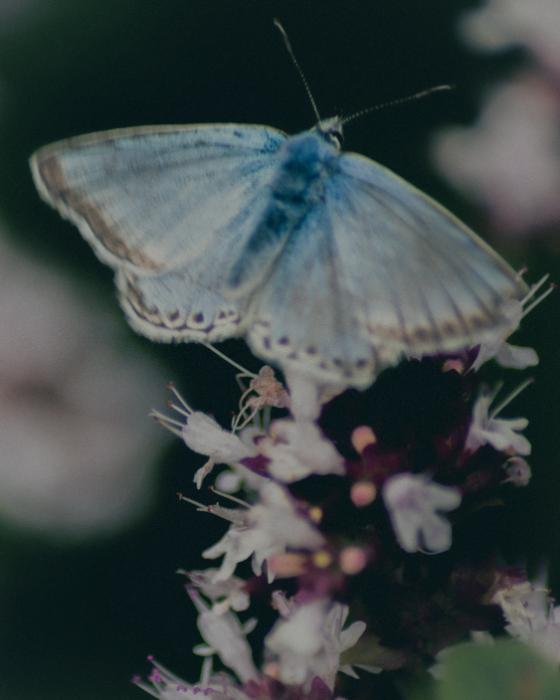
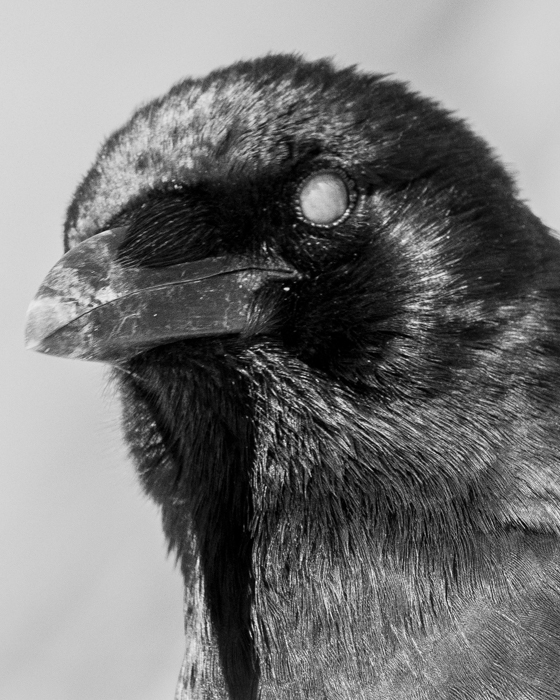
In my work, nature is not separate from the body or the psyche, it is deeply entangled with them. Rather than a setting, I see it as an active presence that can function as a character, a reflection of our inner states, and a space for exploring desire, vulnerability, fear, and transformation. This becomes particularly evident in “Endure”, where the images are highly tactile, depicting bodies under tension or constraint, the piercing eyes of reptiles, and insects with unsettling textures.
Could you share your approach to submitting your work to open calls, galleries, and editors as an emerging artist?
As an emerging artist, in the beginning I wasn’t entirely sure where to position my work or where it would resonate most effectively. Over time, I’ve become more selective, applying only to open calls that align with my practice, interests, and artistic intentions. The same goes for exhibitions and publications. I do not engage with galleries whose selection is based on exhibition fees rather than the quality of the work itself.
Are you planning to publish another book?
Yes, I’m currently working on an ongoing project that I envision naturally evolving into a book.
What tips do you have for young photographers or artists looking to begin their journey in photography?
Be passionate and obsessed with something, that is the starting point. Be open to discussing your ideas and sharing your work with the world, not just your niche in the art world, even if you fear exposure. Be faithful to yourself and to mystery.
Thank you again for participating in this interview, Chiara. It’s been a pleasure!
Thank you!
All Images © Chiara Benzi
(Above and Below: a selection from Endure)