
THOMAS VAN POPPEL
Please share some information about yourself and your journey into photography.
I am a 25-year-old photographer, originally from the Netherlands, and currently residing and working in Cologne, Germany. My journey into photography is quite amusing. After graduating high school, I found myself uncertain about my future and lacked a clear passion or direction. I attended several open days at various colleges, but none of the programs resonated with me. The application deadlines for most courses had passed for the following year, and I had planned to take a gap year. However, my mother discovered an open day at a film and photography academy and suggested that I attend. Although it was already mid-summer, I decided to join her and explore the opportunity. Upon entering the academy, I felt an immediate connection and realized that I wanted to become a photographer. I quickly gathered some photographs I had taken on a holiday a year prior using my father’s camera, and within a week, I submitted my application and was fortunate to be accepted. Thus, my formal journey in photography began at the academy. While many aspiring photographers typically start with a hobby before pursuing formal education or self-study, my path commenced directly at the academy, and I am truly grateful for this opportunity to develop my craft.
Do you have any formal education in photography, such as workshops or courses you’ve attended?
I began my educational journey with a four-year bachelor’s program at the Nederlandse Fotovakschool, a technically focused and commercially oriented academy in Rotterdam. During my time there, I acquired most of my fundamental technical skills. However, after a year and a half, I felt I had reached the limits of what I could learn at that institution and made the decision to discontinue my studies. Initially, my intention was to pursue a career as a commercial photographer. However, after attending an open day at an art academy, I realized that I wanted to further develop my artistic abilities in that environment. Consequently, I enrolled in a preparatory course at WDKA in Rotterdam for a few weeks, which enabled me to gain admission to The Royal Academy of Arts in The Hague, where I completed a four-year bachelor’s degree in Photography. During my time in The Hague, I deeply engaged in building, understanding, and developing my artistic practice.

Do you work exclusively with analog photography, or do you also use digital?
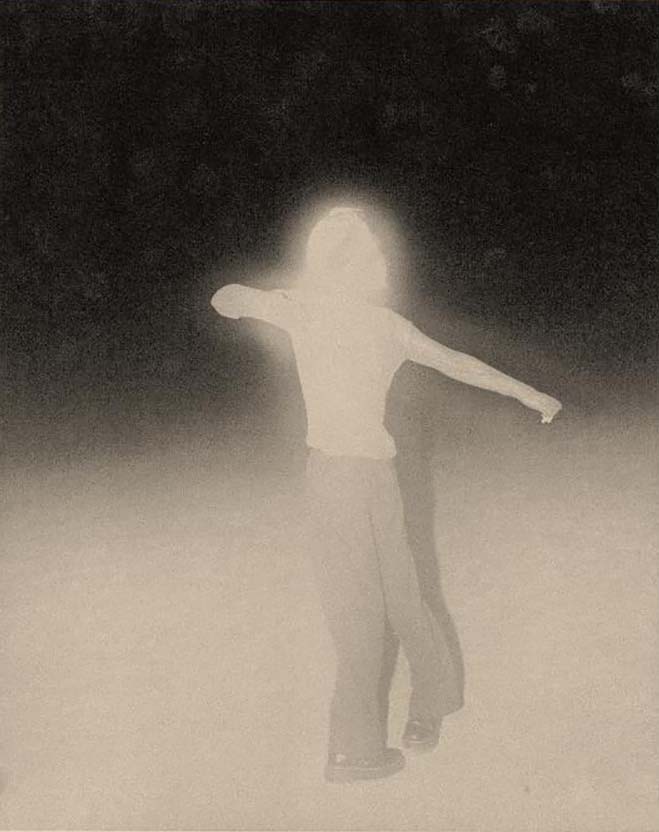
All of my photographs are in digital format. While I appreciate analogue photography and the meticulous process it involves, I have found that digital photography allows me greater freedom to experiment during shoots. I frequently employ experimental techniques, reflecting on my choices in real-time and capturing numerous images to discover that one perfect shot. This often involves a combination of techniques such as flashing, lens fog, overexposure, and dynamic movements from both the model and the environment, all of which must harmonize to create that singular image. I believe that the hesitation and constraints I would feel with analogue photography might be limiting, though I consider it a potential challenge worth exploring in the future. However, I do transform my digital files into tangible objects by printing them on various papers and materials, and I enjoy experimenting with different liquids, such as coffee, to stain and tone the images. This process introduces unique imperfections that contribute to their distinct look and feel. I prefer not to work solely with digital files; instead, I seek to bring my creations beyond screens and computers into physical forms that I can hold and touch—objects imbued with character and soul.
What significance does photography hold for you?
For a period, I found myself uncertain about my feelings toward photography. I experienced a continual oscillation akin to a love/hate relationship. I was increasingly captivated by the potential of video and music, particularly the interplay of sound with moving images, which I found exhilarating. However, I recognized that this attraction was more of a fleeting infatuation. Ultimately, I realized that photography is my true medium; it possesses a stillness and an endless quality that I find profoundly poetic. I can immerse myself in a single moment in time indefinitely, losing myself in its world. Photography allows one to appreciate every detail of something that existed only for a brief instant in reality. Unlike sound or moving images, it can also persist as a tangible object. I can touch, hold, and display it on my wall, giving it a physical presence. Additionally, it serves as a tool for both practical documentation and artistic expression, enabling the creation of something that transcends mere record-keeping.
Photography, by its very nature, compels one to approach it differently than other mediums. In drawing and painting, one builds from the ground up. In photography, we deconstruct reality, peeling away layers until we capture precisely what we desire within our frame, sometimes intentionally, and sometimes serendipitously. It represents a balance between control and relinquishing it. Much like an orchestra conductor or a film director, we direct, select, and present our version of reality. This understanding ultimately clarified for me that photography is my passion. It embodies a unique combination of chaos, control, serendipity, and order. This does not imply that I will exclusively use photography moving forward, nor that I will abandon other mediums; for me, the process is fluid. I continue to create soundscapes and occasionally combine them with my photographs to achieve a different or more immersive effect, similar to how I approach video. However, at its core, it has become increasingly evident that photography is what defines my identity as a creator.

Do you remember the first photograph(s) you ever took?
Although I do not recall my very first photograph, my father frequently carried video and photo cameras during my childhood. I have vivid memories of accompanying him on walks during holidays, capturing images of spiders in the bushes or sunsets in the mountains. These experiences, along with the holiday photographs, marked my initial engagement with photography and the art of image creation. Reflecting on those moments is enjoyable; I never imagined as a young boy that I would eventually become a photographer. It is amusing how life unfolds in unexpected ways.
Do you develop your own sequences, or do you collaborate with an editor or curator?
During my tenure at KABK, all of my projects and work were consistently curated with the assistance of my peers and instructors. Currently, the approach varies depending on the context. For instance, I handle the curation for my personal social media and certain projects independently. However, I am eagerly looking forward to collaborating with a talented curator for my upcoming exhibition at Narander Art Experience, where we will work together to design the space and select the photographs. I believe that, regardless of one’s visual training, there is an inherent bias when evaluating one’s own work. Engaging with fresh perspectives is always enlightening and valuable. There have been numerous occasions when someone has pointed out aspects of my work that I had not recognized, providing new insights into how viewers may interpret a photograph. Therefore, whenever possible, I prefer to collaborate with others, as this approach invariably results in a more refined outcome than if I were to curate everything solo.
Could you describe your photography style?
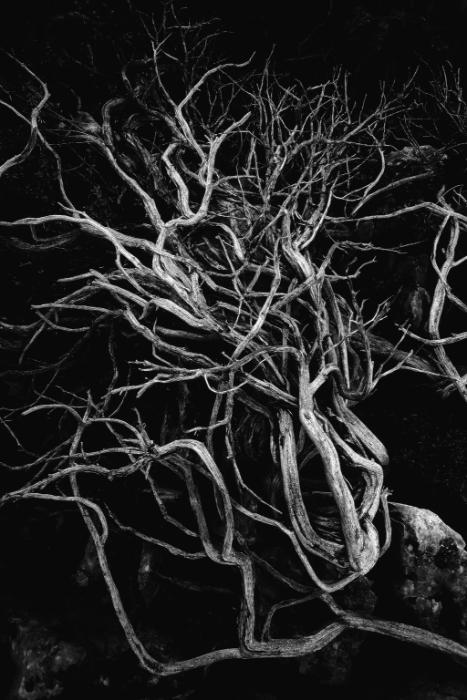
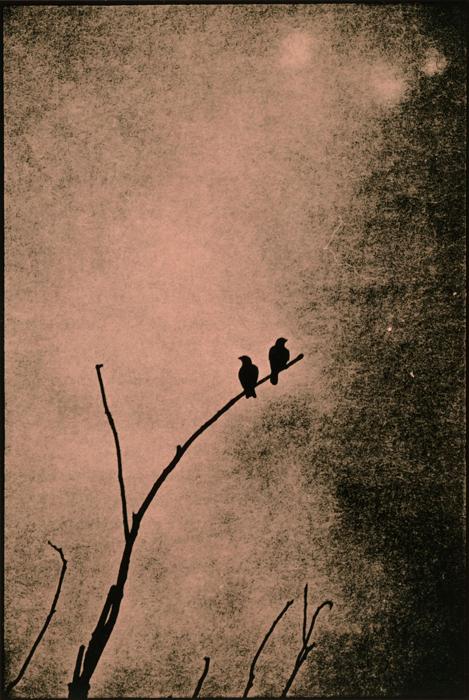
In my work, I strive to create dreamlike landscapes that evoke both familiarity and unfamiliarity. I capture minimalistic scenes that convey a sense of stillness and infinity. The individuals in my photographs exist in a delicate balance between an ethereal harmony of anonymity and a sense of familiarity, characterized by visualized auras that connect them to their natural surroundings. Within these expansive spaces, I aim to provide my audience with an opportunity to wonder, feel, connect, reminisce, and interpret. The materiality and imperfections present in my work contribute to a unique rawness that is integral to my style. The images transcend their existence as mere files, transforming into tangible objects that can be touched and felt—entities that belong to this universe and possess a physical presence. They have a beginning and an end, existing in their own right, which imbues them with a sense of life.


You indicated that all your photos are digital. Could you please share with us the complete process of converting them into physical prints? I assume that everything begins with a digital negative.
I strive to achieve my desired outcome while shooting, although some minor editing is inevitably involved. I capture images in RAW format, and since the camera preview is in monochrome, I have a clear idea of the final result. Once I import the images to my laptop, I reduce the dynamic range to enhance contrast and achieve a distinct look and feel. I then apply a subtle amount of grain, preparing the image for printing. I am fortunate to have an inkjet photo printer at home, allowing me to produce prints directly at my desk. Since these are black and white images, there is no need for color correction. I have conducted numerous tests on various types of paper; typically, I print on either thin newspaper or standard paper, which I then stain with tea or coffee. For larger fabric prints, I rely on printing workshops to produce them for me. For my last exhibition, I submitted scans with warm tones for printing, which was quite successful. For the upcoming exhibition, I have ordered all my prints on large linen fabrics in black and white, which I will individually stain with coffee. I hope this approach will lend a more authentic and unique quality to the larger fabric prints, as the color imperfections should enhance the overall aesthetic of the works.
Your photographs possess a beautiful, dream-like quality. What significance do these visual elements hold for you?
To me, they symbolize something beautiful that is often overlooked and forgotten—a raw connection to life and our surroundings that seems to have diminished. I experience a sense of nostalgia for a time before the digital age, when I was a child fully immersed in my environment, free from distractions. These images embody that stillness and pure connection, yet I encourage viewers to derive their own interpretations from my work. I am genuinely interested in understanding the impact my art has on individuals independently, without any accompanying explanation. It is remarkable to witness how my work can evoke different meanings and emotions for others, whether it be grief, love, or a specific memory. I have even had people share that they experienced a dream resembling one of my photographs, which I find profoundly meaningful.

It appears that your images function more effectively on their own rather than as part of a cohesive collection. Is this intended?
Due to my experiences in both academia and the art world, I have become well-acquainted with the notion that artists typically engage in project-based work. After graduating, I recognized that this approach often restricts my ability to create purely from a place of joy and intuition. When I shift my focus to projects, I tend to develop concepts that my work must conform to, prioritizing how a body of work communicates a narrative to my audience over how an image resonates with me personally.
Currently, I strive to work more closely and with greater integrity to my overarching artistic ideology. This allows me to maintain a conceptual framework while also leaving my work open to audience interpretation, enabling me to explore individually how an image impacts me emotionally. I find it profoundly rewarding to allow my work to speak for itself, inviting viewers to derive their own meanings and narratives from it.
I now create continuously, gradually developing my work without the constraints of a deadline or a fixed concept. To me, this represents the purest form of art. However, I want to emphasize that there is no definitive better or worse approach. This method resonates with me, at least for the time being. In the future, I may reconsider this and embark on a distinct project. To fellow artists, I encourage you not to create concepts merely out of obligation, but rather out of desire. This approach allows you to remain true to your integrity and produce something genuine and beautiful.
Could you please describe your approach to submitting work to open calls, galleries, and editors as an emerging artist?
I have not yet extensively engaged in submitting work to open calls. After graduating, I took a break from creating art to reflect on what motivates me outside of an academic setting. I began producing work more intuitively and have recently discovered an approach that resonates with me. I started sharing my work on Instagram just a few months ago, and since then, I have been fortunate to encounter numerous opportunities. I make an effort to follow mailing lists and accounts that share open calls for photographers, as well as to connect with friends who are aware of available openings. However, I still consider myself a novice and aim to develop a more refined workflow for creating new opportunities in the future. My advice is to stay informed about which opportunities and open calls merit your efforts, and to observe when specific galleries, magazines, blogs, and awards accept work in styles similar to your own. Additionally, building a network within your niche is essential for recognizing the opportunities available to you. I have noticed that I am gradually integrating into my niche, observing that many artists I admire, who share similar styles or interests, follow the same individuals, galleries, art spaces, magazines, and blogs. Therefore, establishing yourself within your niche network is crucial for identifying potential opportunities.
Are there any plans to publish a book?
This is an interesting inquiry. I am deeply engaged in bookmaking, dedicating considerable time at the academy to designing and binding various types of photography books. While I do not have specific plans to create one at this moment, I envision myself producing some form of publication in the near future. I enjoy the process of handcrafting books, but I also find it intriguing to consider the challenge of producing a photo book on a larger scale than what is feasible by hand. This is certainly a thought worth contemplating.


What recommendations would you offer to emerging photographers or artists interested in beginning their journey in photography?
My primary recommendation to emerging artists is to discover their intuitive core. Consider what you create when no one is observing, when your work may never be seen by others. Identify that initial spark and joy within your practice—what inspires you to continue creating and producing more. Safeguard that essence, and frequently remind yourself of it, making it a central element of your artistic journey. When you embrace the purest form of joy in your creative process, nothing can hinder your progress; it becomes untouchable.
Thank you for taking the time to take this interview!
Thank you!
All Images © Thomas Van Poppel
All Images © Thomas Van Poppel