TOBY LAMBORN
Welcome to Lucida, Toby! Thank you for joining us for this interview. To begin, could you share a little about yourself and how you started your journey in photography?
My way into photography was through riding and documenting BMX. Riding a bike became a way to reinterpret the everyday spaces around me, where, depending on your creativity and influences, everything you walked past had the opportunity for a trick to be performed on it. It seems this way of seeing the world explains why a lot of photographers come from a skateboarding or BMX background. When my interest for photography grew and I eventually dove into researching the artists that would go on to influence me, the same rush to the head of realizing the potential of everyday space began to occur. My photographs then led to include less bikes and instead a variety of different spaces and subject matter.
Do you remember the very first photograph or photos you ever took?
I distinctly remember my Mum giving me a disposable camera to use on a school trip to the Isle of Wight when I was about 10 years of age. Not only this but I can still think back to flicking through the prints after we had the photos developed!

Have you received any formal education in photography, such as attending workshops or similar programs?
I studied photography at Sixth Form but did not pursue it much further than that, instead I enrolled for Media & Communications at University of Sussex. Apart from the one elective module where I studied photography for a term, my course mainly focused on studies around “the everyday”. Whether it was technologies or behaviors, a lot of my research and essay writing utilized influences from sociology and philosophy to explore case studies of modern circumstances and habits. Although not photography based, this course was really instructive on my practice especially as I use research as a launching pad for a lot of my personal projects.
Do you work exclusively with analog photography, or do you also use digital? If you focus on analog, could you share your development process? For instance, do you develop your own film and print in a darkroom?
I was shooting film up until a couple of years ago. Whilst shooting film I was developing it, hanging it to dry as well as shedding the odd tears over dropping rolls on the floor, all in my bathroom. Then I would go to my local dark room to process the images. I attended one workshop on how to print in the dark room and after that I had just enough knowledge to get by and mess around. This process helped me produce my body of work “Silly” which I made in collaboration with my friend and writer Oliver Rimmer. The work centered around local folktales, so this longer and more tactile process of producing images by hand seemed to mimic the messy process of storytelling.
After this project, I have since mainly shot digital. I think what differs with these two processes, especially because of the DIY nature I would develop film through, is that digital verges on feeling “too perfect”. So, a big part of getting used to producing work through this medium was to find failures and imperfections in different ways. To get to know what does or doesn’t work for the camera and push for more accidents to happen. Where with film, it seemed these accidents would occur more organically.

How would you describe your approach to photography?
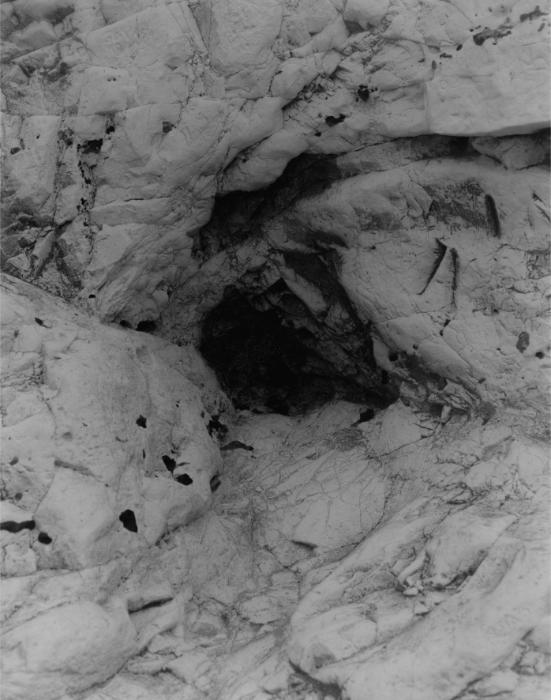
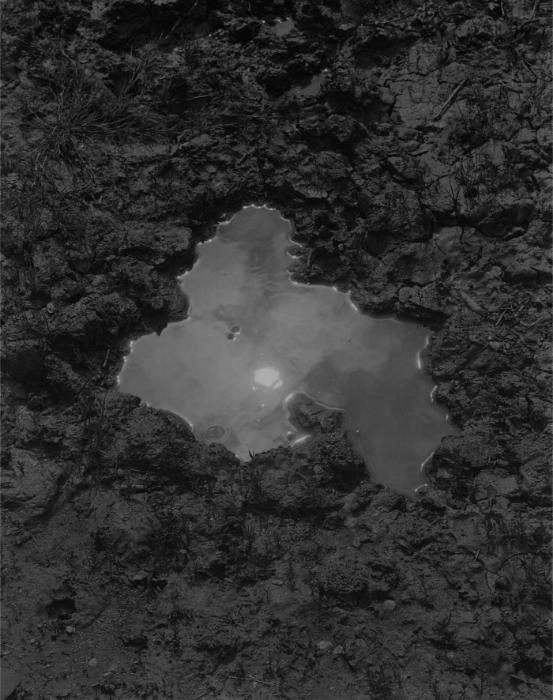
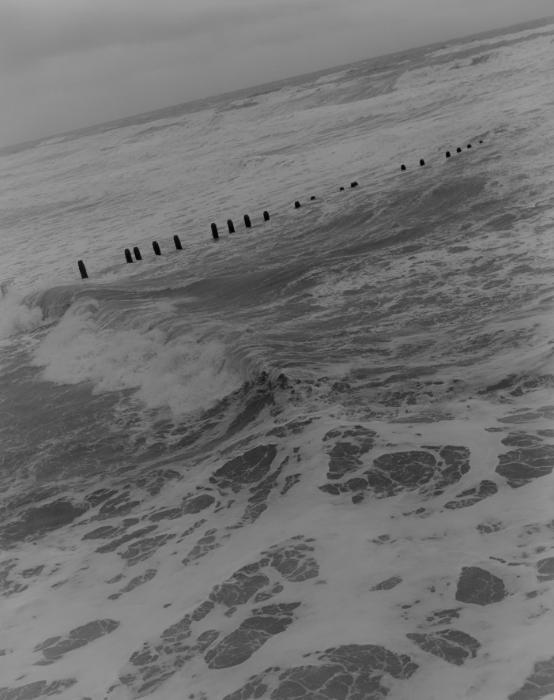
That’s a hard question! I suppose I would describe it as “hazy”. I like to, whether through the image making process or the sequencing, abstract the subject matter and the themes I’m working with. However, the way I shoot tends to never truly feel abstract. Instead, a heightened version of the real spaces.
Could you tell me about the inspiration behind your project “Silly”? What were your initial intentions or objectives for this work? What methods did you use during the process?
The title “Silly” originates from the word “Saelig”, the Old English word for blessed. This project consisted of me and writer Oliver Rimmer walking to and documenting the settings of local folk tales and stories. Through researching and getting in touch with experts, we built a body of work around the intersection of own perceptions of these spaces and the re-telling of the stories themselves. Folk tales continue to be told as they are amazing at molding themselves around the present, so we thought of our work as a continuation of this tradition.
Living in Brighton, we are lucky to have amazing photography festivals such as Photo Fringe as accessible ways to exhibit no matter what experience you have previously. So, we set the goal of putting together a show to be a part of Fringe as an opportunity to tie together my photographs and Oliver’s writing. Focusing on the local tale “The Knucker”, a serpent like beast that dwells in bottomless pools of water, we used this story to create a thread to curate Oliver’s prose and poetry alongside my photographs through. Famously having no single definition on its appearance, the exhibition as a whole encouraged viewers to picture the Knucker for themselves so that the tale could be influenced by their own emotional experiences and create revitalized re-tellings.

Do you come up with your own sequences, or do you work with an editor or curator for help?
I tend to sequence my own work. It’s become a part of my practice I really enjoy! I think Instagram is a fun way to mess around with sequencing as it offers a lower stake environment to try and align different types of images together.
Could you share some details about your series “The Shimmer”?
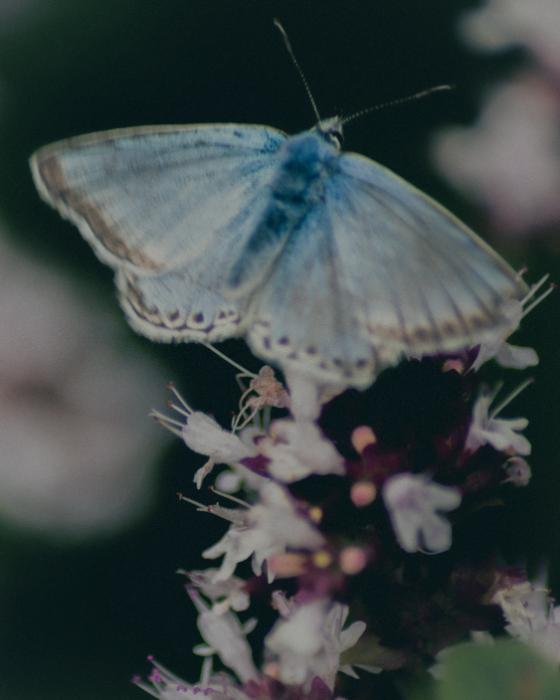
This project actually led on from “Silly”. When exhibiting the work, visitors would come up to us and trade knowledge on the folktales they knew. When I was invigilating one day, a man came up to me and asked whether I knew that the local hills, The South Downs, “used to be blue”? He added with saying that the hills would shimmer blue thanks to the Downs’ vast blue butterfly populations but curtailed this fact by saying that this event hasn’t been seen for about 100 years.
This was the foundation of the project, from this word of mouth tale I then started to explore the South Downs to make sense of this phenomenon. From there I attempted to piece together what I imagined it looking and feeling like alongside exploring the grief of this spectacle being lost. I later began researching the Shimmer to find out how it disappeared, later to find out that it not only did exist but disappeared due to poor management of the land. Evidence of a long and disruptive attitude to the landscape that caused the displacement of butterfly and humans alike. So not only does the project explore the phenomena of the Shimmer but also how it’s disappearance is tied closely to attitudes towards ecology.
All hope was not lost for the Shimmer however, briefly re-appearing in 2012, it shows the local landscape still contains hope for the future despite its mistreatment. It is near this last siting of the Shimmer where I will be exhibiting this project. Come July 17th, I’ll be showing this body of work at The Seven Sisters Visitors Centre. Not only does this coincide with the start of this years official butterfly count but this also ties in with the efforts in land management the centre are doing to increase butterfly populations in the area. So if you come along, who knows, you may be able to see the hills turn blue for yourself!
What does photography mean to you personally?
I think photography is a way to explore curiosities and scratch itches in my brain that are personal to me. I tend to be a big over thinker, so I find photography and pursuing projects as a way to utilise this habit in a healthy way. For instance, whether it’s research, sequencing or shooting, by constantly mulling these over I’m often thinking of new angles or perspectives to introduce into the projects I’m working on. It’s also really gratifying seeing how your perception of the subject matter changes when you’ve worked on a project for a long time. The world opens up to you, everything from the empty space in a crack in the floor to a wrinkle in a person’s face becomes full to the brim with stories and meanings.

Could you share your approach as an emerging artist when it comes to submitting your work to open calls, galleries, and editors?
I’ve found, in an effort to take the pressure off of the process, that re-jigging projects for different open calls act a good excuse to test the limits of the work. For instance, a different themed open call may ask for a slightly different sequenced edit. Therefore, offering the potential to find new connections between images you hadn’t thought of before, as well opening your photographs to new themes you hadn’t thought they could represent. Considering the competition of open calls and the cost of them, not all of them feel viable. So, this at least helps to take the pressure off of the process and find new meanings in the work for myself. Therefore, letting the project grow that little bit more in directions I wouldn’t have uncovered if I hadn’t engaged in the application process.
Are you thinking about publishing a book soon?
Yes, I am! I’ve recently published my project “The Shimmer” with the brilliant Bracken Books. Copies are currently available and all are hand made in their Hasting’s studio.
What tips do you have for young photographers or artists looking to begin their journey in photography?
Just enjoy diving in! It’s a large and expansive world so enjoy finding new photographers to be inspired by. Messing up and failing is all part of the process. Whether it’s ruining a roll of film or editing a photo which didn’t come out as you hoped are all aspects you get used to. Sometimes these mistakes produce your best images, where you sometimes just need to give the work a bit of time to fully realize its potential
Thank you for participating in this interview, Toby.
It’s been a pleasure!
All Images © Toby Lamborn