ANTONIO ROSATO
Can you tell us a bit about yourself and how you got started in photography?
My name is Antonio Rosato, and I was born 42 years ago in Salento, but I’ve lived in Umbria for 15 years, where I live with my husband. I studied Chemistry and Pharmaceutical Technologies and have always worked in color formulation and product development for cosmetics companies. Throughout this time, I’ve never neglected artistic experimentation, a passion I’ve nurtured since adolescence, especially in photography and the visual and sound arts. In 2024, I decided to dedicate myself professionally to photography. To do so, I left my job as a researcher and developer for companies and chose to work part-time as a pharmacist, giving myself more time to consistently focus on my artistic projects in photography.
Do you have any formal photography education? any workshops you attended and so on.
No, my photographic training is the result of a completely self-taught process that developed over time through the study of manuals and empirical experimentation.
Do you shoot only analog or digital as well? if analog, what is your development process (do you develop your own films? do you print in the darkroom, etc)? try to be as detailed as possible.
My focus is on analog film, and my photographic research focuses on 35mm and instant film; the cameras I use are a Pentax K1000, a Canon FTb QL, and a Polaroid Now Camera. Sometimes I enjoy cooking rolls of film into film soup. As for developing, I don’t do it myself, but I scan the negatives at home.
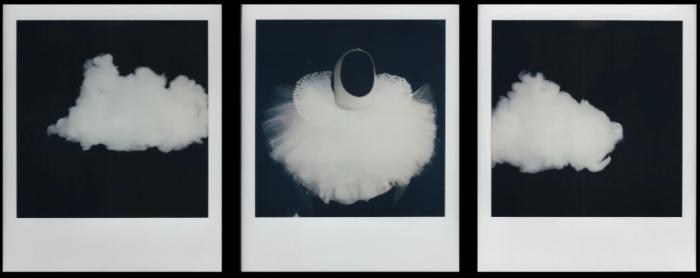
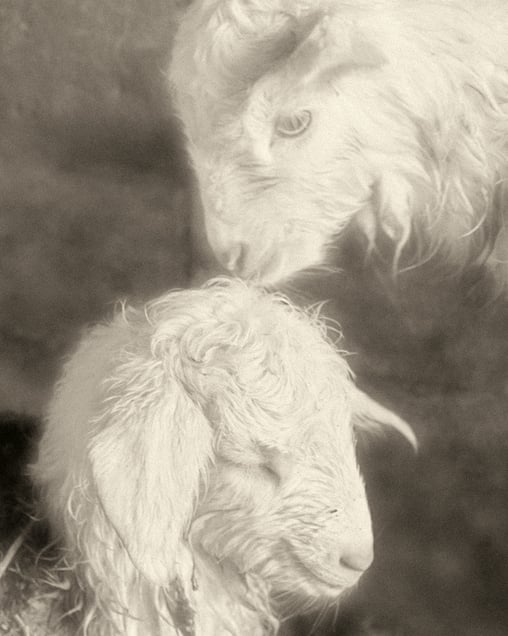
Above: a selection from Zeno
What does photography mean to you?
For me, it’s always been natural to associate thoughts, moods, and concepts with images and sounds. In my life, for personal reasons, I’ve always gotten lost in this sea of suggestions, and in photography I’ve found the most suitable means of expression for what I want to tell and how I want to tell it. Precisely for this reason, there’s a strong personal element in all my work and in the message I want to convey; photography allows me to explore my being and my journey, what happens around me and the feelings it evokes. Photography is therefore a medium that allows me to communicate with myself, posing universal questions for thought to anyone who wishes to approach it.
Do you have a recollection of the first photograph(s) you ever took?
I grew up in a family where photography was also used for entertainment: I remember that when I was little, my aunts and I would often take pictures of ourselves by setting up improbable sets; perhaps this is why the use of Polaroids and 35mm cameras has always been so familiar to me. I don’t remember exactly what the first photograph I took was because the camera has always been a constant in my life.
Do you create your own sequences or do you seek the help of an editor/curator?
I create my own sequences, and I believe this is one of the fundamental phases, where I flesh out the idea I want to convey. For me, storytelling is the core of the creative process; each of my projects stems from an idea or reflection that is explored in written form and then embodied in the images I shoot. If, however, I start with a few images already taken, I try to sequence them in such a way that the choice itself represents the intention to visually convey what I want to convey.
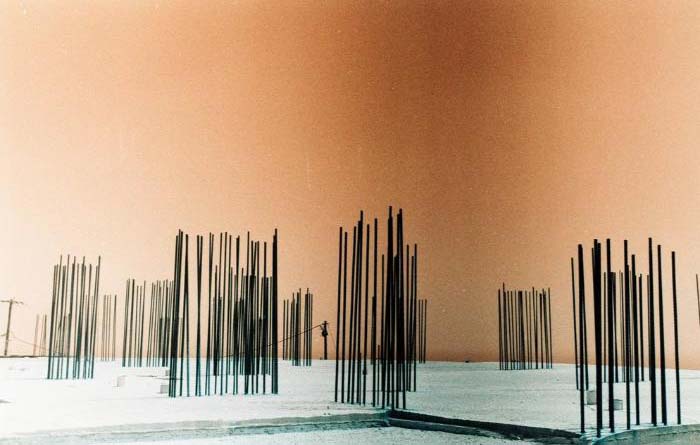
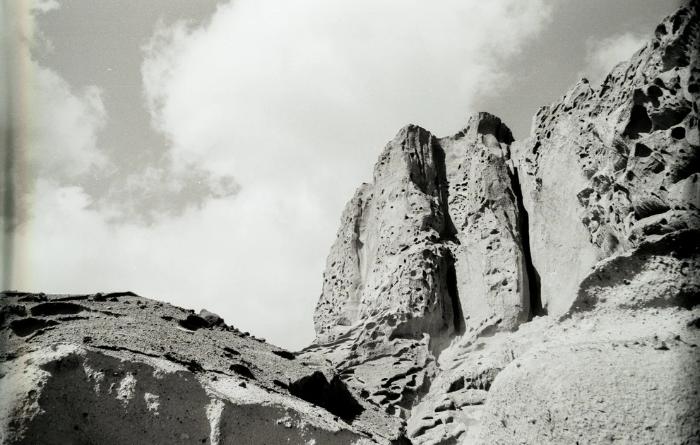
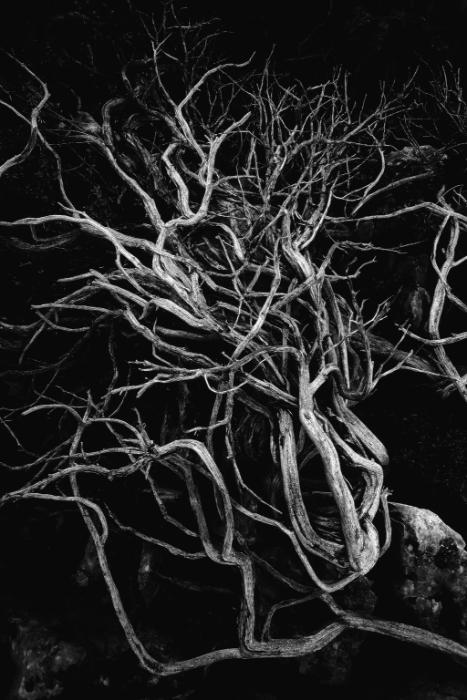
Above and below: a selection from I am not Here
Can you tell us how you came up with the idea for the I am not Here series? I understand it will also be published as a photobook. can you share more details?
I AM NOT HERE is a reflection on the state of detachment, not physical but mental, from our surroundings. I believe we’ve all experienced moments in our lives where we become locked in a kind of inertia, forced to carry out our daily activities, adrift from ourselves.
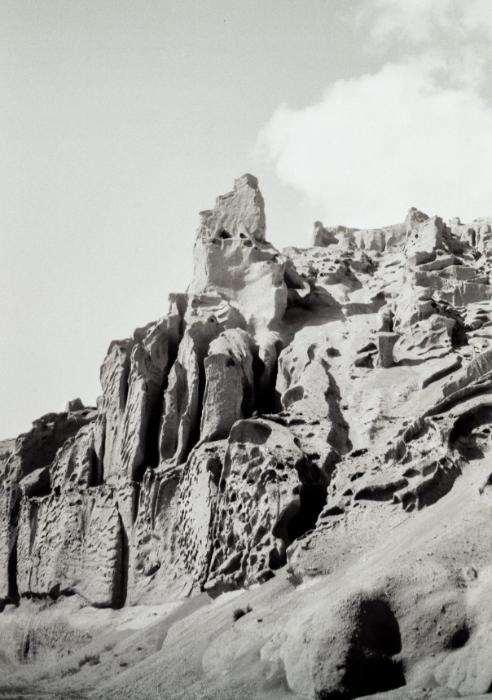
The project aims to reflect on this emotional detachment, represented by the first-person perspective with internal focus, a narrative technique in which the camera adopts the perspective of a single character.
I deliberately chose to set the project in settings that would allow me to transfigure the moods I wanted to convey into images; these are mostly solitary landscapes that somehow reflect a sense of alienation. I also chose to use film that further emphasizes these atmospheres, creating visual blocks that shift the narrative to different levels.
I’m working on the I AM NOT HERE photobook; currently, as I did for USSARO, I’m studying the design to make it appropriate for the concept and the choice of materials. As usual, my idea here is to create not just a photo book but an object that is in itself linked to the reflective experience I’m trying to propose.
Can you tell us more about your Achronic Symbiosis series (processes, etc)?
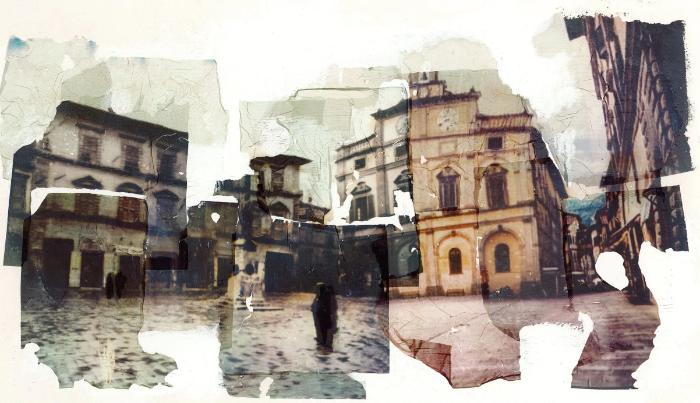
Achronic Symbiosis is a very important project for me because it was the first one I attempted to make a name for myself in photography. It’s a project heavily based on technical research and required extensive testing of material compatibility. It depicts three locations in Città di Castello, the city where I live, portrayed in the past and present, brought together in a single gaze. The cities we inhabit are familiar and well-known places that both reveal and conceal the connection between past and present. It’s clear that today could not exist if it hadn’t
existed yesterday; however, the past has no other way of revealing itself than in the form of the present. All reality, if looked at carefully, presents itself as an achronic symbiosis: every place exists as we see it; however, if we can see it as it appears today, it’s only because the same place was seen yesterday. In this project, I presented three locations in Città di Castello: Piazza Matteotti, Via San Florido, and Porta San Giacomo in three images created by blending vintage photos and contemporary snapshots. Thus, I made the work of time and humanity visible in the urban fabric.
I wanted to interpret the passage of time with a mixed technique, in which layers of paper, gesso, and photographic film are superimposed using emulsion lift. The use of Polaroids seemed suitable for this purpose, once I had grasped the idea of representing city locations as a metaphor for the passage of time.
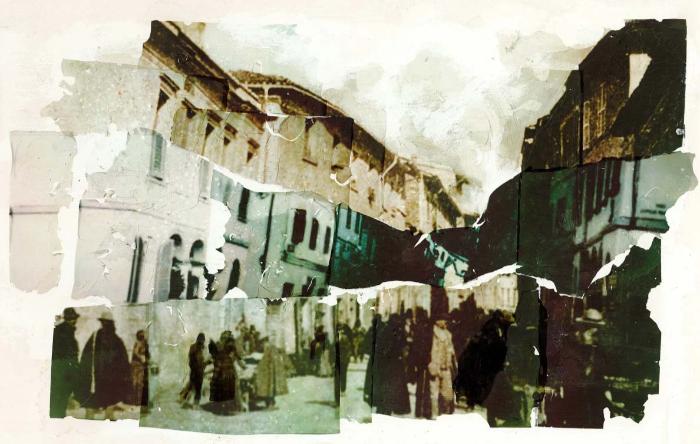
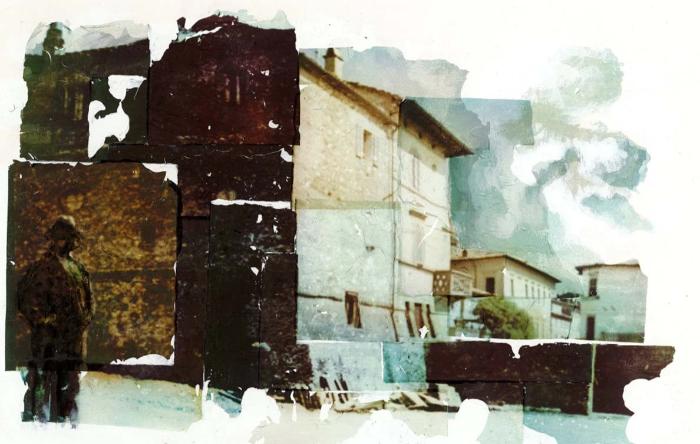
Above: a selection from Achronic Symbiosis
The project began in December 2023 with the selection of archival photographs depicting city locations with a perspective I could replicate today; the next step was to photograph the same locations. I studied each pair of photos to match perspectives, voids and solids, protrusions and recesses, light and shadow, and colors. I obtained a digital image by merging the two photos to recreate architectural continuity; I then created the support with a plywood base, watercolor paper, and acrylic base; I printed the Polaroids; finally, using emulsion lift, I transferred the images to the support. Each finished panel consists of 20-26 layers of Polaroids applied with a brush and overlaid with other layers or gesso. The project was completed in July 2024.
Can you share the story behind your body of work Ussaro? What was your original intention or goals for the project? What were your processes?
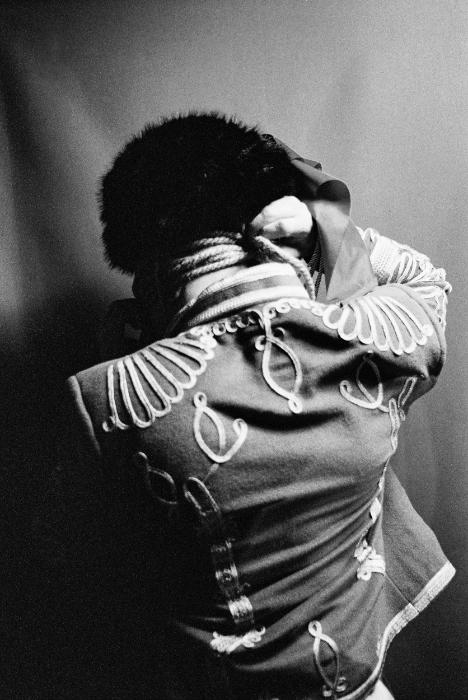
USSARO was born from the need to express my own intimate feelings and share them with others as food for thought. It’s not always easy to feel free: USSARO represents the desire to free ourselves from all those intimate, social, and moral situations we encounter throughout life, situations with which we sometimes have to compromise or even endure.
We are in a historical moment in which we risk being influenced in various ways: we have so much stimulation, but we lack solid points of reference, and this can lead to a sense of emptiness. In this situation, it’s necessary to know and embrace our own essence and our own path, to be honest, not to care about judgments: only in this way can we live, not survive.
USSARO aims to represent the life journey of each of us, a journey that passes through personal experience to reach full self-awareness, for better or for worse.
USSARO was immediately conceived as a photo book; the initial phase was the storytelling, to which I wanted to give a timeless aesthetic to make the experience as universal as possible, uncategorizable. I then chose the character and the symbols, imagining their appearance and placing them in various settings. Next, I searched Umbria, Tuscany, and Marche for the locations best suited to represent the concepts I had in mind, where I took most of the photographs (some of which required special permission); other photos were taken in the studio.
The next phase was the selection of the photographs, favoring those with the most powerful allegorical meaning; after that, I began self-publishing the book.
This phase lasted just over a year.
Ussaro has also been published as a limited-edition handmade book? can you share your self-publishing experience? (difficulties, etc).
USSARO was self-produced in five numbered copies. I developed the book’s design after writing the storytelling and choosing the costumes; the packaging itself also contains elements from the photos. The act of removing the book from the bag, freeing it from the string, evokes the essence of the project; the binding and the choice of cover color recall the character’s jacket.
I then chose a type of paper that would enhance the sensorial aspect, printing the photos in fine art with an inkjet printer. It was at this stage that I encountered the biggest challenges, partly due to the fact that it was my first time creating a photo book; it wasn’t easy for me to find a lab that could print on the type of paper I had chosen. Regarding the binding, I was supported and assisted by a very patient craftswoman; the final choice of materials was made after carrying out compatibility tests, and I must say that this phase, with its challenges, taught me some lessons I will be able to apply to future projects.
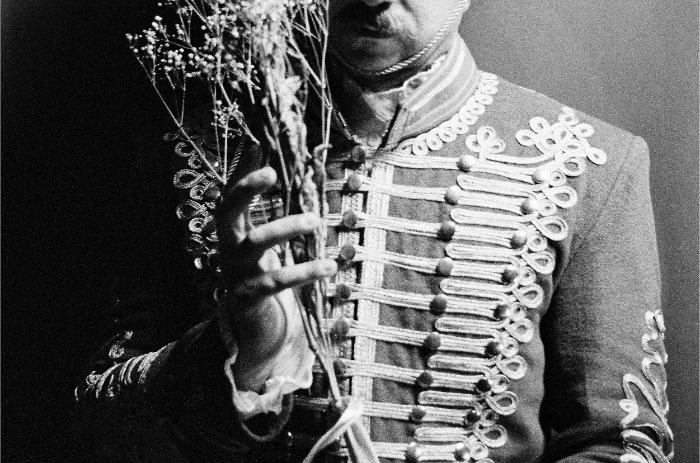
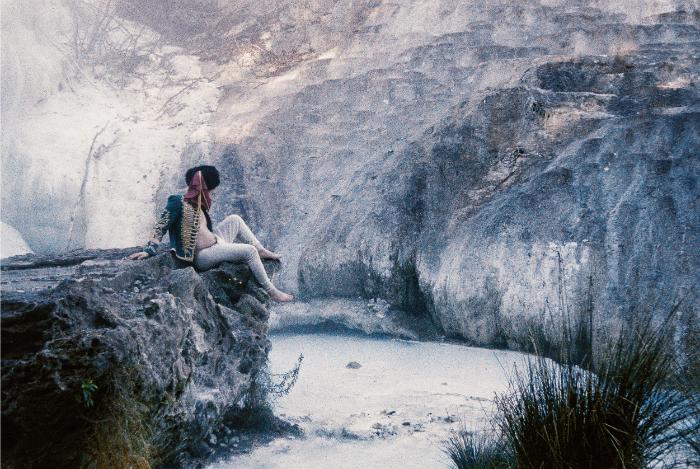
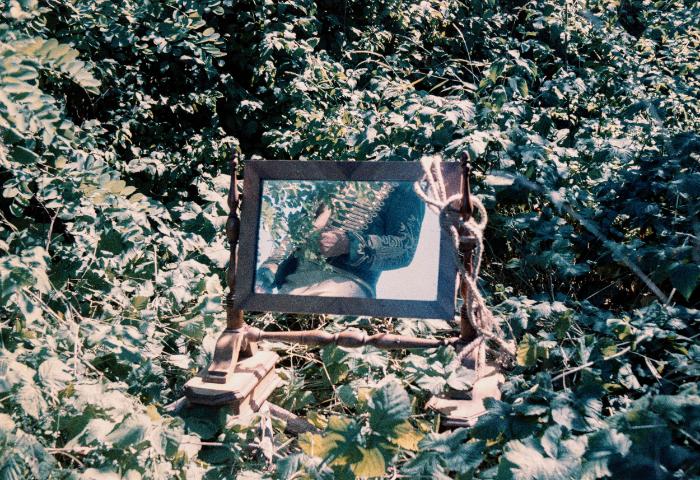
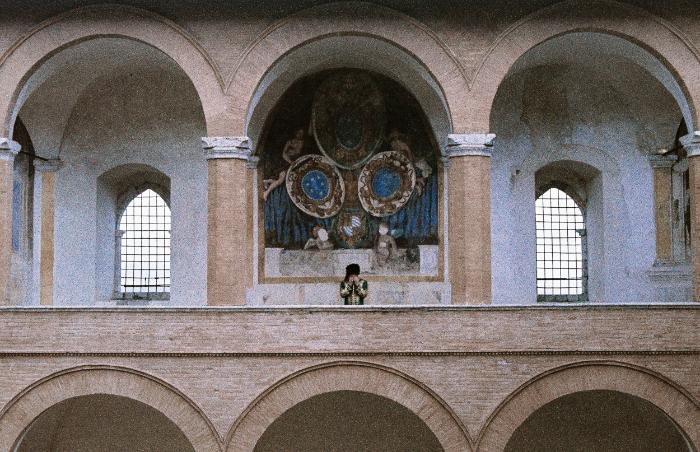
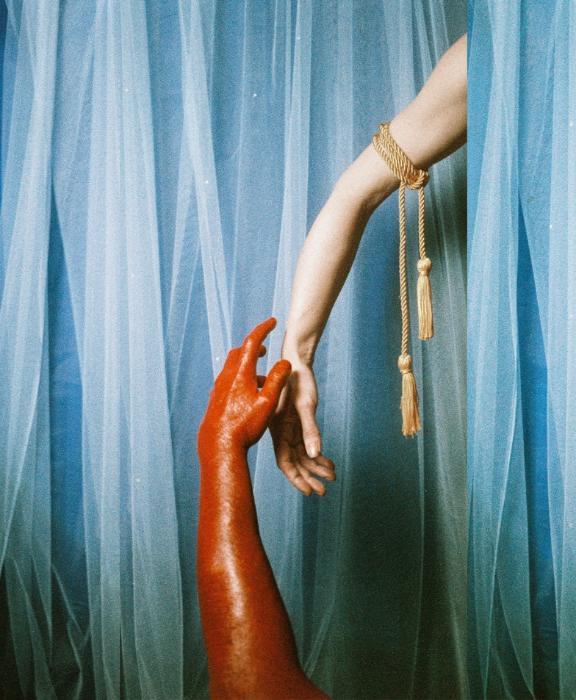
Above: a selection from Ussaro
What advice would you give to younger photographers or artists who would like to get started in photography?
Never stop experimenting and finding your own path, regardless of judgments.
Thank you for participating in this interview!
Thank you! My pleasure!
All Images © Antonio Rosato