
CARLOTTA VALENTE
Could you share a little about your background and what inspired you to begin your journey in photography?
I started working with photography when I was very young, in high school, thanks to a teacher who was deeply passionate about the medium and who basically “forced” us to produce all the photographic material we needed for our graphic design assignments ourselves (I was studying at an art high school, in the graphic design and advertising track).
He was also very involved in darkroom practice, and he used to tell us how, when he was younger, he kept his photographic chemicals under his bed (something I would strongly advise against doing now). From that moment on, I discovered a world that I never left.
I think part of the reason is that I have always had a difficult relationship with time — I have always been chronically late, and at the same time an unrealistic planner of impossible schedules. Photography, and in particular analog photography, allows me to give time a different kind of value.

Nowadays my research focuses on the exploration and experimentation of historical photographic printing processes. Through a practice that merges analog techniques with contemporary visual languages, I investigate the expressive potential of photography conceived as a material object—capable of conveying a physical and sensitive presence.
My work examines the relationship between photography and memory, emphasizing the material value of the print in an era dominated by fleeting and easily forgotten digital images. My series act as instruments of resistance against oblivion, where time and matter become essential elements of visual storytelling.
In 2021, I co-founded Studio Bayard, an independent space dedicated to photographic research and production, with a particular focus on historical and experimental processes. Within the studio, I develop my own artistic practice and collaborate with other artists on various projects.
Have you received any formal education in photography, such as attending workshops or similar programs?
Yes, I studied photography at a photography school, the Scuola Romana di Fotografia, which no longer exists. At the time I chose it because it offered a proper three-year darkroom master program, where I met my first teachers: Roberto Properzi and Antonella D’Onorio De Meo.
After that, I tried to attend as many workshops as possible across Europe, which allowed me to meet many professionals and researchers working with historical photographic processes.
It seems like your photography leans heavily towards the analog side. Would you mind sharing how you first got into darkroom techniques, including the methods you use and any tips you might have?
My practice is based on analog printing, but I also like to hybridize it with contemporary materials and processes in my research. This is because photography, beyond being a language or an expressive form, is also a technology. It is perhaps the first widely distributed art form that relies so heavily on technological progress and the use of machines.
Because of this, I like to think that today it is still possible to discover something new within processes that were originally developed and used for a relatively short period of time in the first half of the nineteenth century. Or, more simply, to make them more accessible, or more practical to use.
I started with classic silver gelatin development and printing, and gradually added more and more processes to my knowledge base: cyanotype, salt printing, kallitype (and its variations), platinum-palladium, carbon printing, wet plate collodion, albumen, anthotype, daguerreotype… in short, by constantly going backwards in my research into photographic processes, at some point I will probably have to start painting.
Do you incorporate any digital elements into your photography?
As I mentioned, I really like hybridizing historical photographic printing processes with contemporary tools, including digital photography and digital printing. One simple example is the use of digital negatives (or positives), a process that allows any digital file to be translated into an analog print.
This also makes it possible to bypass many of the technical limitations tied to specific historical processes, such as issues of contrast, sensitivity, or logistical constraints linked to materials and exposure conditions.


Above: a selection from Studies on Abstraction
How do you define photography in your life?
I like to think of photography as a way for anyone to leave traces behind, even small ones. When I make photographs, I try to think of those traces as something that will eventually take on a life of their own. It is a kind of strange anticipatory grief, but without the pain of absence.
Photography is a unique medium because it always starts from reality: from what the photographer had directly in front of the lens at the exact moment the shutter was opened. There is something almost paradoxical in this. It originates from something that was truly present, and yet from that moment on it immediately begins to transform. I like to think of it as a kind of illusion of eternity, which nevertheless remains only an illusion.
Once a photograph becomes an object—a print—it enters the world and becomes subject to the same effects of time that apply to anything else that exists. It can deteriorate, be forgotten, be lost, or it can survive while the narrative attached to it disappears: a loved one, a special place, an obsession, a memory.
What fascinates me most is precisely this condition. Photography has the ability to hold presence and absence at the same time. It shows us something that truly existed, while also reminding us that it no longer exists in the same way. I believe this ambiguity belongs to photography more than to any other language.
Do you remember the very first photograph or photographs you ever took?
I don’t personally remember, but my father carefully keeps some photographs I took during my first school trip to the island of Ventotene, and he refers to them as “my first photographs.” They are images of light reflections on the water in the island’s salt pans.
I shot the entire 36-exposure color roll on those reflections alone.
Do you come up with your own sequences, or do you collaborate with an editor or curator for assistance?
It depends. I usually create my sequences on my own, but in several projects I have also worked with curators and coordinators.
How you would characterize your photography style?
I’m not really sure. I don’t think I have a photographic “style,” and I’m not even sure what that really means. For me, what matters is to enchant and to tell stories.
What I photograph, and how I print it, is very closely tied to the concept of each individual project, which I then try to express through the choice of specific printing techniques.


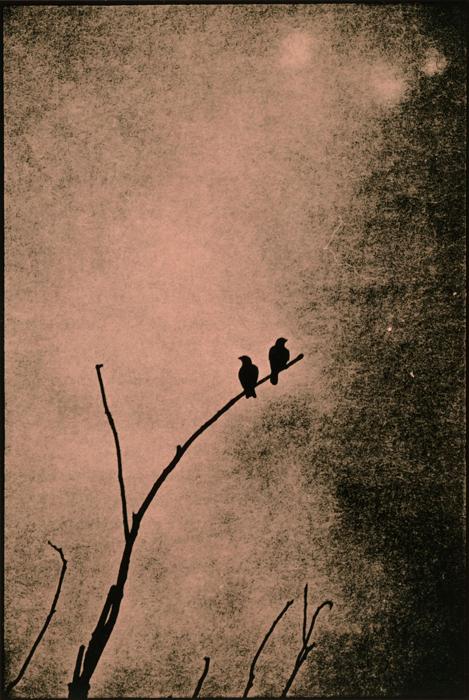
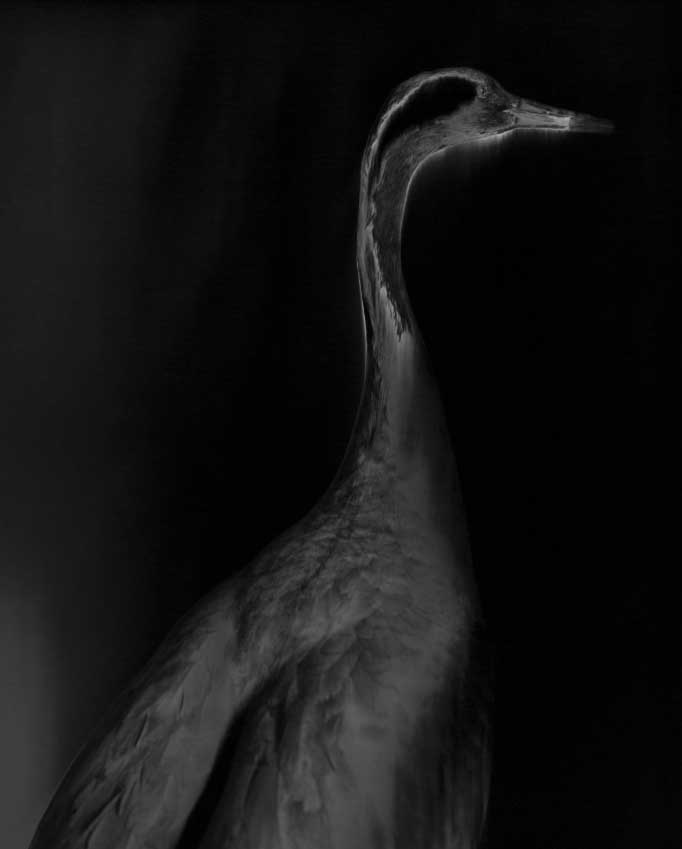
Above: a selection from The Mimetic Observer
Could you tell us about the inspiration behind your stunning work, “The Mimetic Observer”? What were your initial goals for the project, and what processes did you go through to bring it to life?
“The Mimetic Observer” is a project commissioned by the italian Istituto Centrale per il Catalogo e la Documentazione as part of a call dedicated to the 700th anniversary of Dante Alighieri’s death. The aim of the project was to interpret the way Dante describes light in the Divine Comedy through photography and, together with curator Peter Lang and project coordinator Giorgio Di Noto, we decided to approach light through photographic materials and processes themselves.
For Inferno, a place where light is almost completely absent, I worked with the opacity of silver gelatin paper and with solarization (the Sabattier effect), a process that “burns” the highlights of an image, turning them black or silver.
Purgatorio is instead represented through the transparency of glass, a material that can be crossed by light and that projects shadows, much like the souls in this cantica, the only ones in the Divine Comedy capable of casting them. As a process, I chose cyanotype: blue is the first color Dante explicitly describes in the poem, and the cyanotype herbarium is also a tribute to Anna Atkins, who used this process to create what is considered the first photographic book in 1842.


Above: a selection from The Mimetic Observer
For Paradiso, I worked with daguerreotypes together with Joaquin Paredes Piris, who introduced me to this extraordinary process. In this cantica, Dante is no longer able to see clearly due to the overwhelming intensity of Paradise’s light, which progressively blinds him. Something similar happens to silver plates in daguerreotypes: when exposed to too much light, they can become “blinded,” developing bluish tones in overexposed areas.
The idea of creating a bestiary for Inferno and a herbarium for Purgatorio came from curator Peter Lang, while Paradiso, which focuses on some of the luminous phenomena described in the cantica, developed from my own research.
The project was published in a catalogue (published by Via Industriae, now unfortunately sold out) and exhibited at the museum of the Institute as well as at Palazzo Barberini.
What interested me most throughout the project was the possibility of translating a literary description of light into a physical one, allowing photographic materials themselves to become part of the narrative rather than merely a tool to illustrate it.


Above and below: a selection from Photosensitive Materials
Could you share some insights about your series on Photosensitive Materials?
“Photosensitive Materials” is a project that began almost as a game in the darkroom, from a very simple desire to observe photographic paper not only as a support for producing images, but as an object in itself, with its own physical presence and specific material properties.
Much of my research revolves around photography as a material object, and working with analog processes I constantly handle prints, negatives, test strips and, more specifically, silver gelatin paper. I realized that these elements are often treated only as intermediary tools leading toward a final image, while I was more interested in looking at them for what they are, before what they produce.
For this reason, I started using unfixed or unexposed silver gelatin paper, together with graded test strips from the darkroom, folding them and transforming them into small sculptural objects. I was interested in what would happen by taking something that is originally a two-dimensional surface and bringing it into space, turning it into body and volume.

In this work, photography no longer simply represents something external to itself, but becomes both subject and support of its own process. Even though the project began as a very open-ended experimentation, I believe it still returns to a question that runs through much of my practice: what happens when we start looking at photographic objects not only for what they show, but also for what they are?
Your work often includes elements of nature, both plants and animals as well as minerals and rocks. Do you view nature as a backdrop, a character in its own right, or maybe as a mirror of our inner emotions?
Flora and fauna are present only in the project “The Mimetic Observer”. However, a form of nature that I often incorporate into my visual research is made up of rocks, stones, minerals and meteorites.
I frequently use these subjects as visual metaphors to continue the reflection on time and memory that connects all my projects. Roger Caillois, in The Writing of Stones, writes: “(Stones) come from the beginning of the planet, sometimes from another star […] I am speaking of stones older than life itself […] in which a mystery is hidden and revealed, slower, vaster and more grave than the destiny of an ephemeral species.”
For me, something very similar happens with photographic images.
What tips do you have for younger photographers or artists eager to begin their journey in photography, especially when it comes to mastering darkroom techniques?
I think the most useful advice is to be prepared to fail, many, many times.
Working in the darkroom and with historical printing processes teaches you exactly this: how to fail, sometimes even when you are sure of what you are doing and feel you have everything under control. You think you’ve understood a procedure, you repeat it, and then suddenly something changes and you have to start again—sometimes once, sometimes five times, sometimes hundreds of times—to figure out what went wrong in a workflow that worked perfectly the twenty times before.
At first, it can be frustrating, but over time it becomes a very useful part of the practice. It teaches patience, and above all it teaches you that control is always partial, that there is always a point where the material can react on its own.
In a sense, it is something I also find useful in life: as long as you can start again, nothing is ever really “lost,” because starting over is part of the process itself.
Thank you again for participating in this interview, Carlotta. It’s been a pleasure!
Thank you!
All Images © Carlotta Valente
Below: a selection from The Mimetic Observer