

KOSTIS ARGYRIADIS
Welcome to Lucida, Kostis! We truly appreciate you joining us for this interview. To kick things off, could you share a bit about yourself and how you began your journey in photography?
I have been carrying a camera for as long as I can remember. My first one was a small automatic Minolta compact camera. Back then, of course, I mostly photographed friends, family gatherings, and everyday moments. I grew up before mobile phones and the internet became part of daily life, so having a camera with you was something quite ordinary. The desire to make “good pictures” emerged naturally along the way.
At some point my father noticed how deeply engaged I had become with photography and gave me the family’s “serious” camera: a Nikon FM2 SLR that I still own today. It remains one of my most treasured possessions.
It took me a long time to understand what photography actually was. I was still very young photographically, I simply wanted to take pictures, and that alone was enough to satisfy me. Without fully realizing it, I had already decided that I wanted to become a photographer.
Did you seek any formal education in photography after you made the decision to become a photographer? Perhaps you attended workshops or similar events?

Eventually I left engineering school—a decision that led to considerable conflict with my family at the time. Soon afterwards I won a scholarship to study photography and enrolled at ESP Photography School, where I also had the privilege of apprenticing under Stratos Kalafatis.
A decisive moment arrived when I first encountered Japanese photography, and particularly the work of Daido Moriyama. I still remember the feeling vividly. Looking at his photographs, something suddenly became crystal clear. I thought to myself: this is what I want to do. Everything fell into place. For the first time, the path ahead seemed completely transparent.
Given the rising expenses of analog photography these days, do you exclusively work with analog methods, or do you also engage in digital photography?
I began photographing with film simply because digital cameras did not yet exist. Later I bought my first digital camera, but I continued working with film for many years.
My favorite stock was Kodak Tri-X 400. Since it was not a C-41 process film, it had to be developed by hand, which allowed me to push it heavily in the darkroom to achieve the contrast I was looking for. I experimented with many other black-and-white films, and occasionally with films processed automatically by commercial labs, but none ever captivated me as much as Tri-X.
I developed my negatives either in a friend’s studio or at school. The school had an enormous darkroom where I spent countless days and nights. The smell of chemicals, the photographic paper, the red safelight, and the gradual emergence of an image from a blank sheet felt almost magical. It was a beautiful ritual.
Eventually the economics of photography changed. Film became increasingly expensive, and I gradually transitioned entirely to digital photography. Today I usually carry a small Fuji camera for street photography and a larger full-frame camera for everything else.
How do you personally define photography?
Photography is a way of perceiving the world—both the world that exists and the one that does not, the world that came before us, the one we inhabit now, and the one that has yet to arrive.

In a sense, photography is an escape from reality while simultaneously maintaining an intimate relationship with it. It exists somewhere between documentation and dreaming, between the tangible and the imagined. It can function as evidence, as memory, as a sketch of desire, or as a silent documentary of our inner lives.
Photography reveals emotions without words. It becomes a mirror of our psychological landscape, or perhaps a blueprint for the world we wish to create. It can be all of these things at once.
Every photographer, whether accomplished or inexperienced, is a kind of magician. Photography is undoubtedly an art form. Learning its technical foundations is relatively straightforward, but it becomes increasingly difficult as one begins to understand what one truly wants to say. The challenge is not in operating the camera; the challenge lies in developing a body of work, conducting the necessary research, and discovering the precise visual language through which an idea can be expressed.
As the Greek painter Dimitris Mytaras once said, “Art is an answer to a question that was never asked.” Photography, to me, is an entire universe in which one can happily lose oneself.
What I love most is not only the act of making photographs, but everything surrounding it: the thinking, the endless walks, the concentration, the process of reduction and selection, the conversations with fellow photographers, the books, the exhibitions, and even the healthy sense of competition that exists within the photographic community.
And, of course, there is the camera itself. Beyond being a tool, it possesses an undeniable beauty. It is, in many ways, a fetish object—an object charged with desire, memory, and possibility.
If there is one thing I would emphasize, it is that photography, like all meaningful artistic practices, is not a sprint but a marathon. My teacher repeated this lesson to me endlessly. Now, having devoted more than two decades of my life to photography, I am finally beginning to understand what he meant.
Can you remember the very first photograph or photographs you ever took?
If I remember correctly, the very first photographs I ever made were during a school trip. Like many beginnings, they were probably unremarkable in themselves, yet they marked the start of a lifelong habit of looking. At the time I could not have imagined that this simple act of pointing a camera at the world would eventually become the central axis around which my life and artistic practice would revolve.


Above and below: a selection of 6 images from A Balkan Pray
We’d love to hear more about the inspiration and story behind your series, The Balkan Pray!
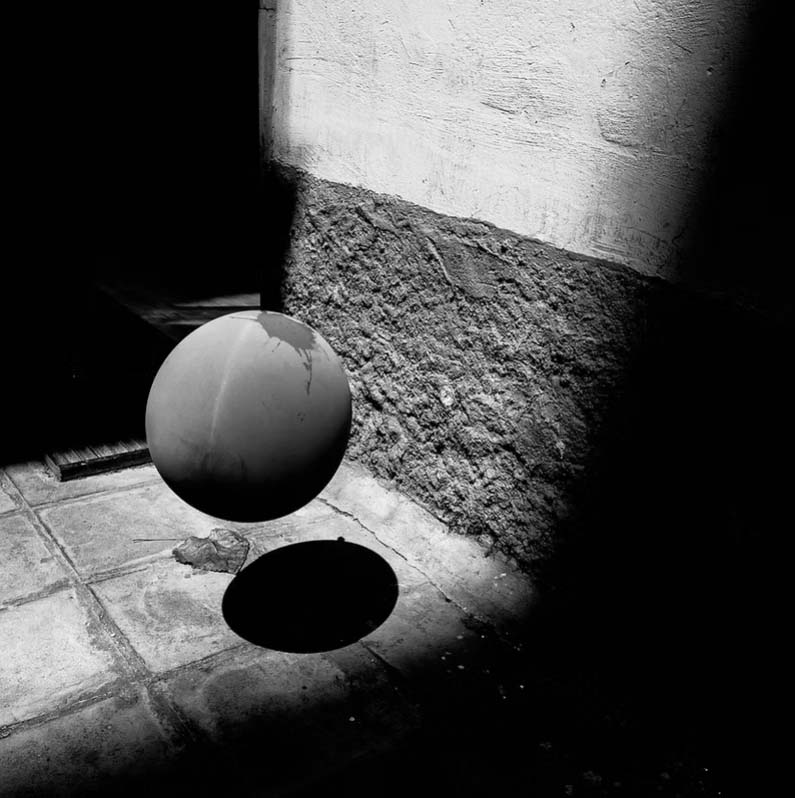
Balkan Pray is a project created entirely through the use of artificial intelligence. It is an ode to the Balkans—the region where I live—not as it exists in reality, but as it survives in my imagination. It is a landscape of memory, mythology, personal associations, and cultural echoes.
Andrei Tarkovsky once suggested that there are two kinds of filmmakers: those who record reality and those who construct their own reality. Balkan Pray belongs firmly to the latter category. It is an attempt to build a fictional yet emotionally truthful Balkan universe.
The project was presented in solo exhibitions in Budapest and Thessaloniki, where it received a positive response. I mention this because the public’s concerns regarding AI are understandable and, in many respects, necessary. We are witnessing the emergence of a new medium, and naturally it raises questions about authorship, originality, and artistic responsibility.
For me, the project was fundamentally an intellectual and creative endeavor. I spent months translating thoughts, memories, symbols, and visual ideas into language, feeding them into a generative model and evaluating the results. Some images failed completely; others came surprisingly close to what I was searching for. The process lasted roughly six months before I arrived at the final body of work.
This is why I often argue that AI does not create independently. It produces images in response to human intention. Without the artist’s vision, those images would not exist in the form they do. The technology is a tool—an extraordinarily powerful one—but still a tool.
Its advantages are obvious: speed, accessibility, and freedom from certain technical limitations. A young artist with strong intuition and a compelling vision can now produce meaningful work without mastering every technical aspect of photography. Some people find this unsettling. Personally, I find it exciting.

I do not believe that because previous generations struggled to acquire technical skills, future generations must suffer in the same way. Every artistic medium evolves. What matters is not the difficulty of the process but the depth and sincerity of the result.
As for the argument that AI merely copies existing artists, I would say that questions of influence, imitation, and originality have accompanied art for centuries. Every artist learns through the work of others. Authenticity does not emerge simply by doing something no one has done before. It emerges through the realization of a personal vision—one that inevitably contains traces of countless influences.
When I teach photography, I am not particularly concerned with the tool used to produce an image. It could be a smartphone photograph, a full-frame camera image, a drawing, a poem, a hand-made print, or an AI-generated picture. What matters is whether the work is honest—honest to the creator, honest to the subject, and honest to the aesthetic logic of the project itself.
If an image succeeds in expressing something meaningful, then the medium becomes secondary.
And experience has taught me that imitation has very short legs. Artists who merely reproduce the work of others may advance quickly for a while, but eventually they encounter a wall. Without a personal voice, there is nowhere further to go. In the end, all artistic work is judged by its integrity, its coherence, and its ability to communicate something authentic.
In art, everything is permitted. The only real question is whether the result is alive.
You self-published the wonderful book DD/MM/YYYY. Could you share some insights about your self-publishing journey, including its advantages, challenges, and any difficulties you faced along the way?
Self-publishing is perhaps the most beautiful way a photographer can share their work with the world. It offers a level of freedom that traditional publishing rarely allows. Every decision becomes your responsibility: production, distribution, promotion, exhibitions, finances, and presentation. You lose the support structure of a major publisher, but in exchange you gain complete control over the final form of the book.
Of course, this freedom comes with challenges. A self-published photobook does not simply appear in the hands of readers. It requires persistence, travel, conversations, presentations, and a continuous effort to introduce the work to new audiences. Often you find yourself presenting the same project repeatedly just to sell a handful of copies.
Yet this is precisely what I enjoy most.
Below: a selection from dd/mm/yyy


Through self-publishing I meet people I would never have encountered otherwise. I share my concerns, ideas, obsessions, and visions, and in return I hear theirs. Gradually you discover that something which once existed only in your imagination has found resonance in the minds of others.
For me, self-publishing is not merely a distribution method; it is a form of community building. It keeps me in motion, constantly traveling, communicating, and exchanging ideas. It transforms the photobook from an object into a living conversation.
Do you come up with your own sequences, or do you collaborate with an editor or curator for assistance?
Both approaches are important.
I usually develop a photographic project until I reach a point where I can no longer move it forward on my own. Only then do I seek the collaboration of a curator or editor. Occasionally a project arrives at a form that feels complete and self-evident, but more often than not an external perspective is essential.
A curator can look at the work without the emotional burden carried by its maker. They can approach the editing process with the precision and detachment of a surgeon—something absolutely necessary because a photographic project is never created solely for its author. Once completed, it belongs to the world as much as it belongs to the photographer. It must communicate beyond the private emotions that produced it.

Curators often respond to what a photographer considers a finished project by saying, “Now the real work begins.” They are usually right. Every body of work deserves to be viewed from multiple angles rather than solely through the singular perspective of its creator. Editing, sequencing, and contextualizing photographs are not secondary tasks; they are integral parts of the artistic process itself.
Would you be willing to share the story behind your remarkable body of work, A Thousand Days of Return? What were your initial intentions or goals for this project? Could you walk us through your creative processes? I’ve heard that some of the images in the project are generated by AI. I’d love to learn more about how you integrate AI with your other images!
The story behind 1000 Days of Return is, quite literally, the story of my return to the world.
For nearly six years I lived with severe agoraphobia. I spent long periods confined to my home, struggling with fears that gradually narrowed the boundaries of my existence. Through psychotherapy —and through photography, which for me has always functioned as a form of psychotherapy in its own right—I slowly found a way back.
When I finally stepped outside again, I encountered a world that felt profoundly different. Perhaps the world had changed. Perhaps I had changed. Most likely, both were true. What mattered was the overwhelming desire to document that experience and the transformation it represented.
Around that time I was invited to undertake a residency on the island of Ithaca. The symbolism was impossible to ignore. According to Greek mythology, Ithaca was the homeland of Odysseus, one of the greatest travelers in human storytelling. A photographic organization commissioned me to photograph the island, but the project quickly became something much more personal.
Leaving home was not easy. It required confronting countless visible and invisible demons, accepting compromises, enduring setbacks, and learning to coexist with uncertainty. These are challenges familiar to many people, yet at the time they felt monumental to me.
I believed this experience deserved to be recorded.

We encounter strangers every day without knowing the battles they are fighting. We rarely recognize how much courage may be required simply to exist. Sometimes existence itself is an act of heroism.
The project became an exploration of return: the continuation of life after a version of oneself has disappeared; the fragile bridge between darkness and light; the fear of loss and the possibility of renewal. It is about emerging from an abyss and re-entering the shared world.
Above all, it is about the strange magic of returning.
I developed the project in collaboration with Alejandro Castellote, founder of PhotoEspaña and one of the finest editors I have had the privilege of working with. After allowing the work to rest for some time, I revisited the photographs and felt that the project required a stronger element of magical realism. The act of returning to life after such a prolonged absence already felt unreal, almost mythical.
For this reason, I introduced artificial intelligence into the project. Approximately twenty percent of the images were created using AI and integrated alongside conventional photographs. My intention was not to replace reality but to expand it—to create a visual language capable of expressing experiences that documentary photography alone could not fully contain.
Whether the two approaches coexist harmoniously is ultimately not for me to decide. The final judge is always the viewer.
What tips do you have for aspiring photographers or artists?
The only advice worth giving is remarkably simple. First: learn all the rules, and then forget them. Second: make photographs not with your mind alone, but with your heart. Technique matters, knowledge matters, history matters—but none of these can replace genuine emotion. In the end, what you choose to say is often less important than how you choose to say it. Photography is not merely a way of recording the world. It is a way of revealing who we are while we look at it.
Thank you again for participating in this interview, Kostis. It’s been a pleasure!
Thank you!
All Images © Kostis Argyriadis
Below and above: a selection from A thousand Days of Return


