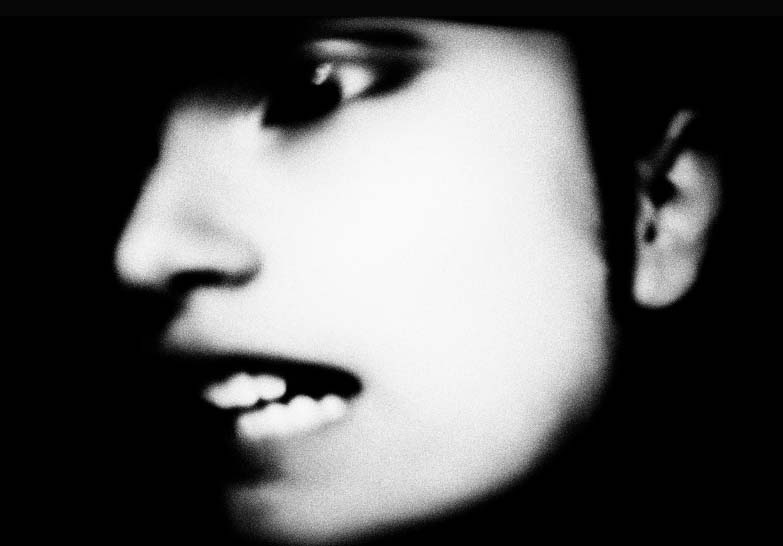
IRINA CHERNIKOVA
Thank you for joining us for the interview, Irina! We’d love to hear about your journey in photography and how you began your passion for it.
I was born in Russia and moved to the United States at the age of 12, where I lived most of my life. I have been residing in France since 2025. I hold a Master’s degree in Economics and have worked professionally in that field for most of my career. Though I do not have a formal background in photography, art has always been a passion of mine. I have been drawing and painting since childhood. My journey into photography began in 2015, when I received a 35mm film camera as a bonus with a lens purchase for my digital camera. That unexpected
gift sparked my fascination with analog photography. Since then, I have immersed myself in the craft, experimenting with various analog techniques, cameras, developing film, and printing images in my home darkroom. I have also explored alternative printing methods,
constantly pushing my creative boundaries.
Do you have any formal education in photography?
I do not have any formal photography education. Instead, I have learned primarily by watching YouTube tutorials and through hands-on experimentation, often using trial and error with the materials I have available.
Do you shoot both analog and digital?
I primarily shoot analog photography, though I do also use digital. I develop all my film at home, using whatever chemistry I can find. Currently, I am using Adox Adonal for black and white film, which I have come to love, but I have also worked with Kodak, Cinestill, and
Ilford chemistry in the past. I have even experimented with alternative developers like Caffenol and, for fun, developing film with wine—both experiences were incredibly fun. In 2018, a friend gave me an enlarger, which allowed me to start printing my negatives at home. Since then, I have been exploring traditional darkroom printing as well as camera less photography techniques, often combining different methods to create unique images.


What does photography mean to you?
I have been thinking about this a lot lately. To me, photography is about capturing something that may not be immediately visible or obvious. It is a challenge to look for what is not necessarily there in plain sight. Often, I will pass on taking a beautiful photo if it does not reveal a deeper truth. Photography, for me, is a form of silent communication. It is my way of expressing ideas, emotions, or even truths. In a way, I suppose I am also revealing something about myself through my work.
Do you remember the first photograph or photos you ever took?
I do have early memories of taking photographs as a child, back when film was still the norm. I mostly photographed my friends using point-and-shoot cameras, and I even had a Polaroid camera. However, what truly ignited my passion for photography was the manual process
of using SLR cameras. I loved having to calculate and measure each shot to capture an image. After mastering the basics, I began to push the limits, experimenting with settings to achieve a specific result I had in mind, to capture not just what was in front of me, but also something more.
Do you create your own sequences or do you seek the help of an editor/curator?
I curate and create my own sequences and projects. I tend to follow my intuition and do what feels right at the time. In a way, each series or project becomes a coping or documenting mechanism for whatever I am experiencing in my life at that particular moment, so I go with that.

Above: 7 images from the Tethered series
Can you tell us how you came up with the idea behind the Kintsugi series?
The Kintsugi series is very important to me because it brings together photographs, prints, notes, and poems I have created and written over many years. I realized there was an overlapping theme in all of my work, and it made sense to compile these elements into a series of handmade zines. I do not feel the project is finished, as I still have much more to say (both visually and verbally) on this subject. I am happy that I am able to take a break for now while the zines are on display at an artist book festival in Padua, Italy. Once I get them back, I will continue the series.


Above: 3 spreads from the Kintsugi zines
Your series Impromptu is much different from your other works/series. is street photography something you still do?
Yes, I always practice street photography, often in my own interpretation of the genre. Most of my images are created in urban environments, usually candid and featuring strangers. I walk a lot, both where I live and when I travel, and taking photographs is my favorite pastime. The “Impromptu” series was special because I created it while I was pregnant and during the early months with my newborn child. I felt vulnerable and out of place doing street photography at
that time, but I also felt a strong need to push myself to get out, walk the streets, and continue my practice. My intention was to maintain my creative routine despite the major changes in my life and to document the world around me during that period. I tried to carve out time here and there, usually in the evenings or on my way to the hospital for prenatal check-ups. I did not have much time or energy, but I am glad I did it, as the series now serves as a memory of the world around me and my son at that time.


Above: 4 images from the Impromptu series
Can you tell us about the processes/techniques used to create the Aftermath series?
The “Aftermath” series was my way of documenting the outside world around me during the COVID-19 pandemic, despite the risks and the advice to stay indoors. At the time, I lived in a dense urban area in San Francisco. I photographed the streets from my balcony during the
strictest confinement periods and ventured out for walks when restrictions were lifted, though the pandemic was still very much present. To reflect the chaos and uncertainty of the time, I used household chemicals, such as bleach and other cleaning products, to alter the film, creating effects of destruction and decay on the images. It was the only approach that felt right to me; it was how I processed the pandemic, and it was how the images naturally emerged. The series also includes some images of nature. I noticed many people trying to return to or relocate to natural spaces during that period, and I thought it was an important detail to include. It seemed to me that we always seek solace in nature when we are most vulnerable.


Above: 4 images from the Aftermath series
What advice would you give to younger photographers or artists who would like to get started in photography?
My advice is to keep observing everything. You have to look and take notice of things, whether you do it with or without a camera. That is how you find beauty, or anything else you may be looking for.
Do you have any plans for publishing a book from one of your bodies of work?
I do hope to publish a book from the Kintsugi series. I am not sure when this will happen, as I will need more time to finish and edit it, but it is my goal for the future.
Thank you for taking the time to take this interview!
Thank you! My pleasure!
All Images © Irina Chernikova
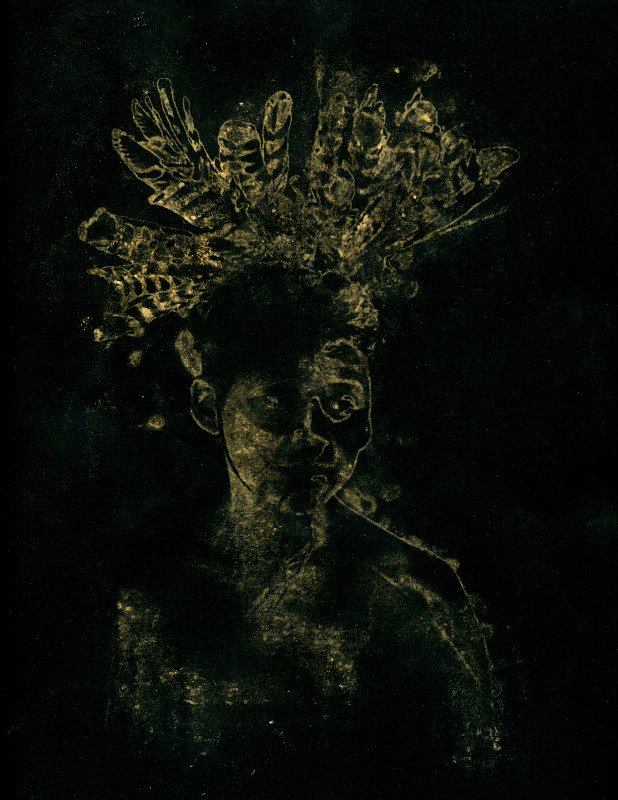


Above: 4 images from the Faultlines series