MELANIE SCHOENIGER
Thank you for joining us for this interview, Melanie! To start off, could you share a bit about yourself and your initial experience with photography? What inspired you to pursue a career in photography?
Thanks so much for having me, Francesco!
My first real encounter with photography happened in my teenage years when I took a photography class at school with my music teacher. He taught us some basics and sent us out to shoot with our reflex cameras. I got immediately enchanted in the darkroom that serendipitously found its way into my life with sorted out material from a friend of my father and that I installed at my grandmother’s house in a tiny room where she overwintered her perennials.
With a real beginner’s mind with almost no prior knowledge I immersed myself playfully in this mesmerizing photographic realm of painting with light and manifesting it in this magical process. I experimented; altering all possible variables and followed all the questions and ideas that came to my mind. Dodging, painting with developer, photograms, solarization and much more. A whole new universe unfolded in constant dialogue with my material. I am still every time excited anew when the image reveals itself.
Did you study photography in school, have you taken any professional workshops, or what is your training background?
I do have an education in a broad spectrum, studying design that included a lot from photography, drawing, painting to design principles and theories as well as executions with various means and techniques. In addition, I added pinches of art history, philosophy, architecture and product design. Working as an art director on a wide range of projects for many years has deepened my aesthetic vision as well, I guess. Photography-wise, I do not hold an MFA in photography or similar. So in this specific area I might consider myself a kind of self-taught. I like to learn by experimentation and follow my curiosity and inspiration in my own rhythm and pace – which especially in the last years while raising children has been crucial. So every time in a kind of deep dive if I felt I need assistance or guidance on my learning journey, I took a course or reached out to someone. E.g. I participated in the Bookmaking Masterclass at Origini Edizioni and an online course with Anne Eder about non toxic alternative processes printing with color.
Do you use only film, or digital too? If film, do you develop and print your own pictures?
I do both.
I started analog, but at some point, my Minolta reflex stopped working. I have played with Lomo, Polaroid and underwater cameras. At the moment I mostly use my iPhone (often with lenses attached, very pragmatic, imagine me sometimes just holding them in front, sometimes even just my polarized sunglasses…) or my converted IR camera. And a Sardina camera, that I have used for years now but I still need to bring the films (special ones like film soup, washi etc.) to the lab for development.
As much as I like to capture images, at the moment I mostly enjoy working with them as a kind of springboard and see where that leads me too. I enjoy working with photograms or scanography as well and have projects that are camera less, abstract or based on appropriated material on my very long idea and future project list.
About my printing process: When my grandmother died, I had to let go off my dark room. But then a new door opened with cyanotype and alternative processes that do not require a darkroom and – having small children around at that time – that are nontoxic. I often played in-between meal preparations, on the terrace, in the kitchen or later in the cellar. Imagine me coating paper on my washing machine amidst various trays on towels with water, soda, left over coffee etc. spread all over the floor. My timer ringing from time to time. Prints hanging between clothes to dry.
As I seek to translate and implement my vision of a future conducive to life, I try to find ways to create as sustainable and nontoxic as possible. So mostly I work in a vegan and plastic-free way, leaving aside gelatin, plastic for either negatives – sacrificing tonal range – or sizing. Experimenting with cyanotype in a multitude of varieties and substitutes like Lupin, Agar, Diazo Gum…
I just relocated to Berlin this summer with my family and feel very blessed that from now on I will have a dedicated space in our apartment to create, an atelier. Can’t wait to establish it and start playing again.
How do you see photography? What inspires you to capture the subjects you choose? Is it more about artistic expression or mastering technical skills? Do you create a fictional world, or do you focus on depicting reality as it is?
A lot.
For me it is a kind of language that evolved in and with me over time and is ever evolving with every project and every new skill. It is a means of expression for my soul. It enables me to marvel at the wonders of existence in a creative dance. And to share my inspiration and awe in a mythopoetic way.
My process is a kind of meditation. A dialogue with the material, a wandering at the shores of not-knowing. A flow state.
A bit like William Blake put it so beautifully: “To see a world in a grain of sand, a heaven in a wildflower, hold infinity in the palm of your hand and eternity in an hour.”
All my images are tributes, metaphors of belonging and interconnectedness.
What stylistic attributes define your portfolio?
Aesthetic, sensitive, vibrant.
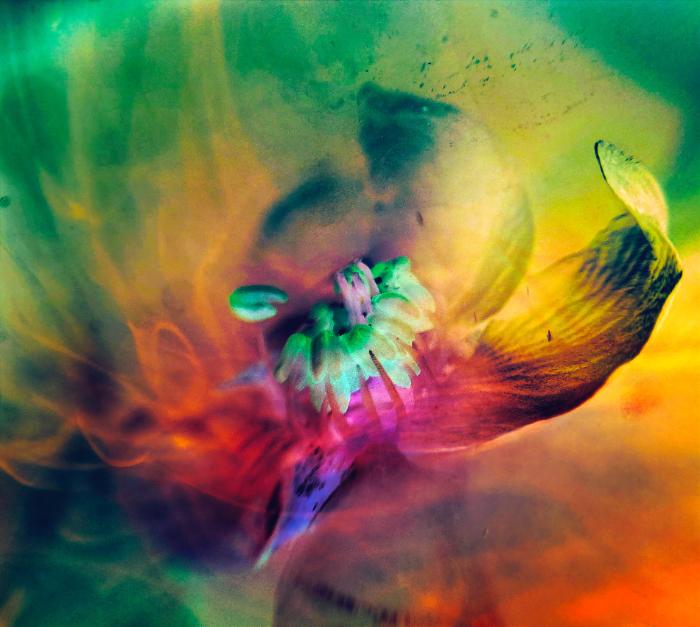
It looks like traditional methods play a significant role in your practice. Could you share more about that? Do you see the unpredictability that comes with your work as a valuable strength or just something that’s part of the job?
Unpredictability makes it especially alluring to me; its openness for me is a direct reflection of the nature of reality, an entrance point to the field of possibilities. Like the alchemists, I love to immerse myself in a creative dance with mind and matter; guided by intuition and embracing unpredictability something unique arises.
In these digital machine mindset times, my messy time-consuming hands-on process is pure gold for me. It enables me to practice expanding my tolerance for uncertainty and not knowing, even to welcome it; an amazing skill for living a human life.
Do you remember your first photo?
Yes, I have a vivid recollection of it. I captured beautiful crosses and statues on an old cemetery in Prague on BW film (Ilford 200 ISO) with my reflex Minolta. Then, I manifested them in my darkroom as gelatin silver prints. (They even were part of my application to study design.)
Many of your images evoke a sense of wonder. Does your work aim to invite viewers to delve into mystery rather than simply presenting facts?
You nailed it, I do consider my images as an invitation to explore mystery. I am drawn to the deep questions, the limits of perception and the wonder of existence. The ineffable, the hidden essence, the animating life force. Joseph Campbell called it the divine radiance behind all things. It might be something like the creative spark that animates the world, the elan vital—the “nothingness” in a Zen context, or the possibilities from a quantum mechanics perspective. And Rilke and Jung referred to it as a kind of center of a spiral, where we circle around and towards it.
I am not interested in a statement of truth in a kind of documentary or representational approach, even doubting the ability of any objective approach at all…
What’s more, big truths seem to be unfathomable and can only be expressed through metaphor. It’s these kinds of truths I am interested in, and they are implicitly interwoven into my art.
For me, mystery has an inherent capacity to point towards these truths in a vague, elusive way. And importantly, to open up a space for, and in the perceiver, to interact, as truth is a kind of experience, something that needs to be felt, and only then can it be known.
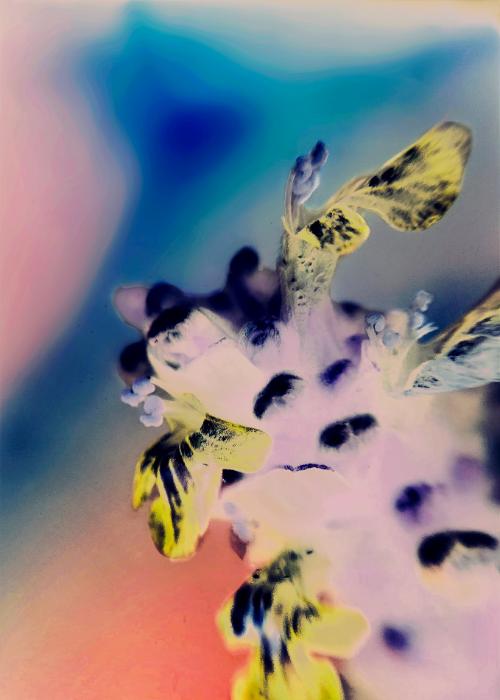

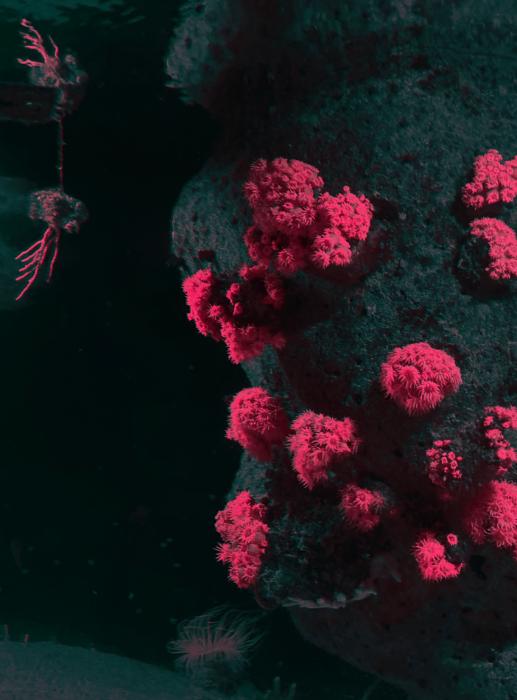
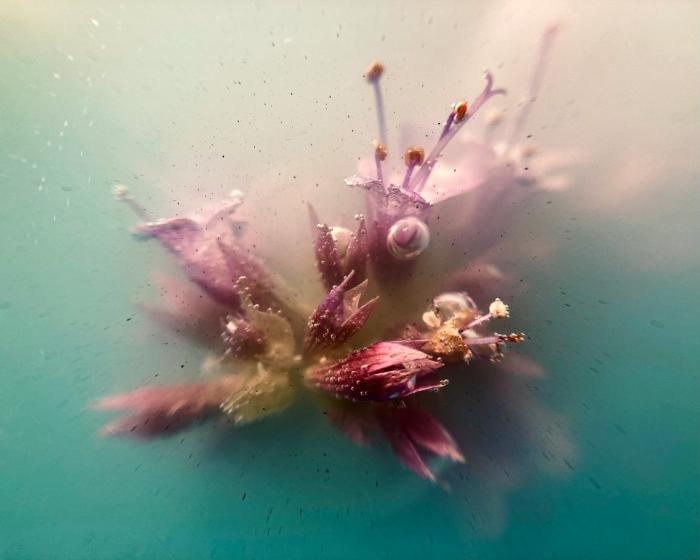
Above: a selection from Beyond the Edge of Darkness. Below: a selection from Octopus Garden
Could you share the story behind your body of work, “Beyond the Edge of Darkness”? What were your original intentions or goals for the project, and what processes did you follow?
“Beyond the Edge of Darkness” is inspired by the book of marine biologist Dr. Edith Widder about her life’s adventures with the vast deep sea called below the edge of darkness.
With this series, my intention was to widen my horizon on various levels. I wanted to develop further as an artist and create another chapter in my underwater realm project (hoping that beauty and wonder spark a reflection on the vulnerable state of the oceans and humanity’s role in our interconnected ecosystems).
I wanted to playfully expand color spectrum and perception (towards bioluminescence and surreal colors), I wanted to broaden the spatial focus as well as the perspective (towards the vast sea and how underwater species sense the world via UV and IR light).
So I took an online class with Susan Burnstine.
I had already captured images and started to alter my colors with a kind of painterly approach of various adjustment layers and masks on way to many levels in affinity photo.
Susan helped me define and refine my thoughts, my vision, and my final images. The monthly class held me accountable during the process. And I still have a friendship that started back then.
Are your sequences self-made, or do you use a curator?
Mostly I create my sequences on my own. I am always again amazed how different threads evolve and how they interact. Rearranging them and starting from scratch anew after some time is always very exciting as well.
It is something I really enjoy and would love to do more. I even imagine working on commissions or projects I resonate with.
Curating a show called *Our place in the scheme of things“ with some fellow artist from my Eco Echo Art Collective has been so much fun. Inspired by my favorite part from Mary Oliver’s poem Wild Geese:
“The world offers itself
to your imagination
Calls to you
like the wild geese
Harsh and exciting
Over and over
Announcing your place
In the family of things“
That said, I do love to exchange with like-minded experts and get feedback when I feel I need it.
Your series, “Octopus Garden,” has garnered wonderful praise. Would you mind sharing a bit about it?
Coral Reefs and the underwater world hold a special place in my heart. My personal experience of this otherworldly realm has left a huge imprint on me.
I turned this deep love and later almost unbearable grief into agency. During Covid and entangled in climate grief, I realized, heartbroken, that coral reefs are on the verge of extinction, that they might vanish in my lifetime and my kids and the next generations will not be able to witness this incredible wonder of biodiversity and amazing beauty. Not to mention its importance for our planetary health and all the more-than-human beings living in and depending on it.
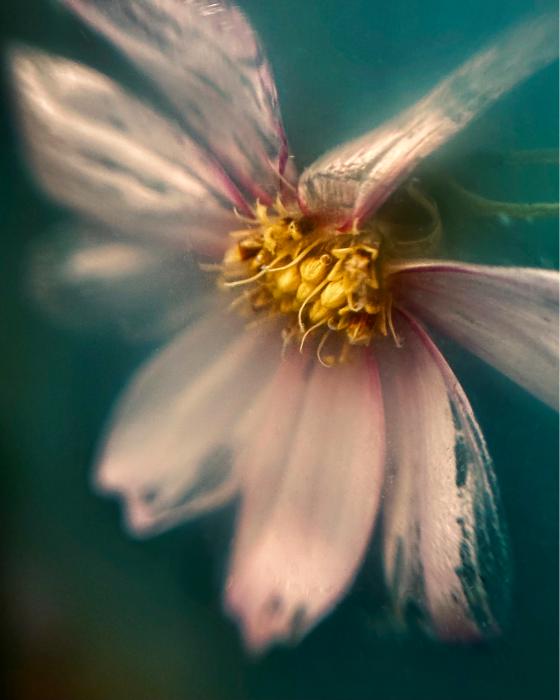
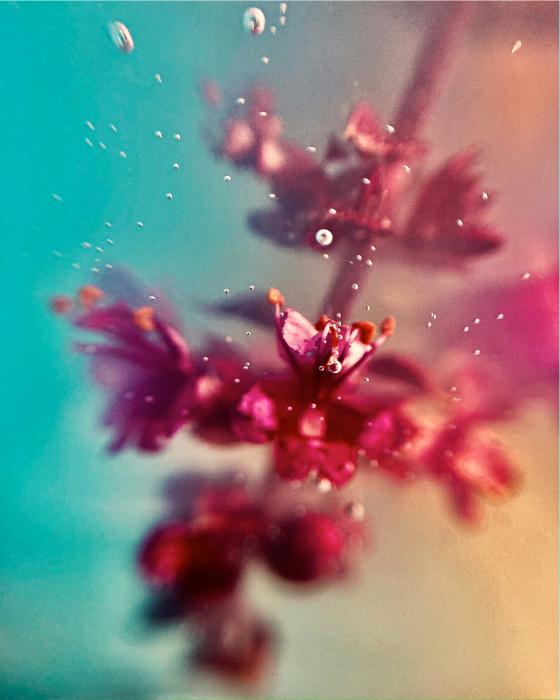
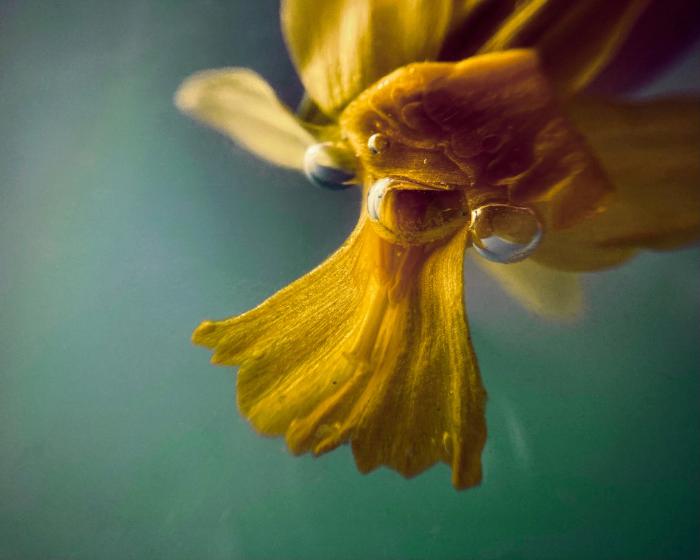
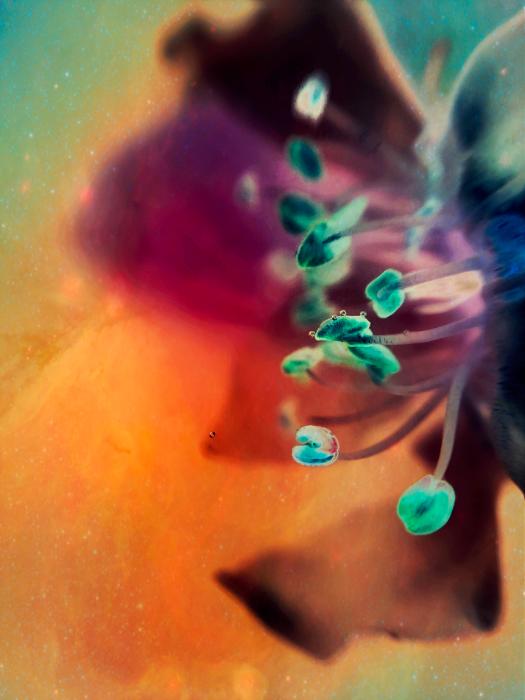
Far from the sea, I started to set up my own diving encounters with more-than human beings at home. I played with my homegrown plants, submerged them in a vase in my kitchen, and captured them with a macro lens on my iPhone. Watching their metamorphosis, I started dreaming of a life-sustaining future, imagining that plants contribute to a new form of underwater life.
I am currently working on a book dummy to honor this project. Revisiting my archive I am now drawn towards images that I first neglected and it seems like I approach them from another perspective.
Could you share your approach as an emerging artist when it comes to submitting your work to open calls, galleries, and editors?
After the first phase of orienting myself at all with a lot of learnings and discovering the matching and not matching ones, I realized that for me the most important thing on this topic is not to let the imagined pressure of deadlines etc. reign my schedule and to always decide from my center, from where I am within my projects and decide and prioritize wisely in terms of focus, time and money.
You self-published your book “To Paradise” in 2024. It would be great to hear about your experience with self-publishing, including any challenges you faced. Do you have plans to release more books in the future?
My first handmade artist photo book, To Paradise, has been an amazing deep dive full of joy and discovery.
Looking back, I would not want to change anything, but at the same time, I am happy I did not know the amount of work and challenges I would encounter on the way when committing myself to it in the beginning.
I really love sequencing images, and I think I’ve gained a better understanding of this kind of flow and rhythm, e.g., in blank pages and the space around the image within the object.
In addition, handcrafting my book, coptic stitching as a meditative act, reminded me of times spent with my grandmother knitting and crafting, and rekindled my love for working with thread.
Self-publishing has been the right decision for this project as I did not want to make an compromises along the way. I considered it necessary to question every step of the process. Making choices that respect nature. So, it took some time and I learned a lot.
One of the most amazing experiences with my book has been the feedback that I received from collectors as well as from reviewers. Their resonance and their perception has been extremely touching and encouraging. With a few exceptions (selling some copies with a Photo bookshop) I know where every book resides and am acquainted with the owner personally now – at least through a written exchange.
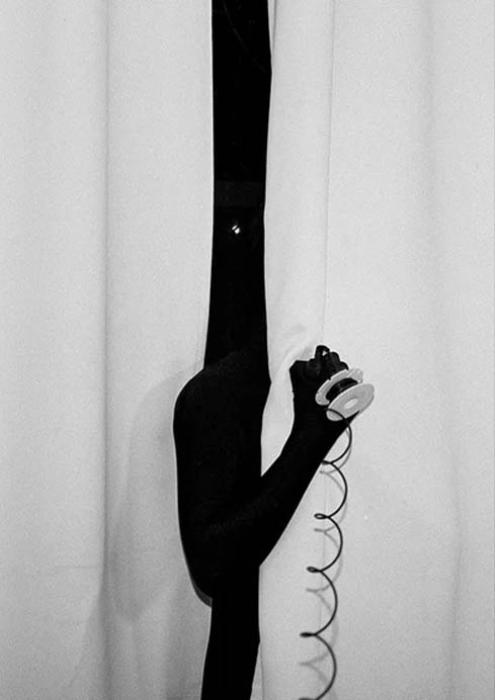
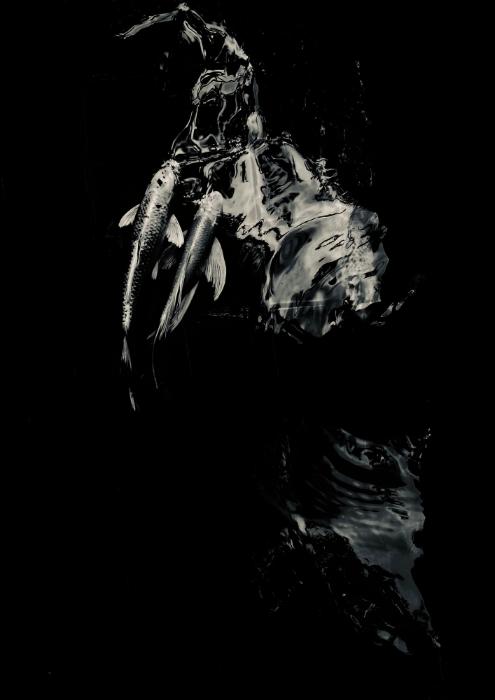
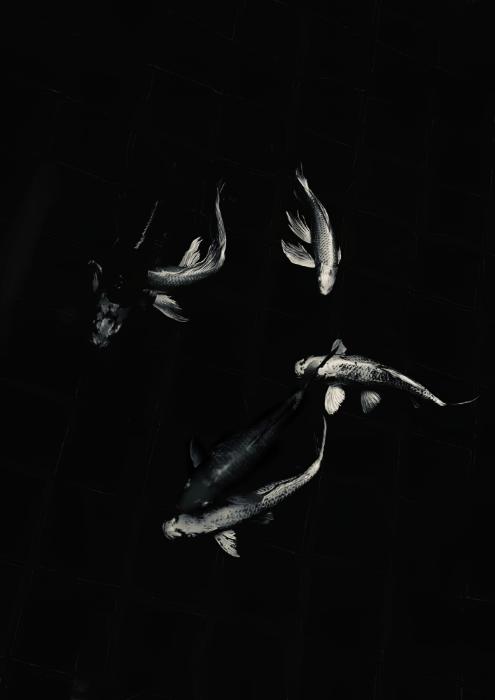
Below: a selection from To Paradise

I do intend to continue creating books.
I crafted a book dummy during my amazing Masterclass at Origini Edizioni in Italy in May 2025. And there is a weekend workshop ahead in Berlin this upcoming October I am very much looking forward to where I want to work on my Octopus Garden book dummy.
What tips do you have for young photographers or artists looking to begin their journey in photography?
Follow your curiosity and your bliss on your own path. Stay open and widen your horizon as far as possible.
It’s been wonderful having you for this interview, Melanie. Keep up the fantastic work!
thank you. My pleasure!
All Images © Melanie Schoeniger