LUCA ORTIS
Welcome to Lucida, Luca! We’d love to hear a little about yourself and your journey into photography.
I am originally a tattoo artist. During Covid I was unable to work for 7 months and I needed to find a different creative outlet. I had recently bought a camera to document a Japanese tattoo fraternity I went to spend time with before Covid hit and I started exploring what I could do with it to keep my mind away from the realities of being stuck at home. I also had plenty of time to explore other peoples work and that’s when I started to understand the direction I wanted to take with my own work.
Did you learn photography through formal training or workshops?
I don’t have formal training but early on I realized that I wanted to print my images and because I’ve always been attracted by craft and hand made things, I started exploring the world of historical and alternative photographic processes.
I knew I needed some training and found the wonderful Costanza at Lux Darkroom in London. She’s a master printer and I took some workshops with her to learn platinum palladium first and eventually settled on cyanotype because I love the imperfections and toning possibilities.
Is your work 100% film, or do you use digital tools as well?
I shoot digital but the rest of the process is very much analog. I use a large printer to print contact negatives, and I then expose them with a UV exposure unit. I hand coat handmade Japanese paper with the cyanotype chemicals and use a lot of different botanicals to tone the prints and achieve different tones.
How do you personally interpret the meaning of photography?
I don’t really see myself as a photographer. I love the act of shooting and pressing the shutter but I’m not technically proficient. I use photography as a starting point to collect images that I can then transform into works that are often very far from what most people think photography is.
Can you think back to your earliest picture?
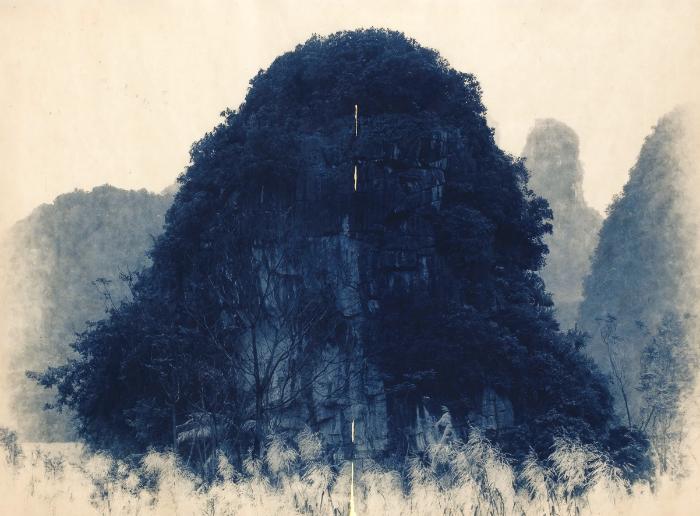
I certainly have a recollection of the first shot that eventually became something that I felt happy with and that was the beginning of what has become my art practice. I was in Vietnam and standing in front of a giant karst mountain that seemed to just spring out of a flat plain. It’s still one of my favourite images I made.
How would you describe your artistic identity?
I’m interested in making images of things that are beyond human time. It’s landscape in essence but I see it more as natural objects that carry the sense of age and timelessness. I never photograph people or anything that is made by humans. I’m only interested in nature untouched by man.
Your photography practice emphasizes alternative processes. Could you share which traditional alternative methods you began with and what your initial outcomes were?
As I mentioned, I started with platinum palladium which is a gorgeous process for achieving beautiful black and grey images but it’s also in many ways too precise and there’s no room for happy accidents. I started using cyanotype because it was a good way to practice in the darkroom environment without the costs associated with platinum palladium. Because I’m not really interested in photography as a way to record images faithfully, I became more interested in the cyanotype process and have continued using it ever since.
Would you mind sharing the story behind your body of work titled “Shodo”? I’m curious about your original intentions and goals for the project, as well as the processes you used to bring it to life.
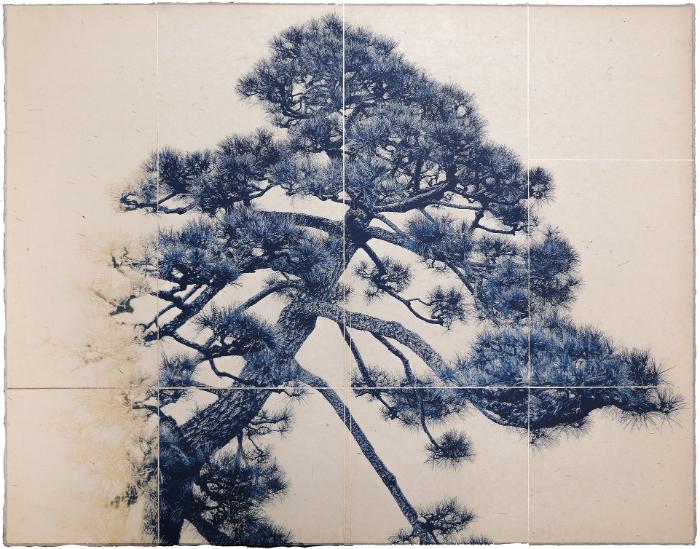
Shodo is a series focused on the parallels I see between the shapes and energy you can find in Chinese and Japanese calligraphy and the shapes and energy I see in trees. It’s about the energy of calligraphy rather than the meaning behind it. When I photograph certain shapes, I find in the natural world they feel to me like an unknown natural language printed on the paper.


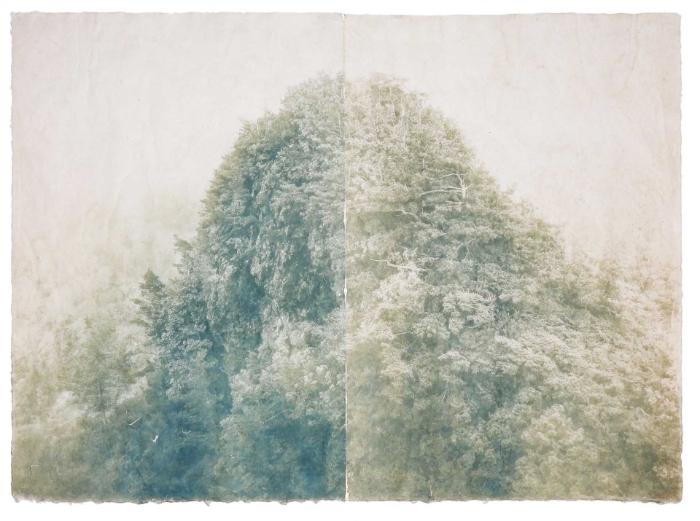
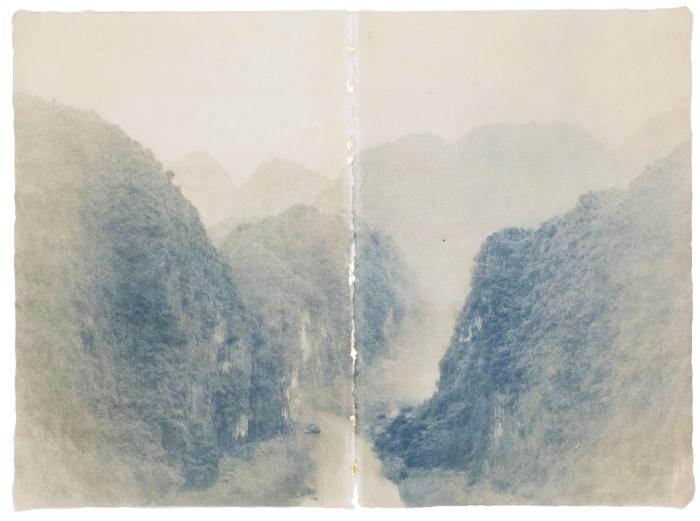
Above: a selection from Shodo. Below: a selection from Half Remembered, Half Imagined
Could you share some insights about your series “Half Remembered, Half Imagined”?
“Half remembered, Half Imagined” is the basis for looking at landscape as memory rather than reality. The way we load memories with emotions means that the image we shoot is often lacking the feeling we felt when we stood in front of that scene. The process that happens in the darkroom strips the image of some of its reality because the process I use never gives a faithful reproduction, but it infuses some of the feeling that for me gets lost in a perfectly rendered print.
Your work regularly explores how people and the natural world relate. Do you see nature as a simple setting, a true character, or a reflection of human emotions?
I see nature as an ever-enduring thing. Unconcerned with us. And I find that very comforting. I look at certain things in nature as filled with an energy and presence that I imagine animists would recognize. Those are the things that I’m drawn towards.
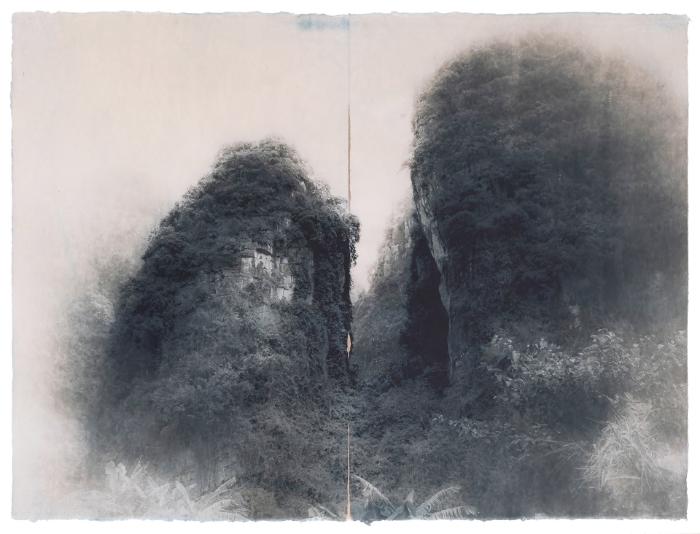
Without a doubt I feel the relationship between my inner state and the moment I click the shutter. My eye is seeing the mountain but when I get back to the darkroom it’s my feeling about the mountain I’m trying to capture.
Your photographs appear to showcase a continuous quest for meaning and presence. What themes are you currently delving into on your artistic journey?
I approach my work away from a strong set concept. I find that just takes me away from the freedom and discovery that the process brings.
The starting point is loose but it’s very much inspired by Chinese landscape painting and other Chinese and Japanese concepts I’ve been interested in because of my practice as a traditional japanese style tattooist.
I’m searching for a feeling of communion with nature, being in the presence of timelessness. Feeling inconsequential in comparison with what I’m witnessing. Photographing things that have been there before me and will be there long after. And using those images to make objects that are reverential towards the nature I’ve witnessed.
It appears that themes of memory and uncertainty have consistently been a common thread throughout your series. How have these themes developed over the years?
I think photography by its very nature is always somehow about memory but while a normal photo fixes an image in time, the creative process that for me happens after I take the shot is there to reflect the shifting nature of what we do with our memories. How we imbue them with feelings that might not reflect exact reality. I find perfect recall uninteresting. I am much more excited about how we write our own imaginary story about things, how we choose to forget or remember some things and not others.
Could you share your approach to your first exhibition with us?
I was invited to join a group exhibition by my mentor Costanza and that made me realize I wanted to put the work out there to get feedback and push myself. I wanted to have some deadlines to work towards to get out of my comfort zone.
How do you usually send your art or writing to galleries, contests, and editors?
After being part of that group show, I wanted to keep the momentum going and saw the opportunity to apply to the Woolwich Print Fair and was lucky to have my work selected. I then applied to the BBA photography prize open call and ended up winning the award.
That led to me collaborating with the gallery and really cemented the feeling that I wanted to put more and more energy into the photographic work as opposed to my tattoo career.
Eventually, I was contacted by Tom at Open Doors gallery, and I am now represented by them. I was always impressed with the artists that Tom works with and so it really felt like a natural place to be and I’m very pleased with having joined the gallery. It feels like everything happed very naturally.

Do you rely on a curator for the lineup of your images?
I work completely by myself and I don’t think I have much foresight or planning in terms of the pieces that end up making the cut. When it feels right it feels right.
What advice would you give to young people interested in starting their photography journey?
Although I’m not young in age, I am definitely still a young photographer myself as this is a second career for me.
I would say one core thing for me is not so much about photography but about the creative process in general, and that is to enjoy the process and be open to mistakes and uncertainty. I don’t go into the studio with a definite piece in mind. I play with things until something unexpected and exciting happens.
Try and push past the moment when a piece feels wrong because that’s the only way to learn something. There’s no real failure in creativity so long as you don’t give up on the project before it’s complete. I think that’s how I found my language.
As for creating opportunities, open calls are a great way into what can often feel like a closed space but keep your eyes open because not all open calls are worth spending energy on. Aside from this, immerse yourself in the type of work you feel attracted to. You have to become a bit obsessive to make a success of things.
Thank you once again for taking part in this interview, Luca. It’s truly been a delight to learn more about you and your photography.
My pleasure!
All Images © Luca Ortis