

LÉNA MARIA
Welcome, Léna! We’re glad to have you here. Could you share a little about yourself and your journey into photography?
As a child, I began my journey in photography by collecting images. I would cut out pictures from my parents’ newspapers and magazines, creating my first collages in notebooks. I was fascinated by the storytelling potential of photography and saw it as something almost magical. It wasn’t until later, during my time in Morocco from 2011 to 2013, that I fully transitioned to photography. While there, I was initially working on a geography thesis project, but I eventually decided to focus entirely on photography.
Is your work purely analog, or do you use digital cameras too?
Right now, I mostly take digital photos, but I do snap some Polaroids from time to time. For my next project, I’m excited to explore anthotypes, which use natural materials like plant juices from flowers, leaves, or fruits. These light-sensitive pigments are applied to paper, and the images develop when exposed to sunlight.
Could you share your background in photography? Please include any degrees, specialized training, or workshops you’ve completed.
I haven’t had any formal training or workshops. However, my university studies played a key role in my development, especially my important experience with the humanities. I started with anthropology and then moved on to geography. That’s where I learned the value of observation, fieldwork, and decentering—qualities that are really important for photography.
What does photography represent for you?
A mysterious and poetic journey. For me, it symbolizes exploration and serves as a meditative quest. I believe photography offers a glimpse into different spaces and dimensions, revealing endless possibilities. It feels like a transformation of reality, allowing me to explore my perceptions and experience intriguing times and places. In my writing, I aim to uncover what connects us as people and reflect on our presence in the world.
Do you remember the first photograph you ever took?
When I left my small hometown in the south of France to study in the city, I was truly captivated by the diversity around me—so many different faces, bodies, and attitudes. I spent a lot of time doing street photography in Bordeaux and Marseille, focusing solely on black and white images. I was always on the lookout for the way light fell on faces in the metro and how it illuminated bodies along the Mediterranean coast. I was really fascinated by light. I also took many self-portraits during this time, and Francesca Woodman’s work had a significant impact on me. Additionally, I explored photographing nudes in natural settings. For me, it went beyond just portraiture; it was a quest to find a deep connection with life and the physical world.
What themes or moods do you lean into most naturally?
We might consider it exploratory photography. I really enjoy the different states of consciousness that come from dreams, walking, meditation, and dancing. These poetic and mysterious states allow us to let go of ordinary thoughts. For me, music is a direct pathway to these experiences. My images aim to capture these moments of wonder, akin to a gentle intoxication. It’s like taking one step into reality and another into a different realm, right on the edge of abstraction.


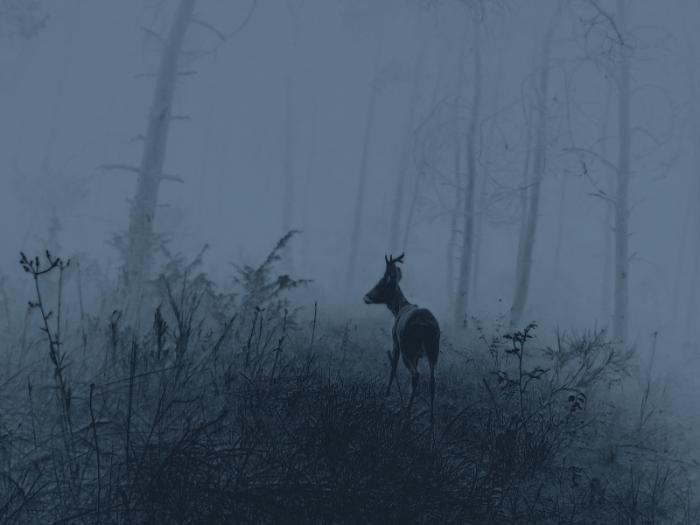
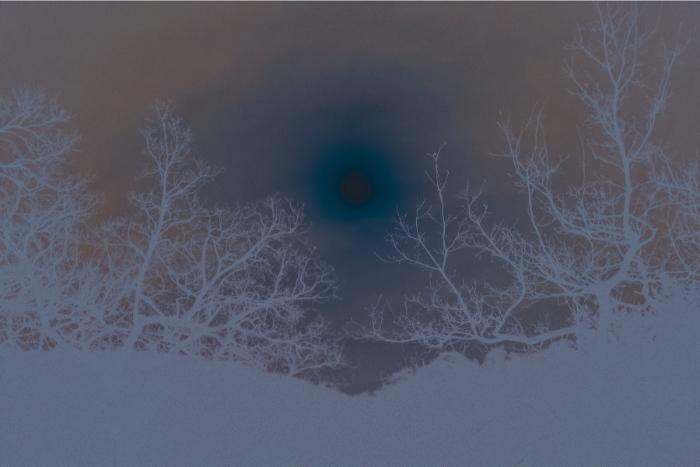
Above: a selection from Les Nuits Ouvertes. Below: a selection from Outremer
I’d love to hear the story behind your body of work “Les Nuits Ouvertes.” What were your original intentions or goals for the project? Could you also share your processes?
For the “Open Nights” project, I aimed to focus entirely on non-human subjects. My photography gear is pretty basic and a bit outdated, which clearly didn’t meet the needs of traditional wildlife photography. I also wanted to be as unobtrusive as possible, so I opted for thermal cameras mounted on trees. This approach reminded me of the magical feelings I had when I first encountered images as a child. It was truly wonderful to reconnect with that excitement!
The nighttime world is both captivating and a bit intimidating. It exists in a space of uncertainty where things and beings transform. Animals come to life, creating a realm of the unseen and the non-human. I wanted it to be an open space where we could connect with the beings and elements that inhabit the night. It’s about recognizing the forces around us that we can’t see and feeling like there’s potential to broaden our understanding beyond our usual beliefs and perceptions. It’s a small effort to push back against the limitations of thought and imagination.
My main inspirations include the engravings of Robert Hainard, the photographs of Yamamoto Masao, George Shiras, and Stephen Gill, as well as the remarkable project “Cut Ear” by Julien Coquentin. I’ve also been deeply inspired by Simona Kossak and her extraordinary bond with animals.

Could you share a bit about your series “Outremer”?
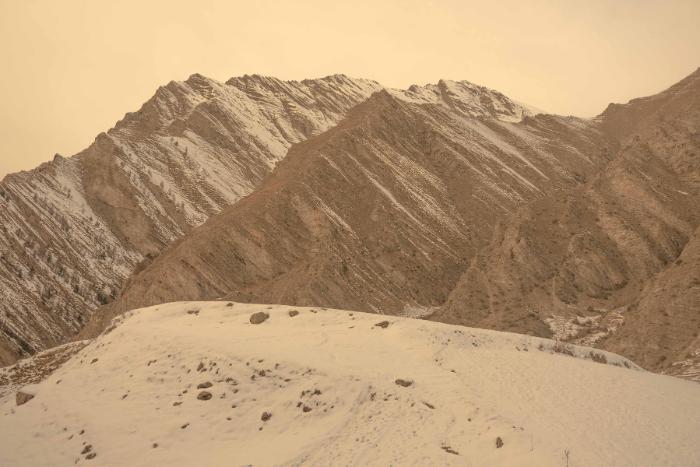
“Outremer” is a project that combines archival images gifted by my grandmother, showcasing the colonial period in Algeria up to its independence in 1962. I’ve also included some of my own photographs of intriguing landscapes taken in recent years. This ongoing project explores themes of family history, the memory of exile, and how these stories are shared. How do we connect with places? How do we carry them forward, even amid silences, unspoken thoughts, gaps in memory, and past traumas? What kind of relationship do we have with this heritage, and how do we transform it?
Do you create your own photo sequences, or do you prefer to work with an editor?
I am alone in this process. I have not had much contact with the so-called “professional” world of photography.
Since your artistic output often highlights how humans and nature interact, do you perceive the environment as a setting, an acting force, or a reflection of our internal landscapes?
Being immersed in the “outside world” is really important to me; it’s at the core of my approach. The sensory experiences I have out there serve as a basic yet vital reminder: to truly live, we need to feel. I feel a strong bond with the elements—earth, water, fire, air, and space—as well as with all living beings. Everything is interconnected, almost like an unspoken agreement. I explore this connection through walking, contemplation, observing nature, waiting, and wandering. It encourages me to reflect on being present and listening, to slow down, and to align myself with the rhythm of the seasons. Without this foundation, I find it hard to create an image.

I resonate with philosophies that view what we call “Nature” as a concept shaped by modern Western thought. This perspective, which treats nature as something separate from humans, often leads to a mindset of control and exploitation. I particularly connect with the ecofeminist movement. Above all, I truly believe we’re not isolated; we’re all part of a larger network. I feel these exchanges and connections intensely. Everything is intertwined. My work revolves around this idea of “relationship,” moving beyond a narrow view of the world to recognize that we’re part of a vast, interconnected whole.
Your photographs appear to capture a continuous quest for meaning and presence. What themes are you currently delving into in your artistic journey?
Right now, I’m really focused on connecting with my body and sensations. I’m aiming to create photography that’s very organic, sensory, and sensual. I’m also diving deeper into ideas around the sacred and ritual. There’s a phrase by Marie-Hélène Lafon that sticks with me: “Everything is visceral and tracks and signs; the world is inexhaustible.” I don’t question the lyrical and romantic aspects of nature or the idea of rewilding. I feel a strong desire to protect this sacred connection and the simple relationship I have with it. It stirs feelings in me that are hard to put into words, and honestly, it remains quite mysterious. I appreciate that mystery and feel it’s essential not to explain everything.
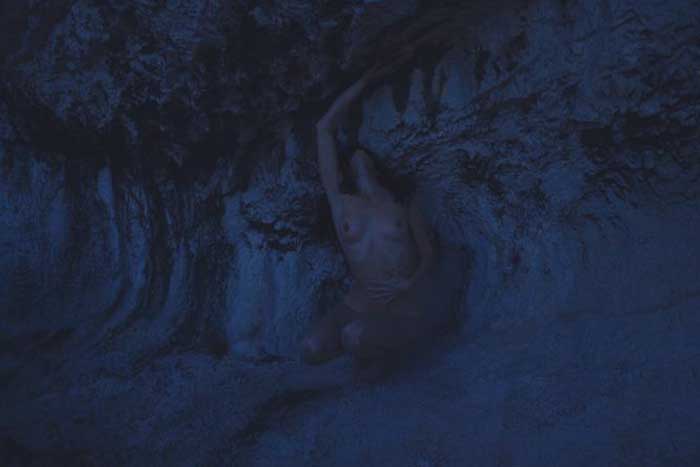
Below: a selection from La Voix du Feu
The themes of metamorphosis and experience appear to be the common thread in your series. How has this developed over the years?
At first, I was really intrigued by how people connect with their surroundings and the land they inhabit. I wanted to meet individuals, whether real or fictional, who have a strong bond with their territory. Whether they were scientists, climbers, botanists, or just casual hikers, they truly represent this connection. I love exploring how a geomorphologist, a volcanologist, or a physicist sees the world. I’m interested in their unique language, their gestures, and their research—even if I don’t fully grasp it all. Literature and science have always been amazing ways for me to immerse myself. Nowadays, I’m just as captivated by these people, but my perspective has shifted to be less analytical and more intuitive. What inspires me now is feeling the sacredness of a place and uncovering all the elements that make it special. I find that incredibly poetic. The threads of experience and transformation allow me to appreciate the blending of different perspectives, worlds, and scales. One of my core beliefs is in the richness that comes from connections, encounters, and crossing boundaries.
Could you share the story behind the series La Voix du Feu?
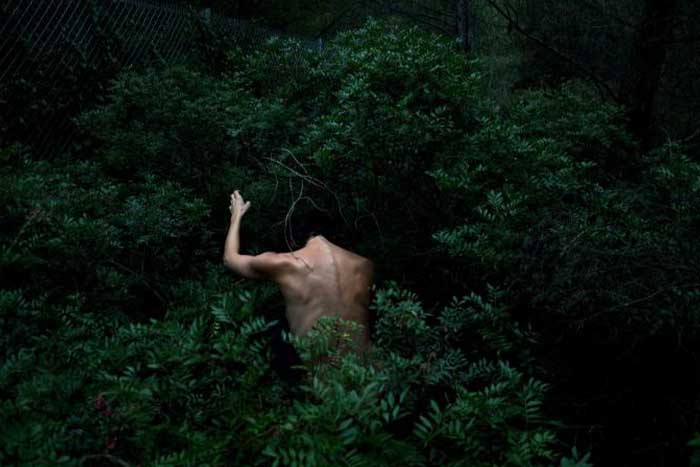
This series, produced in 2022, draws inspiration from “Eurydice feu,” a poetic tale by Chloé Baudry. It allows Eurydice to reflect on her own story. Beyond the myth, it captures a woman’s journey to reclaim her place in the world by addressing her fate and the fate of the earth. This poetic reimagining situates the character in a contemporary setting and delves into the idea of sisterhood. The mythical figure transforms into a sister and ally, returning to confront her past. She expresses her anger to the world, discussing the oppression from Orpheus, the impact of patriarchy, and the exploitation of both land and people. She paints a picture of chaos, drawing us into a realm that feels both unsettling and familiar—ultimately, it’s our world. This also reflects our indifference. Yet, we are witnessing a revival. Speaking out becomes a powerful act of self-affirmation, a push toward life, and a desire to shed what no longer serves us. In this context, the refusal to compromise transforms into a joyful freedom.
Post-production appears to play a crucial role in your images. Would you mind sharing your workflow?
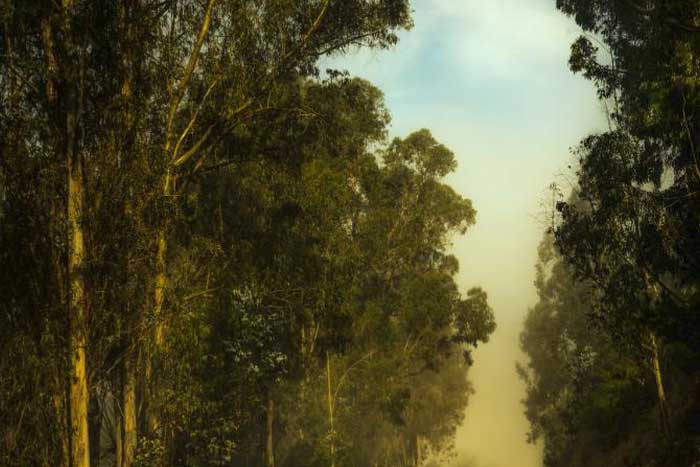
Working with images in post-production feels like a personal ritual for me. I’m drawn in by the colors and their impact. My digital experiments often lead to monochromes with rich, coppery, oxidized tones. I’m on a quest for the colors of the earth, and sometimes those found in underwater spaces. I embrace the themes of change and transformation, which is why my palette includes ochres, sanguine, and clay hues. I aim to rediscover the colors that resonate with me during the shooting process or those that emerge while editing. Through color, I delve into the blend of dreamlike imagery and magic. My black and white photographs often focus on beings and symbols, while I also pay close attention to materials, textures, and details. It’s like a tactile desire to connect with stone, plants, fire, and foxes. I’m always seeking a journey through the sensory world and the connections it brings.
Could you share your approach to submitting work to open calls, galleries, and editors?
I tend to be pretty independent and don’t often apply for jobs. I usually trust my instincts, and it’s often the connections I make that really matter. Most importantly, I want to maintain my valuable and delicate freedom to pursue what truly resonates with me.
What tips do you have for younger photographers or artists looking to begin their journey in photography?
Enjoy yourself and trust your instincts!

Thank you for being part of this interview! It’s been a delight to have you with us!
Thank you!
All Images © Léna Maria

