LAETITIA GALITA
Could you share a bit about yourself and how you got into photography?
My name is Laëtitia Galita. I was born in 1984 and grew up in the countryside of Northern France before moving to Lille. In 2003, I began studying psychology, specializing in environmental social psychology to better understand human beings and their relationships with their surroundings. After graduating in 2010, I worked in several fields that shared a common thread of sharing knowledge and raising awareness, before devoting myself entirely to photography as an artist-photographer.
My affinity for this medium developed during childhood. My father, an amateur photographer and videographer, carefully documented our family life using his analog camera and VHS camcorder. Back in the pre-internet era, I spent a lot of time immersing myself in his photo albums and the videos he took at various moments in our lives. I started documenting my own life during my teenage years, using disposable cameras before acquiring my first digital body when I entered university—perhaps a form of emancipation, who knows !
Have you taken any formal photography classes or attended any workshops?
In 2016, I trained at the Centre d’Arts Plastiques et Visuels in Lille. For three years, I received theoretical and practical instruction that led me to produce my first artistic projects. It was also during this time that I discovered the magic of the darkroom and black-and-white silver gelatin printing. Then I became a member of a community photo lab located in an independent cinema, Cinéma L’Univers in Lille. This was an opportunity for me to continue practicing photography independently and producing my own prints.
I was also able to attend various workshops where I discovered alternative photographic techniques such as Lith printing, caffenol printing, cyanotype, solarization, and wet plate collodion. Since then, I have developed a particular fondness for alternative processes, as they offer access to another form of reality, or even allow us to detach ourselves from it.
Today, I have a studio at La Pouponnière in Lille, a creative and experimental space where I have set up my own darkroom. Right now, I have a keen interest in Lith printing, and I now find myself passing on this technique by hosting introductory printing workshops of my own.
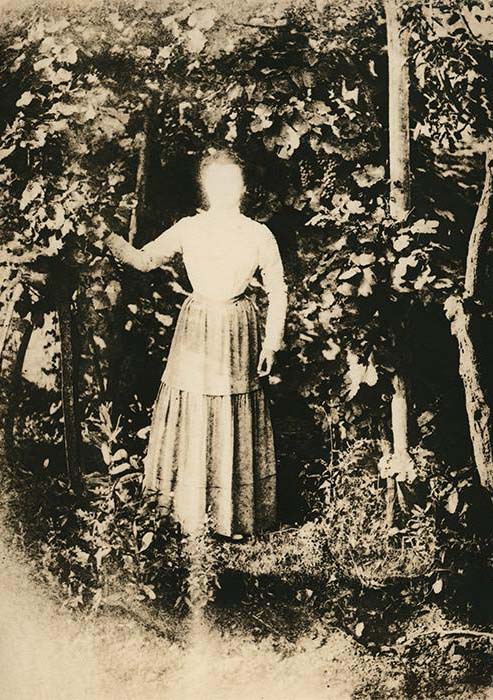
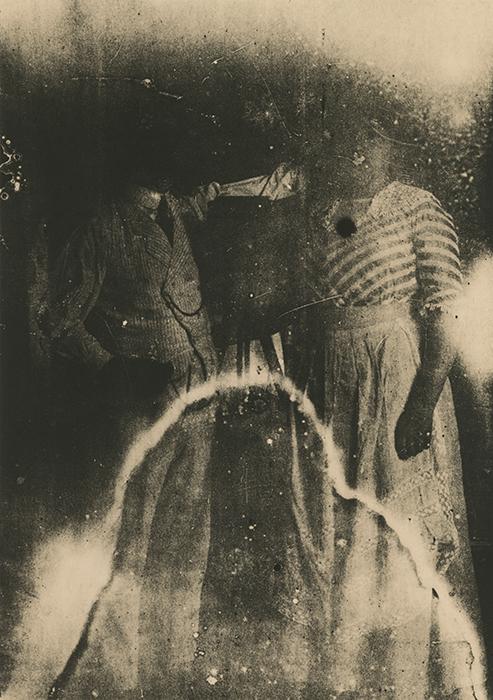
Above: a selection from Elle
Do you shoot just analog, or do you also use digital? If you stick to analog, what’s your development process like? Do you develop your own films and print in the darkroom?
Although I occasionally shoot with a digital camera, analog remains my medium of choice. I own several different cameras that I take with me whenever the opportunity to capture images arises. I use one or the other depending on the situation, but also based on their respective focal lengths and film types. I handle every step of the analog development process myself : I develop my own film and create my own prints using an enlarger.
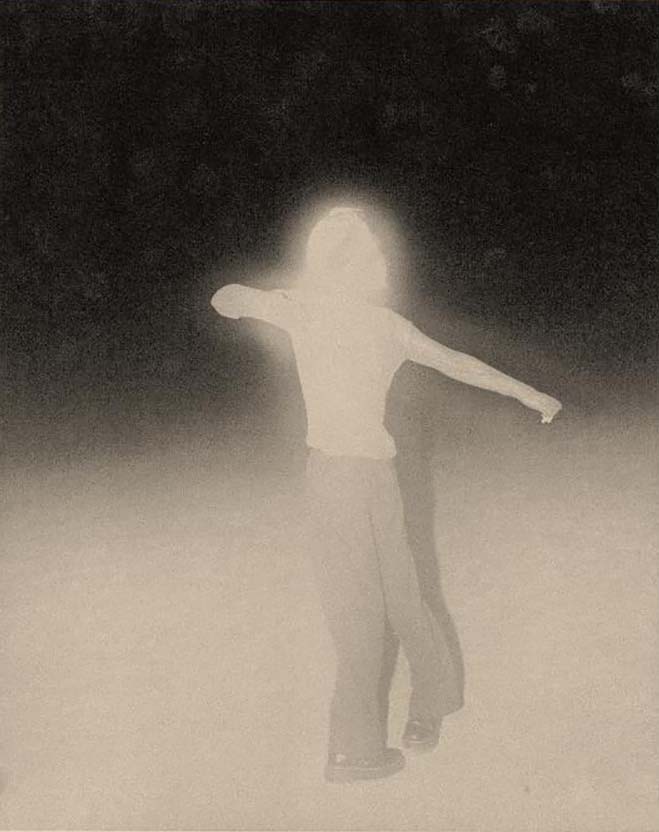
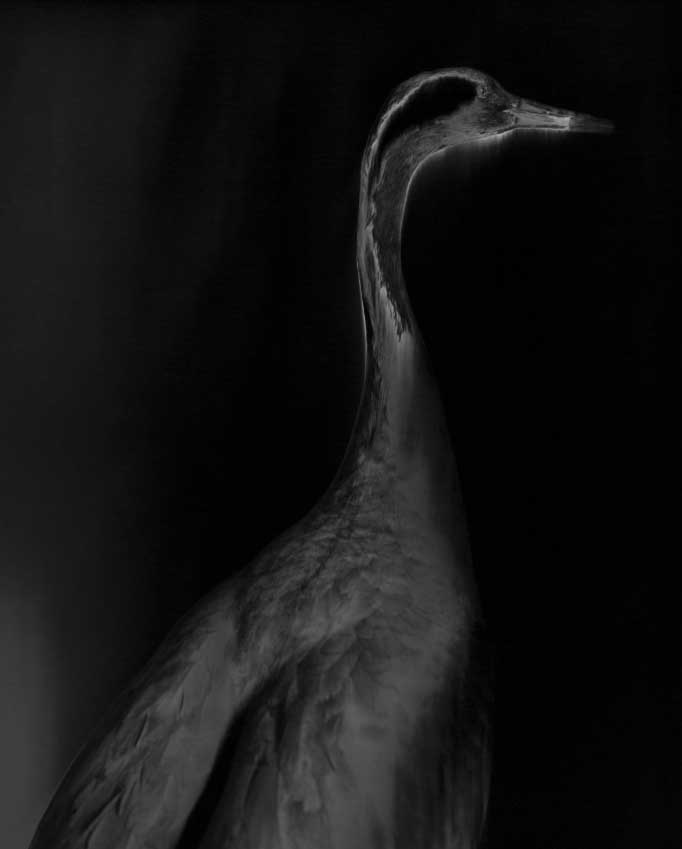
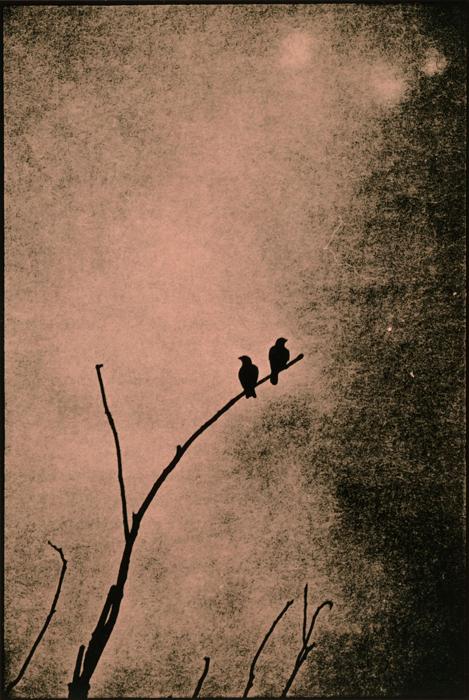
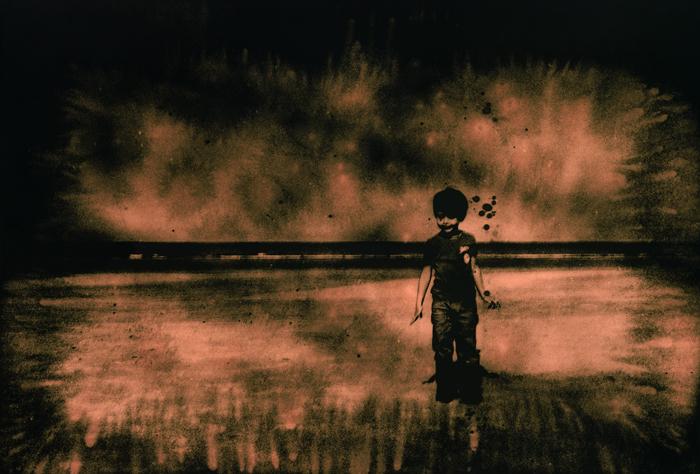
Lith printing is a process characterized by the use of a special developer to obtain unique black-and-white images on vintage baryta (fiber-based) paper. It allows me to achieve incredibly rich prints with stark contrasts, deep blacks, a distinctive grainy texture, and specific hues depending on the paper used. The highlights are worked under the enlarger, while the blacks develop in the chemistry. It is an “infectious” process, meaning that the blacks appear first and eventually spread across the entire surface of the paper. The “snatch” is the exact moment I choose to pull the image out of the developer and plunge it into a stop bath to halt this process.
What I look for most are what I call “artifacts” : random details and unique textures that appear unpredictably and do not exist on my original negative. This allows me to obtain organic shapes like veins, mold-like patterns, “snowball” effects, or blemishes that look like cells. When I spend hours on my prints and these artifacts appear, I am completely surprised and captivated by what happens. It feels like a miracle is taking place and my images start to vibrate!
Lith printing takes a lot of time to yield a singular image. The development is very slow ; it can take anywhere from 5 to 60 minutes to get a satisfying print. You have to find a subtle balance between exposure time under the enlarger, development duration, developer dilution, and its oxidation. This technique fascinates me because of its versatility, its creativity, and the way it forces you to unlearn the standard logic underlying traditional analog development.
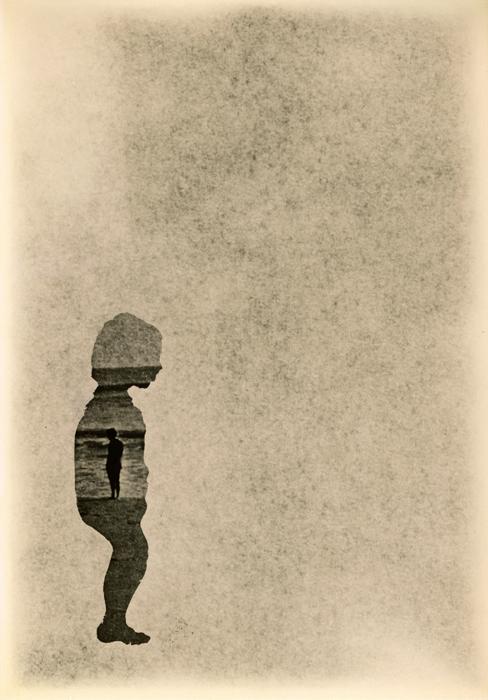
Beyond this process, I love discovering and employing new techniques. I have worked with sand to add texture to my images. I have also experimented with composing images from 35mm film using specific mask cutouts and reframing. More recently, I explored the technique of plant-toned cyanotypes by preparing decoctions from tree leaves.
What does photography mean to you personally?
For me, photography is inseparable from memory and identity. Each image opens a window onto the past, shaping our understanding of the world and of ourselves. It was this very same quest that led me to study psychology, and I believe this interest is implicitly reflected in my visual work today.
On a more intimate level, photography is an act of resistance against forgetting. I have a fragile memory, and the contours of my recollections fade all too quickly. Photography then becomes a necessity, a way to materialize what eludes me. Yet, therein lies the paradox of this medium : while the image freezes a trace, it also cruelly reveals everything that has vanished : the sound of a voice, the vibration of a color, the depth of an emotion or an interaction. My images give body to the shifting, lacunary, and almost spectral nature of memory. By exploring my recollections through Lith printing, I transform these personal events into tangible objects. It is a way of weaving a thread between past and present, gathering scattered fragments to try and build a sense of continuity in my own identity.
Faced with today’s proliferation of images, I seek to evoke rather than show, to suggest rather than document, creating sensitive and poetic works that invite contemplation and introspection. My photographs offer a suspended moment in time : an attempt to reconstruct a sensory and emotional memory, while leaving an open space for the viewer’s own imagination.
Do you remember the first photograph or photos you ever took?
Haha ! Given my fragile memory, I have absolutely no recollection of the first photo I ever took. I would have loved so much to have a trace of it.
Do you come up with your own sequences, or do you collaborate with an editor or curator?
At the moment, I create my own sequences, but it would be a real pleasure to collaborate with an editor or a curator to bring a fresh perspective to my work and enrich my narrative.
Have you thought about publishing a book based on any of your work? If so, could you share more about your experience?
I haven’t published a book yet, but I would love to one day work on a publication for one of my series to keep a lasting record of it. In fact, I am thinking of Anamnesis, the series currently featured on your website, Lucida Magazine.
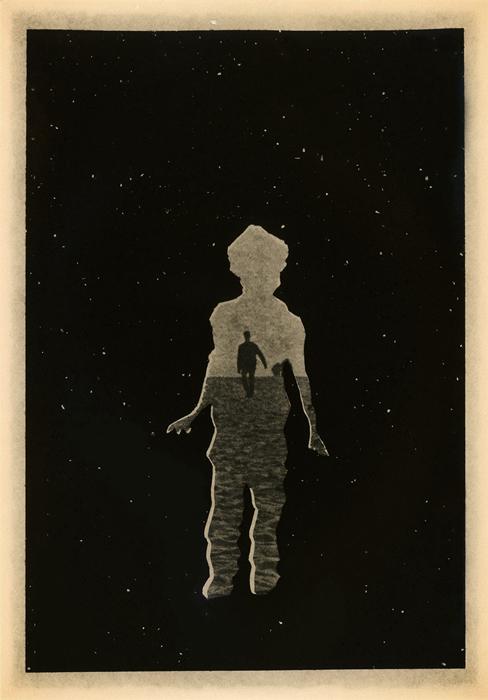


Above: a selection from Echos
Could you share the story behind the series “Racines”?
Racines (Roots) offers a sensitive, botanical exploration of the garden located right in front of my studio, using the plant-toned cyanotype technique.
Last October, all the artists at La Pouponnière – the creative space where I currently work – were invited to participate in a collective exhibition centered around the theme of the garden. Naturally, I wanted to focus on the one closest to me, which features several remarkable trees, including a magnificent common yew. It is an enclosed, incredibly lush space where people come to rest and birds come to sing. I pass by it almost every day, and for this project, I wanted to dedicate my full attention to it.
The body of work consists of two sets of images in dialogue with each other. The triptych celebrates the common yew, an emblematic tree of the garden. Three photographs reveal its presence : the rising foliage, the imposing trunk, and the roots anchoring themselves into the earth. In contrast, a mosaic unfolds a constellation of images. It brings together ten cyanotypes, each representing one of the garden’s remarkable trees : the common ash, sycamore maple, sweet chestnut, pussy willow, hazel, horse chestnut, black locust, cherry plum, olive-leaved willow, and the common yew. Each reveals itself through the print of its foliage, leaving a unique trace of its presence.
Through this series, I wanted to present a sensitive, poetic, and photographic inventory of these remarkable trees. Each image acts like a botanical identity card, an intimate portrait where the tree’s appearance dialogues with its own organic matter. The plants are no longer just the subjects of the image; they become active agents in its transformation. This work is part of an experimental and ecological approach, where the cyanotype process, combined with the dyeing properties of the plants, reveals a quiet alchemy between nature and image. Each photographic fragment thus carries the unique imprint of a living being.
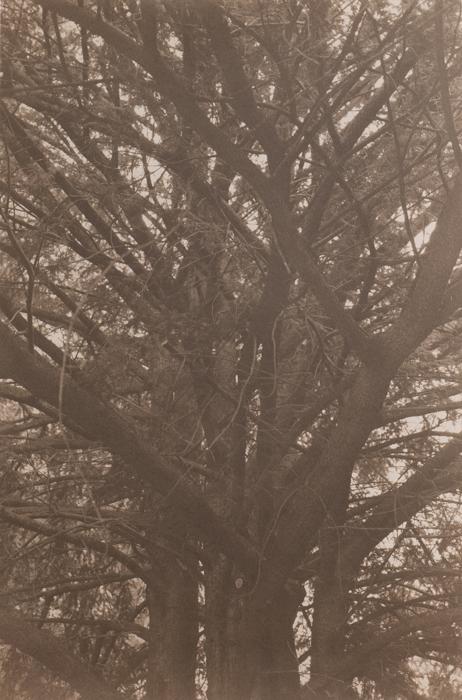
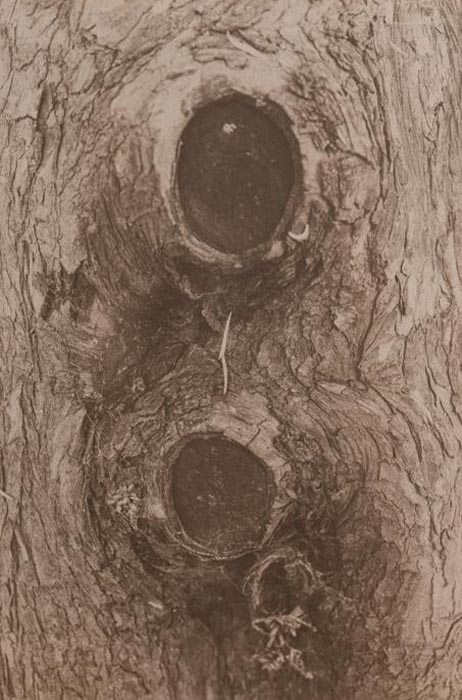
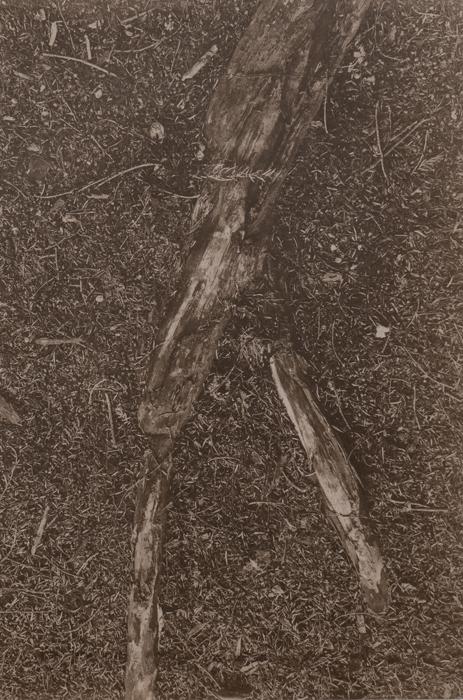
Above: a selection from Racine
What tips do you have for young photographers or artists looking to start their journey in photography?
To anyone wanting to get started in photography, my main advice would be to let go, let yourself be guided by your instinct, and take your time both in your practice and in developing your artistic approach. For me, gear doesn’t matter much; above all, you have to learn to trust your own eye. I also think it’s vital to experiment and meet people to nourish your creativity and evolve within the community. Making a living from photography is really not easy today. Personally, I struggle to make a living from it… You have to be versatile to launch yourself, but above all, you must never stop believing!
Thank you for taking the time to take this interview!
Thank you!
All Images © Laetitia Galita